
Ankura Hospital gives a Second Chance to Two-Year-Old Who Accidentally Consumed Acid
The child suffered serious burns to the mouth, food pipe, chest, genitals and groin after accidentally ingesting acetic acid. Timely stabilization, safe and expert medical transport, and intensive pediatric care at Ankura Hospital For Women

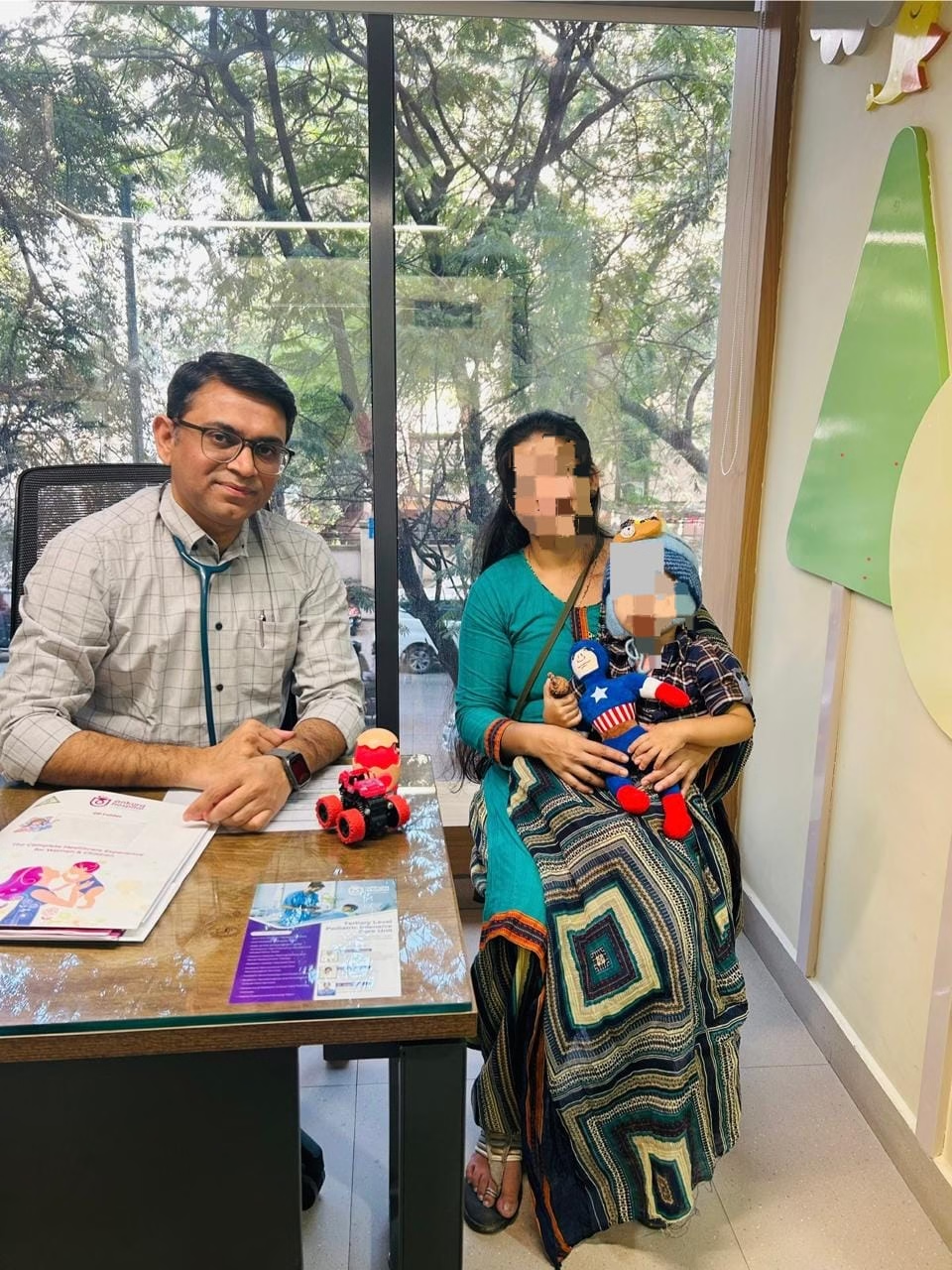
The child suffered serious burns to the mouth, food pipe, chest, genitals and groin after accidentally ingesting acetic acid. Timely stabilization, safe and expert medical transport, and intensive pediatric care at Ankura Hospital For Women and Children, Aundh, Pune ensured a safe, complication-free recovery.
A two-year-old baby boy was successfully treated at Ankura Hospital For Women and Children, Aundh, Pune after accidentally ingesting acetic acid, a corrosive household cleaning chemical that caused severe burns to his mouth, food pipe, chest, genitals and groin. A coordinated medical effort led by Dr Milind Jambagi and the Pediatric Intensive Care Unit (PICU) team ensured timely stabilization, safe ventilated transport from Satara, and comprehensive management of his airway, internal injuries, and chemical burns. Through precise endoscopic evaluation and round-the-clock pediatric critical care, the team was able to control further complications and guide the child to a safe and steady recovery.
This Children’s Day, Arjun (Name changed), a two-year-old boy from Satara, met a life-threatening emergency when he accidentally ingested acetic acid, a commonly used household cleaning chemical. What began as an ordinary day for his family turned into a nightmare within minutes. The corrosive liquid stored in a drinking water bottle burned his lips, oral cavity and food pipe and left painful chemical injuries on his chest and groin. As Arjun gasped for breath, crying in severe pain, his frightened parents watched helplessly, unable to understand what was happening or how their playful toddler had suddenly slipped into danger. The house that was filled with his laughter just moments earlier was now filled with panic, fear, and the desperate hope that they would reach help in time.
Arjun was immediately taken to a Satara hospital, where Dr Ghorpade recognized the severity of the situation. Understanding that every minute mattered, he stabilized the toddler and urgently arranged a referral for higher-level pediatric care. Ankura Hospital’s specialized neonatal and pediatric transport and retrieval team from Pune under the expert guidance of Dr Milind Jambagi travelled to Satara, with their specialised ambulance securing the child on ventilator support and ensuring continuous monitoring through the high-risk journey. Upon arrival at Ankura Hospital for Women & Children, Pune, the case was taken over by Dr Milind Jambagi, Head of the Pediatric Intensive Care Unit, Emergency and Retrieval Services and team.
Dr Milind Jambagi said, “On arrival at Ankura Hospital, Arjun had scald burns over the body and his oral cavity revealed corrosion. An endoscopy done immediately revealed corrosive injuries to the food pipe, though fortunately, no perforation was detected.
Ventilator support was continued until the child’s breathing stabilized. The chemical burns on the chest and groin were managed with specialized dressings and medication to prevent infection and aid healing. Chemical and corrosive ingestion in toddlers is extremely dangerous because the damage begins instantly, can worsen rapidly and have lifelong consequences.
Storage of corrosive chemical substances like house cleansers and acids in drinking water or soft drink containers in the home is a risk factor for accidental corrosive ingestion in children, particularly those less than 5 years of age.
In Arjun’s case, we were dealing with airway compromise, corrosive injury to the food pipe, and external burns all at the same time.
Timely stabilization, safe ventilated transport, and prompt endoscopic evaluation and evidence-based medical management helped us prevent life-threatening complications like necrosis, perforation, disseminated intravascular coagulation, shock and sepsis.
Our PICU team monitored his airway, nutrition, and wound healing round the clock and treated him with evidence-based latest medical care at every stage.”
Dr Milind Jambagi further added, “This case reminds families to store household chemicals safely, beyond the reach and sight of children. Arjun was taken off ventilator cautiously. Feeding was cautiously restarted first through a tube to avoid further injury of food pipe, and later orally once his swallowing improved. Over the next few days, the toddler responded positively to treatment, he was off ventilator, the burns began healing, and his oral intake slowly recovered. One week later, Arjun was discharged marking a remarkable turnaround in a case that could have ended very differently. Dr Milind urges all the parents to stay alert and keep all household chemicals, medicines, and sharp objects completely out of children’s reach, as accidents occur in children most of the times when the parents are around them but unattended. Curious toddlers explore everything around them, often without understanding danger. Simple precautions at home can prevent life-threatening emergencies like these.”
“Every minute matters in accidents, poisoning and corrosive ingestion. When Arjun arrived, his airway was fragile, his mucosa was injured, and he was in significant pain. At Ankura, we have built a comprehensive pediatric emergency system that includes rapid response retrieval services, advanced bronchoscopic, endoscopic and intensive care facilities, and a team trained to handle complex and time-sensitive cases specifically in children. Arjun’s recovery is a powerful example of how coordinated, compassionate, and evidence-based pediatric multidisciplinary care can change outcomes. Every child deserves the chance to heal and thrive, and we are committed to providing that level of care every single day.”
“Seeing our little boy struggling to breathe and scream in pain is something no parent should ever witness. We had no idea how something so serious could happen so suddenly to our child. When the doctors told us his condition is critical after accidental ingestion of acid, our world collapsed. We feared losing him at any moment. But when the Ankura’s specialised children’s retrieval team arrived, we felt hope for the first time. They treated him gently even while acting fast, and once we reached the hospital, every doctor and nurse cared for him like family round the clock. Watching him slowly open his eyes, breathe without support, and take his first sip of water again felt like witnessing a miracle. We will always be grateful to Dr Milind Jambagi’s team at Ankura Hospital for giving our child a second chance at life,” said Arjun’s mother.