
Delhi Government to Inaugurate 34 New Ayushman Aarogya Mandirs
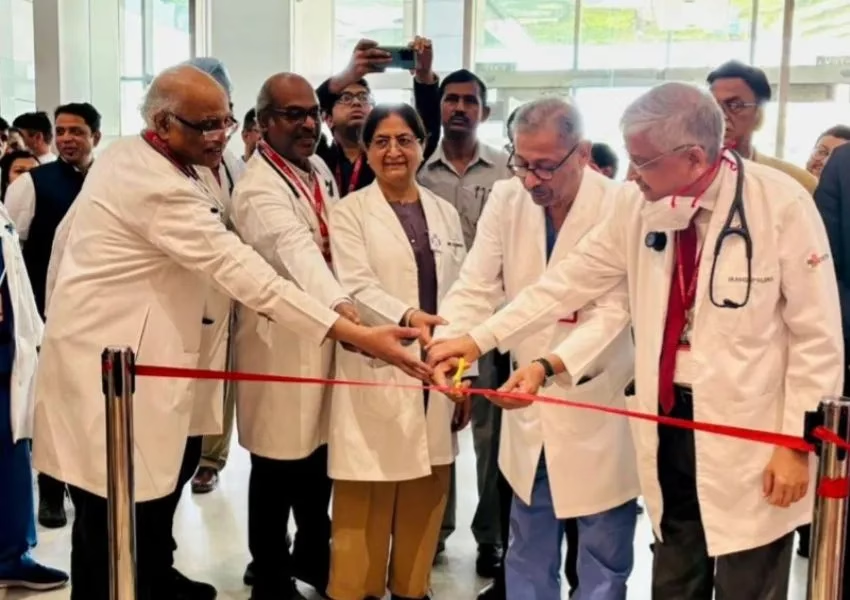
The Delhi Government today announced the inauguration of 34 new Ayushman Arogya Mandirs (AAMs) next week, marking a major expansion of the city’s primary healthcare infrastructure. This follows the launch of 33 AAMs and 17

The Delhi Government today announced the inauguration of 34 new Ayushman Arogya Mandirs (AAMs) next week, marking a major expansion of the city’s primary healthcare infrastructure. This follows the launch of 33 AAMs and 17 Jan Aushadhi Kendras across the capital on 17 June 2025, which were inaugurated by Chief Minister Rekha Gupta and her cabinet colleagues .
The AAMs are part of a comprehensive strategy under the Ayushman Bharat health mission to replace earlier mohalla clinics and other makeshift dispensaries with well‑equipped, permanent centres. Each centre will feature qualified medical staff including MBBS doctors, nurses, pharmacists, lab technicians, and support personnel, ensuring quality service and continuity
These centres adhere to Indian Public Health Standards (2022), offering a full suite of services, including preventive, promotive, curative, rehabilitative, and palliative care
Inaugurated AAMs already offer a range of services: free essential medicines (over 100 types), both in‑house and outsourced diagnostic tests (14 and 79 respectively), maternal and child healthcare, elderly and chronic disease support (including TB, leprosy, NCDs), mental health services, immunizations, cancer screenings, yoga sessions, emergency oxygen, digital health records, and dedicated spaces for breastfeeding and play areas for children
AAMs are open on weekdays with operating hours typically running from 8 or 9 am to mid‑afternoon .
This expansion is backed by ₹1,700 crore allocated under the PM‑Ayushman Bharat Health Infrastructure Mission and additional ₹2,400 crore in central grants from 2020 that had previously gone untouched
Delhi is on course to establish approximately 1,100 AAMs by 31 March 2026, with plans to roll out about 100 new centres monthly—15 per assembly constituency—underscoring the government’s commitment to accessible, reliable healthcare
Chief Minister Rekha Gupta emphasized that this initiative represents a shift from temporary mohalla clinics—which were criticized for poor hygiene, untrained staff, outsourced corruption-prone services, and misuse—to permanent, modern facilities offering dignified care and efficient services across Delhi
Complementing this, the launch of Jan Aushadhi Kendras at government hospitals, offering medicines at 50–80% below market prices, reflects a broader effort to reduce out‑of‑pocket healthcare costs
Health Minister Dr Pankaj Kumar Singh reiterated the government’s goal of ensuring three hospital beds per 1,000 residents in Delhi—well above the current capacity of less than one bed. He stressed that quality healthcare and sanitation are fundamental rights, and the government is dedicated to delivering them—as reflected in the new AAMs’ infrastructure upgrades
As Delhi prepares to open 34 more AAMs next week, including associated Jan Aushadhi Kendras, the city continues its march toward a more accessible, integrated, and high‑quality primary healthcare system—reinforcing its vision of a “Swasth Delhi, Sashakt Delhi”.