
ICMR Invites Industry Collaboration to Develop Indigenous Therapies Against Nipah Virus
The Indian Council of Medical Research (ICMR) has called for strategic partnerships with the pharmaceutical and biotech industry to develop indigenous therapies and vaccines against the Nipah virus, a highly fatal zoonotic infection that poses

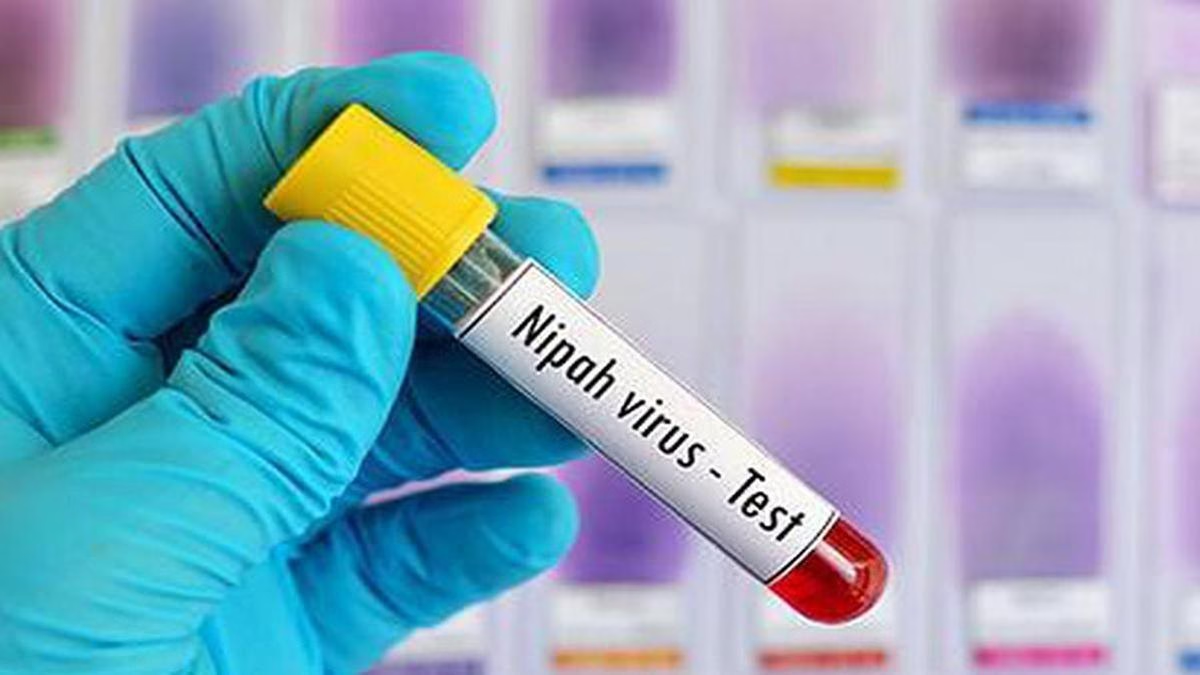
The Indian Council of Medical Research (ICMR) has called for strategic partnerships with the pharmaceutical and biotech industry to develop indigenous therapies and vaccines against the Nipah virus, a highly fatal zoonotic infection that poses recurring public health threats in India.
The initiative aims to strengthen India’s preparedness and response capabilities by promoting research collaborations that can accelerate drug discovery, diagnostic tools, and therapeutic solutions for the virus. Officials from ICMR emphasized that such partnerships are crucial to reduce dependence on imported treatments and build a resilient healthcare ecosystem capable of tackling emerging infectious diseases.
The council has also proposed establishing public-private R&D models, encouraging technology sharing, and enabling regulatory fast-tracking for promising candidates. These efforts will focus on translating laboratory research into scalable and affordable interventions that can be rapidly deployed during outbreaks.
The Nipah virus, transmitted from animals to humans, has triggered multiple outbreaks in India—particularly in Kerala—with case fatality rates ranging from 40% to 75%. Despite previous containment successes, the lack of an approved antiviral or vaccine continues to challenge health authorities.
By seeking active industry participation, ICMR aims to leverage India’s growing biotech innovation base to develop homegrown therapeutic solutions that could not only protect domestic populations but also position India as a global contributor in infectious disease research.