
IIT-Indore Develops High-Accuracy AI System for Early Detection of Breast and Cervical Cancer
Researchers at Indian Institute of Technology Indore have achieved a significant breakthrough in early cancer diagnostics by developing an advanced artificial intelligence system capable of detecting breast and cervical cancers with exceptionally high accuracy. The

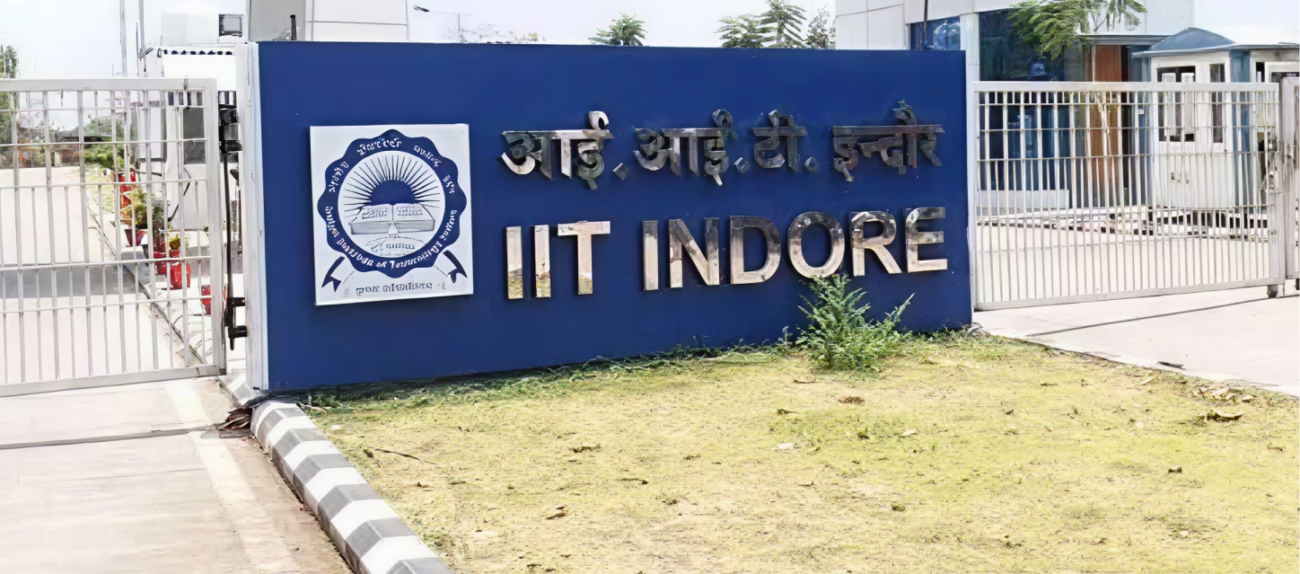
Researchers at Indian Institute of Technology Indore have achieved a significant breakthrough in early cancer diagnostics by developing an advanced artificial intelligence system capable of detecting breast and cervical cancers with exceptionally high accuracy. The innovation promises to support clinicians in identifying cancerous changes more reliably and swiftly, particularly in settings with limited specialist availability.
Led by Prof. Kapil Ahuja and his team from the Department of Computer Science and Engineering’s Math of Data Science and Simulation Lab, the AI system employs sophisticated algorithms that analyse medical images to flag suspicious regions that may indicate malignancy. For breast cancer screening, the researchers created a novel texture-based descriptor that can discern subtle irregular patterns in mammogram images, even in dense breast tissue. For cervical cancer, a deep learning model extracts both detailed visual features and higher-level structural information from colposcopy images to enhance diagnostic precision.
In internal and external validation tests using four international datasets, the AI models consistently delivered accuracy rates in the mid-to-high 90 percent range, outperforming many existing diagnostic techniques. This performance potential underscores the system’s utility in prioritising high-risk cases and reducing missed diagnoses, which are critical factors in improving patient outcomes through early intervention.
Prof. Suhas Joshi, Director of IIT-Indore, highlighted the institute’s commitment to developing technology-driven solutions that address pressing national healthcare challenges, noting that the research includes explainable AI mechanisms that help clinicians understand how the system arrives at its conclusions, thereby strengthening clinical trust.
The project is supported by the DRISHTI Cyber Physical Systems Foundation, which is facilitating efforts to transition the innovation from the lab to real-world healthcare settings. Recognising the importance of population-specific training, the team is also collaborating with HCG Cancer Hospital in Indore to develop prototype versions of the AI models trained on Indian patient data. Future plans include expanding the AI framework to detect other major cancers such as thyroid, lung, oral, colorectal, and oesophageal cancers.
The development aligns with broader global trends in leveraging artificial intelligence to enhance early cancer detection, where AI-assisted systems are increasingly recognised for their potential to improve diagnostic accuracy, reduce false negatives, and extend screening capabilities in underserved regions.