
India Contributes to London Resolution Addressing Antimicrobial Resistance
In a significant global health development, India has extended its support and contributions to the London Resolution, an international commitment aimed at combating antimicrobial resistance (AMR). The resolution, endorsed by over 40 countries, was unveiled

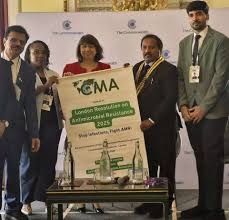
In a significant global health development, India has extended its support and contributions to the London Resolution, an international commitment aimed at combating antimicrobial resistance (AMR). The resolution, endorsed by over 40 countries, was unveiled at a high-level global forum in London focused on preserving the efficacy of existing antibiotics and fostering innovation in antimicrobial treatments.
India’s Role and Commitment
India, which has long been at the forefront of the AMR challenge due to its large population and high antibiotic usage, emphasized its commitment to responsible antibiotic stewardship. Representing the nation, senior officials from the Ministry of Health and Family Welfare and the Indian Council of Medical Research (ICMR) highlighted the country’s National Action Plan on AMR, robust surveillance programs, and efforts to regulate over-the-counter sale of antibiotics.
India has also pledged to:
Strengthen infection prevention and control practices across hospitals and clinics.
Expand laboratory-based surveillance networks for antimicrobial resistance.
Promote research and development of new antimicrobial agents and diagnostics.
Enhance public awareness and education campaigns on responsible antibiotic use.
What is the London Resolution
The London Resolution is a landmark commitment driven by the World Health Organization (WHO), the UK government, and global stakeholders to address the growing threat of drug-resistant infections. It calls for collective action in:
Reducing antimicrobial use in humans and animals.
Scaling up innovation in antibiotic development.
Ensuring equitable access to life-saving antimicrobials worldwide.
Global Urgency
According to recent estimates, AMR could lead to 10 million deaths annually by 2050 if left unchecked. Experts have warned that without urgent action, routine surgeries, cancer treatments, and even minor infections could become deadly.
India’s contribution and alignment with the London Resolution mark a pivotal step toward global cooperation in preserving the future of effective medicine and safeguarding public health.