
Indian Stroke Association Leads a Year-Long Nationwide Drive to Reduce Stroke Deaths and Disability Across India
Over the past year, the Indian Stroke Association (ISA) conducted a series of nationwide awareness campaigns, state-level press conferences, professional training programs, and global collaborations across multiple cities and states to raise stroke awareness, promote

Over the past year, the Indian Stroke Association (ISA) conducted a series of nationwide awareness campaigns, state-level press conferences, professional training programs, and global collaborations across multiple cities and states to raise stroke awareness, promote early treatment, and reduce long-term disabilities such as paralysis, speech loss, and cognitive impairment
With stroke cases rising rapidly across all age groups, driven by uncontrolled blood pressure, diabetes, stress, air pollution, sedentary lifestyles, delayed symptom recognition, and lack of timely treatment, stroke has emerged as a major public health challenge in India. Stroke not only claims lives but also leaves thousands with long-term disabilities such as paralysis, speech loss, and cognitive impairment.
With a stroke occurring every 20 seconds in India and over 18 lakh people affected each year, the Indian Stroke Association highlighted that nearly 80% of strokes are preventable through early detection, blood pressure control, and healthy lifestyle choices. ISA repeatedly emphasized the importance of reaching the hospital within the golden window of 4.5 hours for clot-busting treatment and up to 24 hours for mechanical thrombectomy, reinforcing the message that “Time is Brain,” as nearly 20 lakh neurons are lost every minute during a stroke
Recognizing the urgent need for action, the Indian Stroke Association (ISA) intensified its mission over the past year to reduce stroke-related deaths and disability through nationwide awareness campaigns, professional training, public education, and global collaborations, consistently reinforcing one critical message: stroke is preventable, treatable, and a medical emergency where time saves brain and life.
Nationwide Launch of ‘Check BP – Stop Stroke’ Campaign
In May, ISA launched the nationwide ‘Check BP – Stop Stroke’ campaign, focusing on hypertension, the single biggest risk factor for stroke. Free blood pressure screening camps, public awareness sessions, and educational activities were conducted across multiple regions to encourage early detection and optimal control of high blood pressure.
During the same month, marking Brain Stroke Awareness Month, ISA hosted the national webinar ‘Know Stroke – Beat Stroke’, aimed at educating citizens and healthcare professionals on stroke warning signs, emergency response, and prevention.
Raipur, Chhattisgarh: ‘Brain Stroke Time to Act’ Campaign
In June, ISA held a press conference in Raipur, Chhattisgarh, launching the ‘Brain Stroke – Time to Act’ campaign. The initiative highlighted the dangers of delayed hospital arrival and emphasized the critical golden window of 4.5 hours for clot-busting treatment and up to 24 hours for mechanical thrombectomy in select cases.
Hyderabad, Telangana: Expanding the ‘Time to Act’ Message
The campaign continued in Hyderabad, Telangana in July, where ISA addressed rising stroke cases linked to lifestyle diseases and urban stress. Experts stressed that recognizing symptoms early and reaching a stroke-ready hospital can significantly reduce death and permanent disability.
Jaipur, Rajasthan: Alarm Over Lack of Symptom Awareness
In Jaipur, Rajasthan, ISA raised serious concern over the lack of stroke symptom awareness, warning that delays often lead to irreversible brain damage and paralysis during August. The association urged families to act immediately at the first sign of stroke.
Kolkata, West Bengal: Addressing Urban Stroke Crisis
ISA launched the ‘Brain Stroke – Time to Act’ campaign in Kolkata, West Bengal, during the month of September, focusing on the city’s growing stroke burden. Public education sessions highlighted the BEFAST acronym (Balance loss, Eye vision changes, Face drooping, Arm weakness, Speech difficulty, Time to seek emergency care )for identifying stroke symptoms and the importance of emergency treatment.
Mangalagiri, Andhra Pradesh: BEFAST Awareness Drive
In Mangalagiri, Andhra Pradesh, during October, ISA reinforced the need for public vigilance, urging citizens to recognize BEFAST signs and seek immediate medical care. The campaign focused on preventing paralysis and long-term disability through timely action.
Global engagement and international recognition
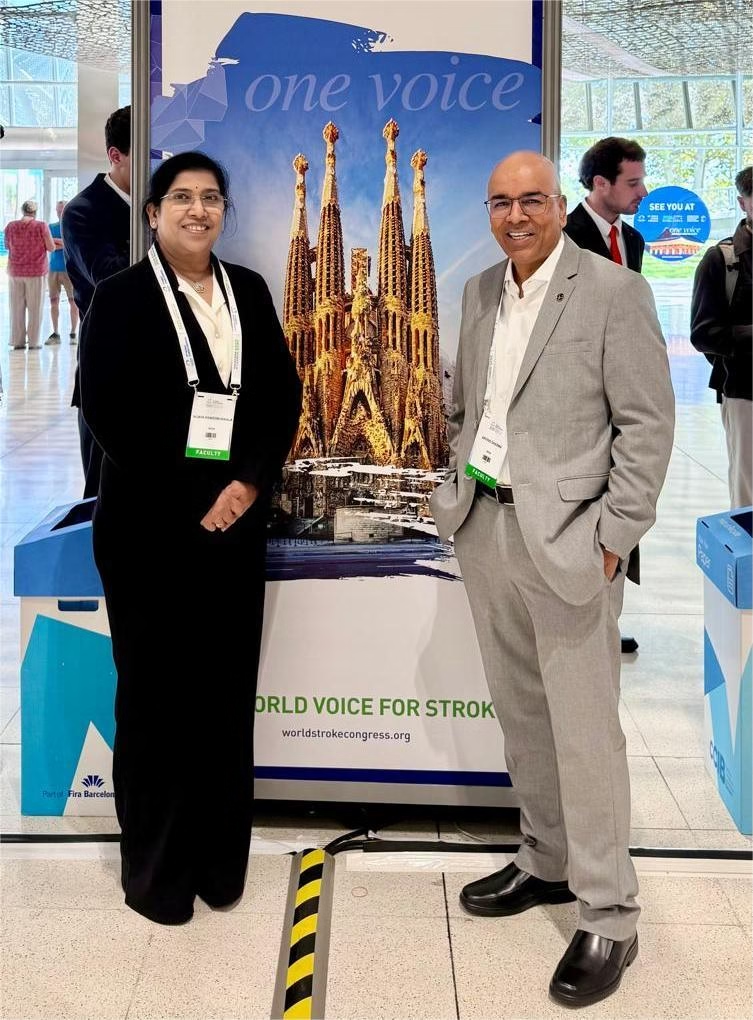
Alongside its national efforts, ISA played an active role on the global stage. ISA experts participated in the Asia-Pacific Stroke Conference 2025 in Japan, World Stroke Congress 2025 in Barcelona, Spain, Oman Stroke Conference, International Stroke conference Los Angeles where they shared India’s experiences, highlighted the country’s stroke burden, and advocated for affordable, scalable stroke care models.
In recognition of sustained excellence, ISA President Dr. P. Vijaya was honored with the World Stroke Organization Diamond Status Award for Excellence in Stroke Care for the fifth consecutive year. Additionally, an original research abstract developed through international collaboration on acute stroke management received the prestigious Paul Dudley White International Scholar Award from the American Heart Association at ISC 2025. Furthermore, VOH honored Dr. Arvind Sharma as National leader impact award: Stroke Awareness and Prevention. VOH also recognized Dr Vijaya as one of the top 30 healthcare leaders in its Women’s Day special feature.
Summarizing ISA’s year-long efforts, Dr. P. Vijaya, President, Indian Stroke Association, said, “Stroke is no longer a distant or rare disease; it is a public health emergency affecting Indians across all ages. Every minute of delay leads to irreversible brain damage and long-term disability. Our mission is clear: empower every citizen to recognize stroke early, ensure every doctor can act swiftly, and build systems that deliver timely, life-saving care. With awareness, preparedness, and collaboration, we can prevent paralysis, save lives, and protect the nation’s brain health.”
Dr. Arvind Sharma, Secretary, Indian Stroke Association, added, “Awareness alone is not enough. We must strengthen emergency systems, train healthcare teams, and ensure equitable access to stroke treatment across urban and rural India. ISA remains committed to building a faster, smarter, and more responsive stroke care ecosystem so that no patient loses their future due to delayed care.”
How to Prevent Stroke and Act Fast
ISA urges every Indian to remember BEFAST and act immediately:
B – Balance loss
E – Eye or vision problems
F – Face drooping
A – Arm weakness
S – Speech difficulty
T – Time to reach the nearest stroke-ready hospital
Controlling blood pressure, managing diabetes, quitting smoking, staying active, and seeking emergency care at the first warning sign can prevent up to 80% of strokes.
Over the past year, the Indian Stroke Association has played a crucial role in shaping stroke awareness, preparedness, and response across India, connecting citizens, doctors, policymakers, and global experts under one mission. As stroke continues to threaten lives and livelihoods, ISA remains steadfast in its commitment to reducing stroke burden, preventing lifelong disability, and ensuring that every Indian brain gets a fighting chance.