India’s TB Elimination Drive Strengthens: Made-in-India Diagnostic Tests Promise Faster, Affordable Detection for Millions
ICMR validates indigenous innovations that drastically cut testing time and cost, accelerating India’s goal to eliminate tuberculosis by 2025In a major leap toward India’s mission to eliminate tuberculosis (TB), the Indian Council of Medical Research

ICMR validates indigenous innovations that drastically cut testing time and cost, accelerating India’s goal to eliminate tuberculosis by 2025
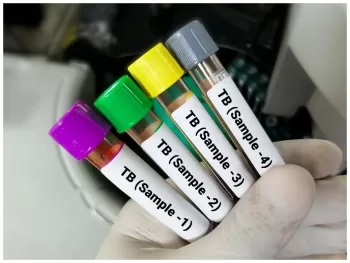
In a major leap toward India’s mission to eliminate tuberculosis (TB), the Indian Council of Medical Research (ICMR) has validated two new Made-in-India diagnostic tests developed by Huwel Lifesciences, which promise to make TB testing faster, more accessible, and significantly more affordable. This landmark validation is expected to transform the country’s diagnostic ecosystem and reinforce the vision of Atmanirbhar Bharat in healthcare innovation.
The two breakthrough tests Quantiplus MTB FAST Detection Kit and UniAMP MTB Nucleic Acid Test Card have been developed to address the long-standing challenges of cost, complexity, and accessibility in TB detection. These tests enable early and accurate diagnosis, especially in rural and resource limited settings where access to advanced diagnostic infrastructure remains a challenge.
Revolutionizing TB Detection Through Indigenous Innovation
The Quantiplus MTB FAST Detection Kit is an open-system RT-PCR test designed to detect lung TB rapidly and efficiently. Unlike conventional systems that rely on proprietary equipment, this test can be performed on any standard RT-PCR machine, allowing broader deployment across India’s diagnostic laboratories. It can process up to 96 samples simultaneously, drastically improving speed and efficiency while reducing testing costs by up to 20% compared to imported alternatives.
The UniAMP MTB Nucleic Acid Test Card, on the other hand, introduces a non-invasive testing method using tongue swab samples instead of traditional sputum collection. This innovation not only simplifies the diagnostic process but also enhances patient comfort particularly for children, elderly individuals, and patients unable to produce sputum. The device’s user-friendly design supports point-of-care testing and community-based screening initiatives, further expanding India’s TB detection reach.
“These innovations represent the next frontier in TB diagnostics faster, cheaper, and more patient-friendly,” said Dr. Nivedita Gupta, Head of the Communicable Diseases Division at ICMR. “By validating indigenous solutions, we are ensuring that high-quality, homegrown technologies reach every corner of India. This step reinforces our nation’s commitment to making TB elimination a reality.”
Driving India Toward TB Elimination by 2025
India bears the highest TB burden globally, accounting for nearly 28% of the world’s cases. The introduction of locally developed, validated diagnostic tools marks a pivotal step in bridging diagnostic gaps and ensuring early treatment initiation. Experts emphasize that timely diagnosis remains the most critical intervention in breaking the chain of transmission and reducing TB-related mortality.
These new diagnostic tests will also reduce India’s dependency on imported kits, ensuring sustainable supply chains and self-reliance in public health infrastructure. The open-system design allows state and district-level laboratories to adopt the technology without extensive new investments, creating a more scalable and cost-efficient model for TB detection nationwide.
“Our vision is to build healthcare technologies in India, for India, and for the world,” said. “Through innovation, affordability, and accessibility, we aim to make TB diagnostics available to every patient from metropolitan hospitals to rural health centers.”
Empowering Public Health Through Indigenous Technology
The validation of these diagnostic tests reflects ICMR’s ongoing efforts to accelerate the adoption of indigenous medical technologies through rapid evaluation and regulatory facilitation. By enabling quicker rollout of high-impact diagnostic solutions, India is setting a global example in combining scientific rigor with self-reliance in healthcare.
The Ministry of Health & Family Welfare has also expressed support for integrating these validated tests into the National TB Elimination Programme (NTEP), ensuring that frontline health workers and laboratories are equipped to deliver accurate, on-the-spot results for faster treatment decisions.
“India’s fight against TB has entered a new era of innovation,” noted an ICMR spokesperson. “When science, technology, and national commitment come together, eliminating TB by 2025 is no longer a distant goal it’s an achievable reality.”