
Liver Cancer Cases Projected to Double Worldwide by 2040: Study Warns Most Cases Are Preventable
Public health experts call for urgent global action on vaccination, alcohol control, and obesity management July 2025 — A new global study published in The Lancet Gastroenterology & Hepatology has raised alarm bells by projecting that

Public health experts call for urgent global action on vaccination, alcohol control, and obesity management
July 2025 — A new global study published in The Lancet Gastroenterology & Hepatology has raised alarm bells by projecting that liver cancer cases are likely to double worldwide by 2040 if urgent public health measures are not implemented. Researchers stress that a significant portion of these cases is preventable, driven by modifiable risk factors such as viral hepatitis, alcohol consumption, and obesity.
Key Projections and Alarming Trends
According to the study, which analyzed cancer incidence data from over 185 countries, the number of new liver cancer cases per year could rise from 900,000 in 2020 to over 1.8 million by 2040. Deaths from liver cancer are expected to mirror this trend, reaching 1.6 million annually, making it one of the top causes of global cancer mortality.
The highest burden is anticipated in low- and middle-income countries (LMICs), particularly in Asia and sub-Saharan Africa, where access to early screening and treatment is still limited.
Most Liver Cancer Cases Are Preventable
Despite the dire projections, researchers emphasize that over 50% of liver cancer cases could be prevented with timely interventions. Key drivers of liver cancer include:
Chronic Hepatitis B and C infections – Preventable through vaccination and antiviral treatments.
Alcohol-related liver disease – Linked to excessive alcohol consumption.
Non-alcoholic fatty liver disease (NAFLD) – Associated with rising rates of obesity and Type 2 diabetes.
Aflatoxin exposure – Contaminants found in poorly stored grains and nuts, mostly in LMICs.
Dr. Isabelle Soerjomataram, one of the lead authors, said:
“This isn’t just a story of rising numbers—it’s about missed opportunities to prevent what is largely an avoidable cancer.”
Urgent Need for Scaled-Up Prevention Strategies
The study urges governments and health organizations to adopt integrated liver health programs that combine:
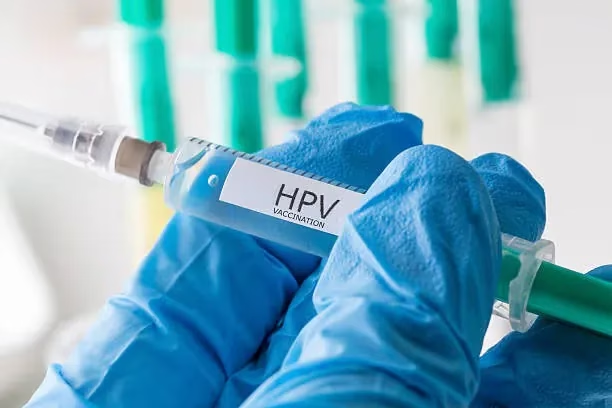
Universal hepatitis B vaccination at birth
Routine hepatitis C screening and treatment
Public awareness campaigns about alcohol and obesity risks
Improved food safety standards in vulnerable regions
Additionally, researchers call for investments in screening and early detection, as liver cancer often goes undiagnosed until advanced stages when treatment options are limited.
India and Other High-Burden Nations Must Act Fast
India, China, and parts of Southeast Asia are expected to carry the heaviest burden of new liver cancer cases in the next two decades due to high hepatitis prevalence, growing alcohol use, and limited public screening programs.
Public health experts say that expanding vaccination coverage, integrating liver function testing in primary care, and strengthening nutritional and alcohol policies can significantly reduce the trajectory of the disease.
A Call to Global and Local Policymakers
The findings come amid growing concerns about rising cancer rates globally. Experts are urging international agencies, NGOs, and local governments to prioritize liver cancer prevention in their non-communicable disease (NCD) agendas.
Without intervention, liver cancer could soon become one of the top three deadliest cancers worldwide—a statistic that is both shocking and avoidable.