
NGT Seeks AIIMS Intervention Over Alarming Water Contamination in Kanpur Region
Toxic Metals Threaten Public Health Across Three Districts In a significant development aimed at tackling the ongoing public health crisis in Uttar Pradesh, the National Green Tribunal (NGT) has sought the intervention of AIIMS, New Delhi

Toxic Metals Threaten Public Health Across Three Districts
In a significant development aimed at tackling the ongoing public health crisis in Uttar Pradesh, the National Green Tribunal (NGT) has sought the intervention of AIIMS, New Delhi to assess and address the impact of severe groundwater contamination in the districts of Kanpur Nagar, Kanpur Dehat, and Fatehpur. The tribunal’s directive comes in response to disturbing medical findings from recent health camps where residents showed abnormally high levels of chromium and mercury in their blood—indicative of prolonged exposure to toxic metals through contaminated drinking water.
Heavy Metal Poisoning Confirmed in Blood Samples
One of the most alarming cases reported involved a resident with a chromium concentration of 46.5 µg/L in their bloodstream—far above the internationally accepted safety threshold. Other cases showed signs of neurological, respiratory, hepatic, renal, and dermatological disorders believed to be linked directly to long-term consumption of polluted water. These findings prompted the NGT to call for immediate and comprehensive medical evaluation from a top-tier institution like AIIMS.
NGT Criticizes State Inaction and Inadequate Response
The NGT bench, led by Justice Prakash Shrivastava, strongly criticized the Uttar Pradesh authorities for what it termed a “superficial and inadequate” response to the crisis. Despite repeated directives, the state failed to ensure proper drinking water supply, limit exposure, or conduct sufficient testing. Only around 7,000 individuals have reportedly been tested so far—an insufficient number considering the scale of the population at risk. The tribunal also condemned the failure to contain toxic chromium dump sites in areas like Rania and Rakhi Mandi, and the unchecked industrial discharges from tanneries in Jajmau which continue to poison groundwater sources.
AIIMS Tasked with Eight-Week Health Impact Assessment
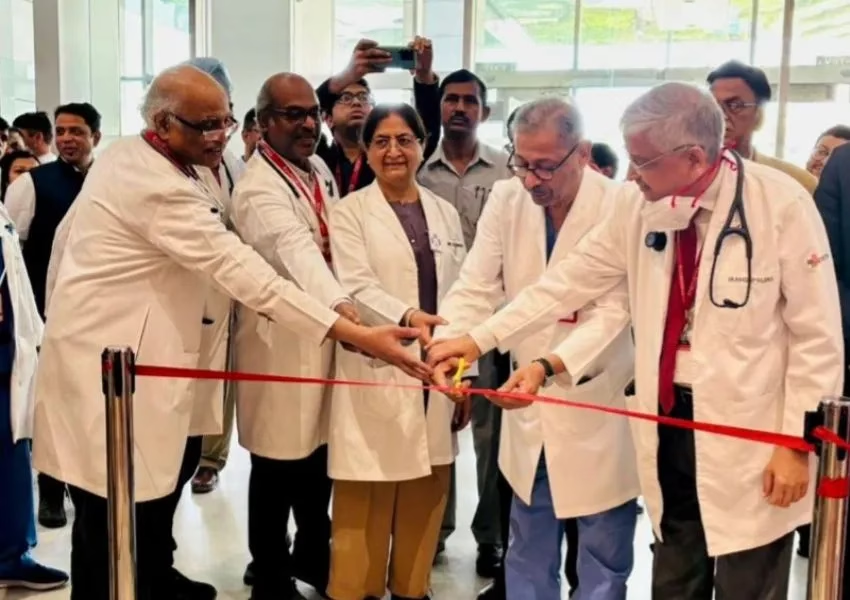
In a strong move, the tribunal has directed AIIMS, New Delhi to assemble a multidisciplinary medical team comprising specialists in neurology, nephrology, oncology, gastroenterology, and toxicology. This team is tasked with conducting a detailed field-level investigation, analyzing the health impacts, and recommending targeted treatment protocols. The findings are expected to be submitted within eight weeks, with the next hearing scheduled for October 7, 2025.
Immediate Measures Ordered by Tribunal
Apart from AIIMS’ involvement, the NGT has also instructed the Uttar Pradesh Government to ensure emergency water supply to all affected regions, mandating at least 135 liters of safe drinking water per person per day as per national standards. Furthermore, the state has been ordered to initiate urgent medical interventions, expand the scope of blood testing, and secure and remediate known chromium dump sites to prevent further environmental degradation and exposure.
A Call for Urgent Environmental and Health Reforms
This development marks a pivotal moment in the battle against industrial pollution and public health negligence in India. The tribunal’s decisive action underscores the critical need for a coordinated, science-driven response to environmental disasters. With AIIMS now officially onboard, the focus shifts toward scientific accountability, robust data collection, and the delivery of health justice for thousands of affected families in the Kanpur region.