Over 50 Delhi judges undergo first-ever training on emergency response to aid road crash victims
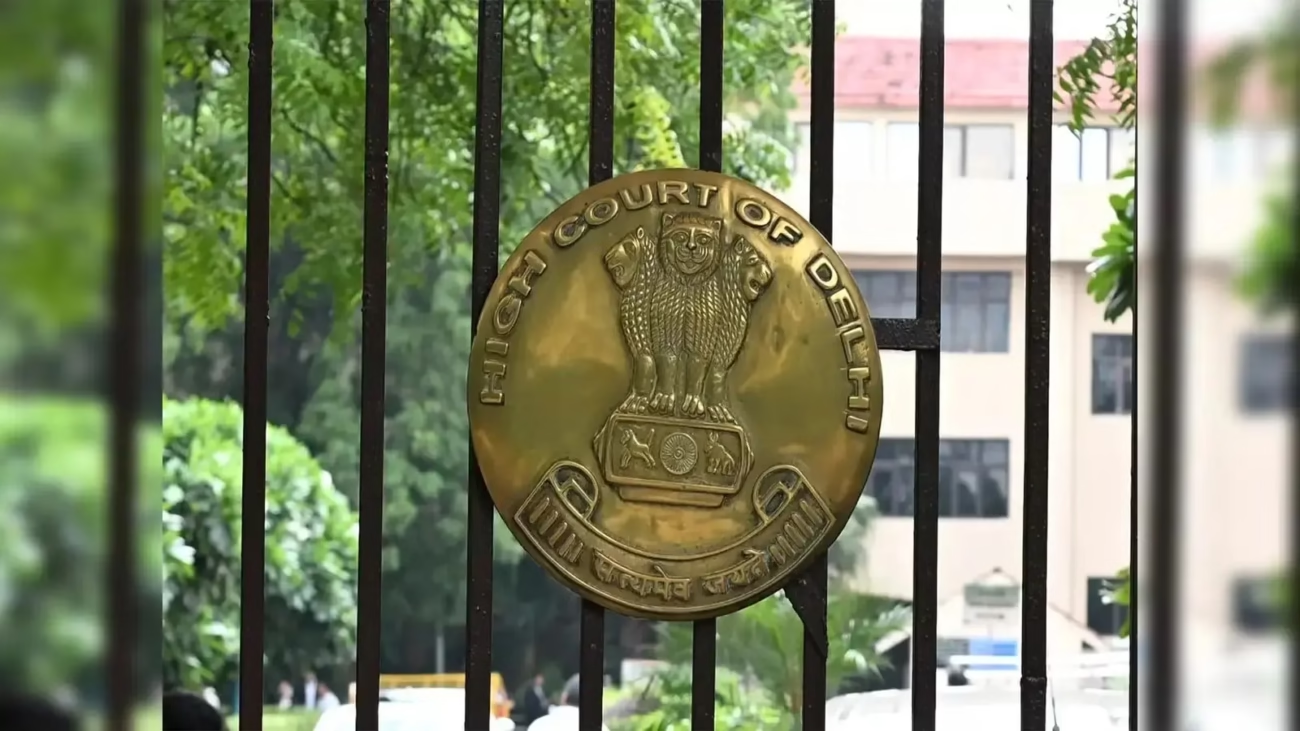
In a first-of-its-kind initiative aligned with the 8th UN Global Road Safety Week, over 50 judges from South and South-East District Courts in Delhi underwent Basic Trauma Life Support (BTLS) training to enhance emergency response capabilities


In a first-of-its-kind initiative aligned with the 8th UN Global Road Safety Week, over 50 judges from South and South-East District Courts in Delhi underwent Basic Trauma Life Support (BTLS) training to enhance emergency response capabilities at road crash scenes.
Organised by SaveLIFE Foundation under its ‘Jeevan Rakshak’ program, and in collaboration with the South District Legal Services Authority (DLSA) and the World Health Organization (WHO), this training is aimed at bridging the critical gap in trauma response by non-medical first responders. It was held at the Saket District Court Complex in Delhi on Saturday (17 May).
The training was also
India sees around 1.72 lakh road crash deaths every year. In most road crashes, bystanders and police personnel are often the first ones to arrive at the scene. From calling emergency services to providing basic care, active bystander intervention can markedly reduce fatalities or bring down the chances of a victim’s condition to worsen. Research has shown that timely and appropriate first response during the critical “Golden Hour” can reduce mortality by as much as 30%.
While PCR units are often the first on the scene, judicial officers also play a key role in the legal outcomes of such incidents. Yet, formal training in trauma response has remained limited for both groups.
Ms Shail Jain, Honorable District and Sessions Judge, South District said, “This training marks a meaningful step toward enhancing the responsiveness and empathy of the justice system. By learning life-saving trauma response skills, judicial officers are better equipped to understand the realities on the ground and support the broader goal of saving lives.”
As part of the training, judicial officers were equipped with essential life-saving skills, including cardiopulmonary resuscitation (CPR), bleeding control, and cervical spine (C-spine) immobilisation. The session also covered a range of critical first response techniques, such as rapid recognition of medical emergencies, initial victim assessment and interaction, scene safety management, and airway management.
“Strengthening first response capacity across all sectors is essential to reducing preventable deaths and disabilities caused by road traffic injuries. By including judicial officers in this training, we are promoting a multi-sectoral approach to emergency care — one that integrates legal awareness, public health, and life-saving action. WHO is pleased to support SaveLIFE Foundation in this important initiative in line with the objectives of the UN Global Road Safety Week and our broader commitment to safer roads and stronger health systems,” said Dr B Mohammed Asheel.
Participants were also trained in responding to high-risk incidents like choking, while also gaining a clear understanding of the importance of the “Golden Hour” in improving survival outcomes for road crash victims. Additionally, they were briefed on the Good Samaritan Law, its implementation protocols, judicial interpretations and case studies.
Mr Vivek Kumar Agarwal, Secretary, South DLSA, said, “Judicial officers are not just custodians of the law but often find themselves in positions where a basic understanding of emergency response can save lives. We are thankful to SaveLIFE Foundation and WHO for this training that will empower judicial officers with practical skills that complement their legal responsibilities, especially in the context of road safety and the Good Samaritan framework. We are proud to collaborate on this vital initiative and hope it serves as a model for other districts as well.”
Mr Piyush Tewari, Founder and CEO of SaveLIFE Foundation, added, saying, “Every life lost on the road is a tragedy we can often prevent. By joining hands with the judiciary to build trauma response skills, we are uniting two pillars of society—justice and humanity—for a common cause: saving lives.”
So far, SaveLIFE Foundation has trained over 26,000 police personnel and citizen volunteers from states across India. The program has helped the Delhi Police, among others, to improve the quality of emergency response to victims of road crashes and contributed to a 30% reduction in road crash deaths between 2012 and 2017.