
PM Modi’s Vision For Atmanirbhar Bharat in Action: Medicover Hospital Uses India-Made MyClip to Treat High-Risk Heart Patient Without Surgery
Medicover Hospital Performs Navi Mumbai’s First-Ever MyClip Procedure, Saves High-Risk Heart Patient Without Open SurgeryDeemed extremely high risk for repeat open-heart surgery due to weak heart function, the patient was treated using a heart-team approach

Medicover Hospital Performs Navi Mumbai’s First-Ever MyClip Procedure, Saves High-Risk Heart Patient Without Open Surgery
Deemed extremely high risk for repeat open-heart surgery due to weak heart function, the patient was treated using a heart-team approach with angioplasty followed by a minimally invasive MyClip procedure, offering a safer and effective alternative
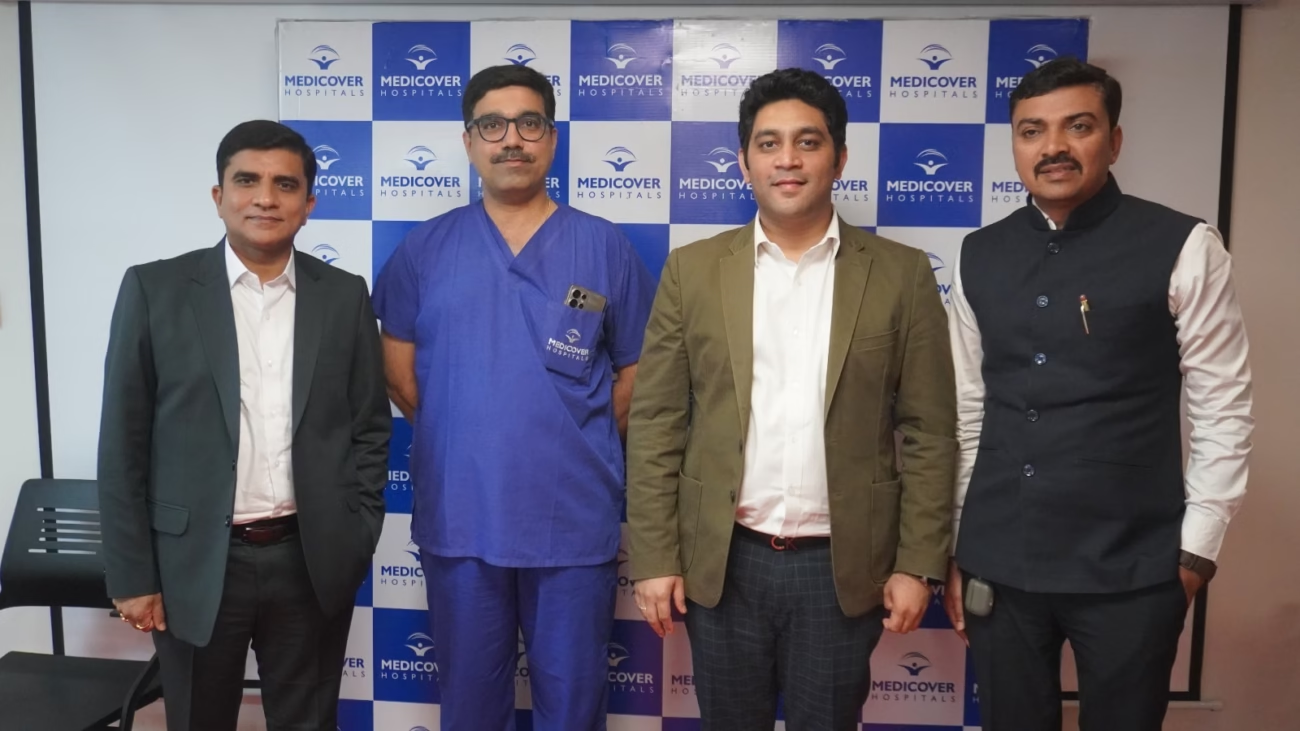
Medicover Hospital has achieved a major milestone in cardiac care by successfully performing the first-ever MyClip (non-surgical transcatheter mitral valve repair) procedure in Navi Mumbai. The complex, life-saving intervention was carried out on a 55-year-old man by a team led by Dr. Anup Mahajani, Senior Consultant Interventional Cardiologist and Valves Expert, helping the patient avoid high-risk repeat open-heart surgery and recover rapidly.
The patient Mr Ashish Gupta (name changed), a resident of Navi Mumbai, arrived at Medicover Hospital in Jan 2026 with persistent chest pain and increasing breathlessness, which were affecting his daily activities. He was diagnosed with severe functional mitral regurgitation, a condition where the heart valve leaks due to weakened heart muscles. Tests showed that his heart’s pumping ability was severely reduced, with a left ventricular ejection fraction of only 25%, placing him at high risk of heart failure. Adding to the complexity of his condition, the patient had undergone coronary artery bypass grafting (CABG) in 2019, making repeat surgical intervention extremely challenging. Further coronary angiography revealed failure of the LIMA–LAD graft, which was contributing to reduced blood supply to the heart muscle. Considering his symptoms and test results, the medical team first performed a successful percutaneous transluminal coronary angioplasty (PTCA) of the native LAD vessel to restore blood flow.
Dr Anup Mahajani, Sr. Interventional Cardiologist and Valves Expert, Medicover Hospital, Navi Mumbai, said,“* This patient had a very weak heart with an ejection fraction of only 25% and severe leakage of the mitral valve, along with a failed bypass graft. Performing a repeat open-heart surgery in such patients carries an extremely high risk, including heart failure, prolonged ventilation, kidney injury, and even death. After detailed discussions within our heart team, we felt that a staged, minimally invasive approach would give him the best chance of survival and recovery. Given the presence of severe mitral valve leakage and the patient’s very high surgical risk due to poor heart function, the team decided to proceed with a non-surgical mitral valve repair using the MyClip device instead of redo CABG and open mitral valve surgery. He was posted immediately for an angioplasty to the LAD and Myclip for severe mitral regurgitation. Due to the severity of the valve leakage, two MyClips were deployed, following which the mitral regurgitation was reduced to less than mild, with excellent valve gradients. Also at the same time, angioplasty to the LAD was done, and a failed bypass graft was taken care of without surgery.
Dr Mahajani further added, “We first restored blood supply to the heart by doing angioplasty to the native LAD artery. Once his coronary circulation was stabilised, we proceeded with transcatheter mitral valve repair using the MyClip device. Since the leakage was severe, two clips were required to achieve optimal results. Procedure time was around 2 hours. Post-procedure, the valve leakage reduced significantly, the pressure across the valve was well within safe limits, and the patient showed immediate clinical improvement. His heart’s pumping capacity improved to 45 percent after one month of follow-up. This case marks the first MyClip procedure ever performed in Navi Mumbai. Such advanced catheter-based therapies are a boon for patients who are not suitable for surgery. The patient made an uneventful recovery and was discharged the very next day. Not treating the patient at the right time could have led to complications like heart failure and eventually death. With the right expertise, infrastructure, and team-based decision-making, we can now offer safer alternatives and quicker recovery to even the sickest heart patients. We are committed to offering state-of-the-art technology, experienced specialists, and comprehensive heart-team–based care aimed at improving patient outcomes and quality of life.”
Expressing his gratitude, the patient Mr Ashish Gupta (name changed), said, “I was very scared when I was told about the seriousness of my heart condition, as I had already undergone bypass surgery in the past. The doctors explained every step clearly and gave me confidence that there was a safer option without open-heart surgery. I am thankful to Dr Anup Mahajani and the entire Medicover Hospital team for giving me a new lease on life and helping me return home so quickly.”
Sandip Joshi, Centre Head, Medicover Hospitals, Navi Mumbai, said, “This landmark procedure highlights our strong commitment to bringing the most advanced and globally accepted cardiac technologies to Navi Mumbai. At Medicover Hospitals, we focus on delivering world-class, patient-centric care through expert clinicians, a collaborative approach, and cutting-edge infrastructure. Our aim is to ensure safer treatment options, faster recovery, and better quality of life for even the most high-risk heart patients.