
Pre-Union Budget 2026–27 Healthcare Industry Expectations & Policy Recommendations
Union Budget 2026–27 Expectations: Voices from Healthcare & Industry

Pre-Budget 2026–27 Dr. Minnie Bodhanwala on Budget FY27 Putting Healthcare at the Centre of Inclusive Growth
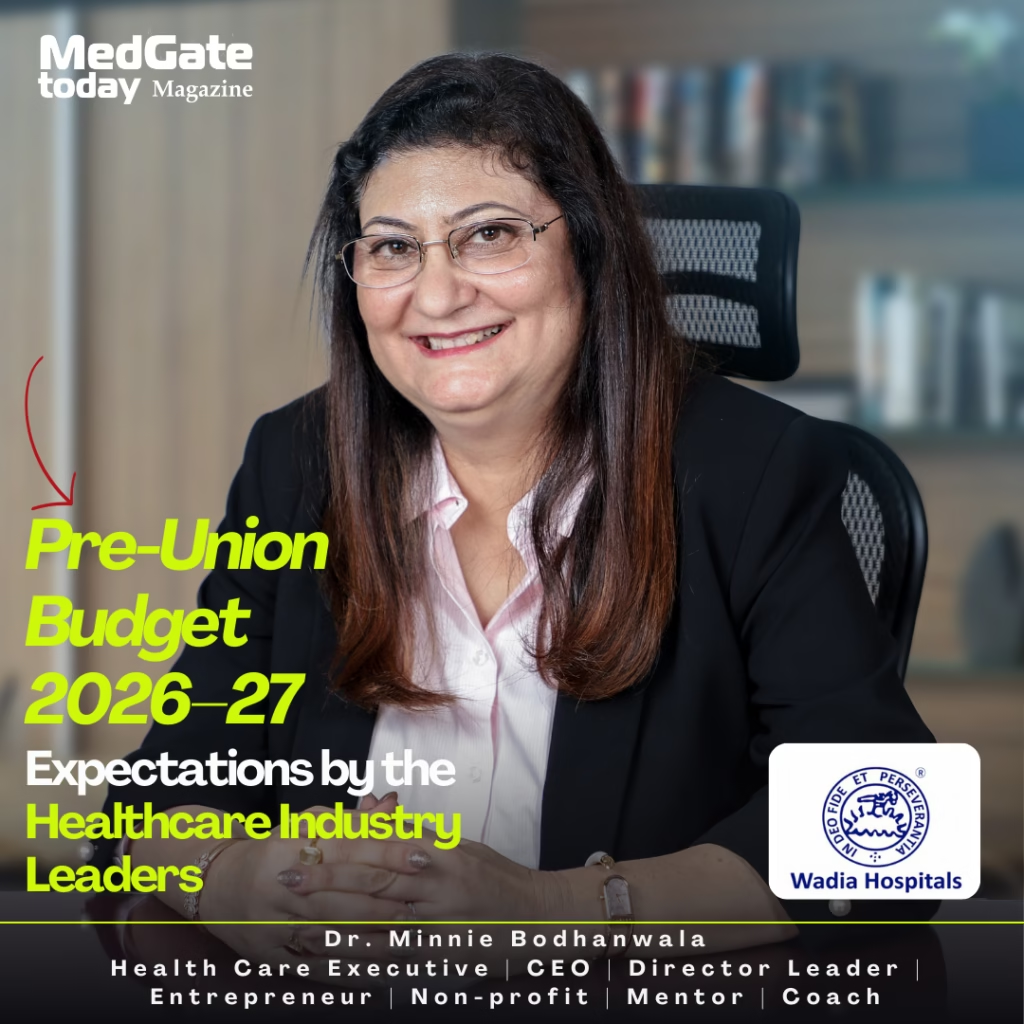
Dr. Minnie Bodhanwala
Health Care Executive | CEO | Director Leader | Entrepreneur | Non-profit | Mentor | Coach
India’s Union Budget FY27 should place healthcare at the centre of inclusive and sustainable growth. Public health expenditure must move decisively toward 2.5% of GDP, in line with the National Health Policy, with a clear multi-year commitment rather than incremental increases.
Priority funding is needed to strengthen primary and secondary healthcare, especially district hospitals, community health centres, and diagnostics in Tier-2, Tier-3, rural, and tribal areas. Capital grants and viability-gap funding can accelerate infrastructure creation outside metros.
The Budget should deepen financial protection by expanding coverage and benefit packages under Ayushman Bharat – Pradhan Mantri Jan Arogya Yojana, while improving cost controls, claim audits, and transparency to reduce out-of-pocket expenditure.
A strong push is required for human resources for health—new medical and nursing colleges, allied health training, rural service incentives, and continuous upskilling to address workforce shortages.
Digital health should receive dedicated allocations to scale Ayushman Bharat Digital Mission, AI-enabled diagnostics, telemedicine, and interoperable health records, improving efficiency and access.
Finally, preventive healthcare deserves sustained funding—non-communicable diseases, mental health, maternal-child health, and climate-linked health risks—shifting India from a treatment-heavy model to a prevention-first system that is equitable, resilient, and future-ready.
Pre-Budget 2026 Rajiv Nath of AiMeD Outlines Policy Priorities for India’s Medical Devices Sector
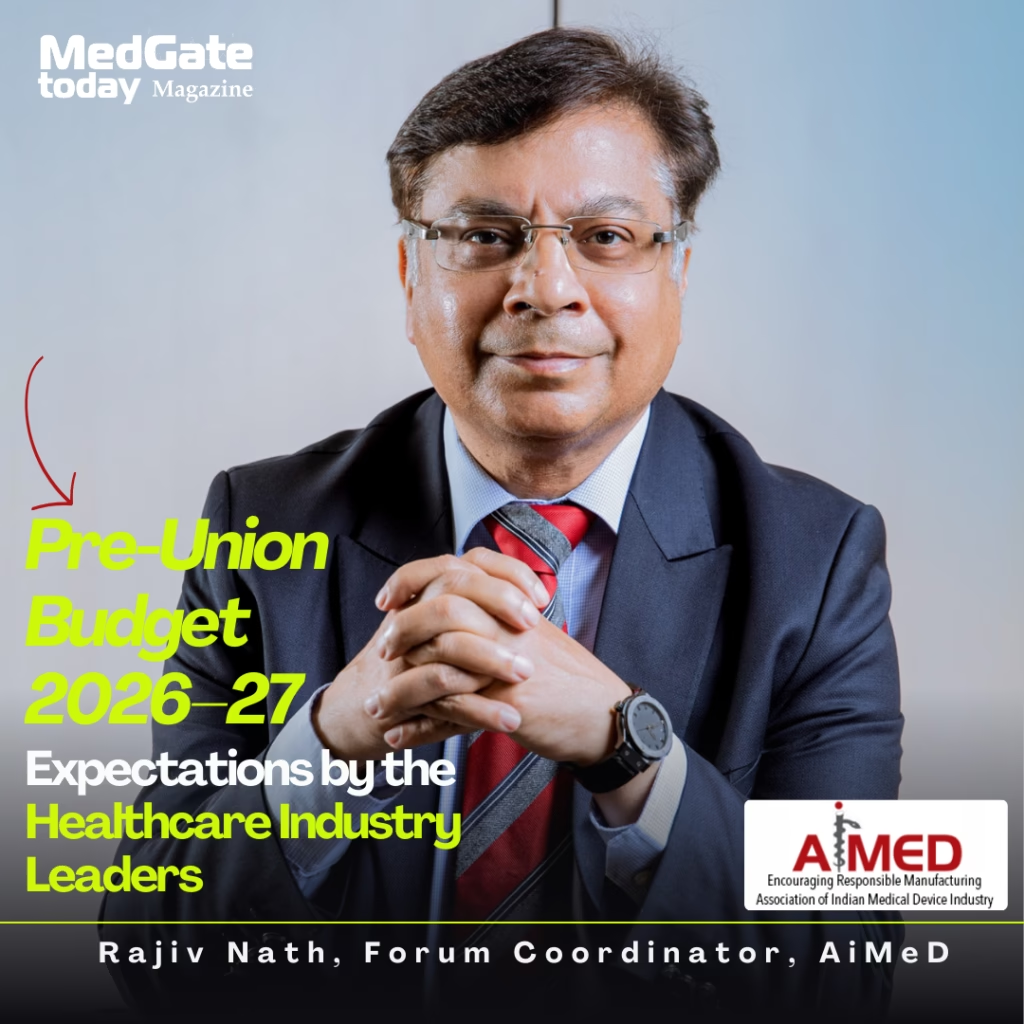
Rajiv Nath, Forum Coordinator, AiMeD
Tariffs for Growth, Labels for Transparency.
“2025 has been a year of steady progress and purposeful engagement for India’s medical devices sector. We commend the Government of India for its continued focus on strengthening the MedTech ecosystem through sustained policy dialogue and the growing recognition of medical devices as a strategic pillar of healthcare delivery and economic resilience. This year witnessed deeper engagement on the Medical Devices Policy 2023, alongside constructive discussions on regulatory predictability, domestic manufacturing capacity, and the urgent need to reduce import dependence in critical device segments.
For Indian manufacturers, particularly MSMEs, 2025 has laid the groundwork for a more balanced and enabling operating environment—one that prioritises quality, affordability, and trust while encouraging innovation and global competitiveness. At AiMeD, our efforts have remained centred on advocating a level playing field, ethical procurement practices, and policy frameworks that support sustainable growth across the value chain.
As we step into 2026, the focus must shift decisively towards consistent policy execution and deeper industry–government collaboration. Key steps include raising tariffs to 10–15% from the current 7.5% to support domestic manufacturing, adopting quality‑based criteria in public procurement with preference for ICMED certification over foreign approvals, updating labelling norms to disclose domestic content percentages, and incentivising suppliers with over 50% local value addition. These reforms, coupled with measures to enhance global competitiveness, can help India translate its capability, capacity, and credibility into lasting outcomes—positioning our nation as a leading global MedTech hub.”
Pre-Budget 2026–27 Perspective Dr. G.S.K. Velu on NCDs, GST Rationalisation, and Healthcare Infrastructure
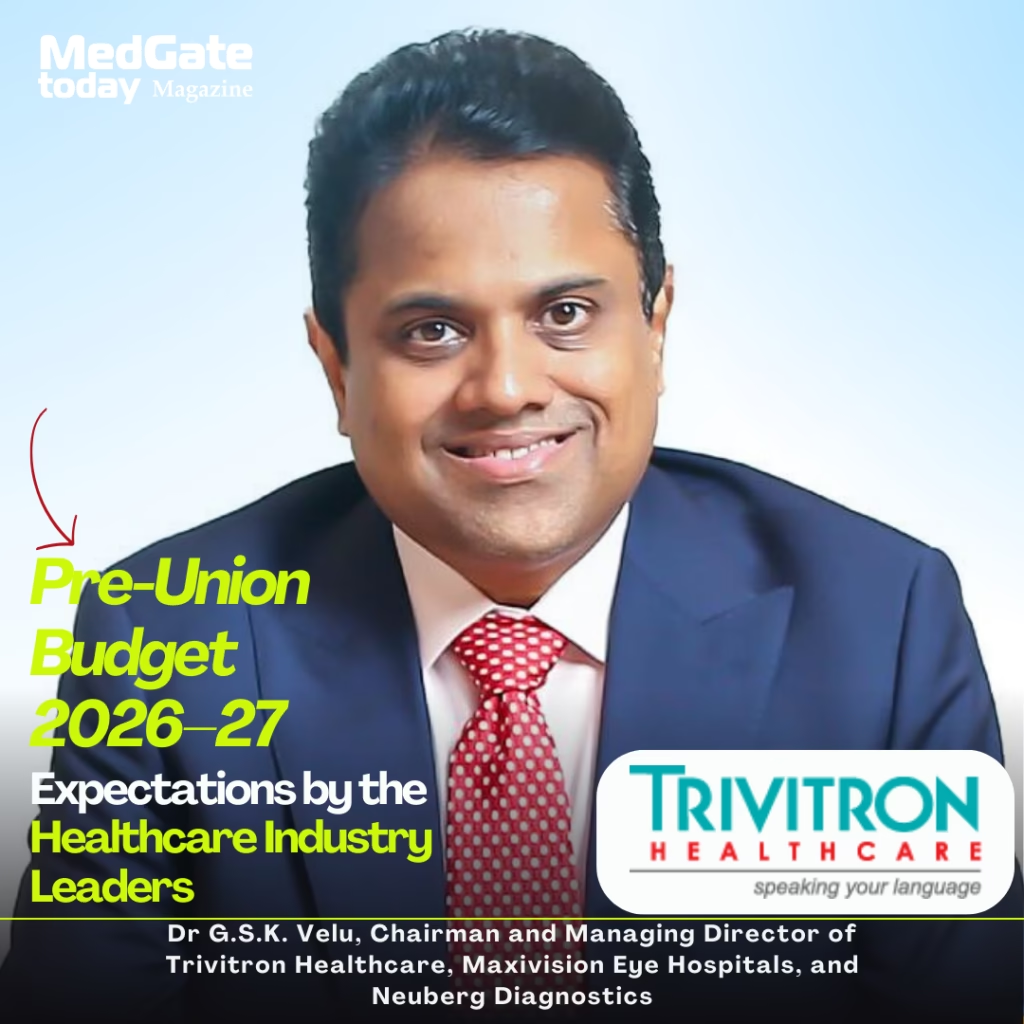
Dr G.S.K. Velu, Chairman and Managing Director of Trivitron Healthcare, Maxivision Eye Hospitals, and Neuberg Diagnostics
“As we approach the Union Budget 2026–27, India stands at a crossroad where execution must take center stage to manage our nation’s soaring Non-Communicable Disease (NCD) burden, which accounts for a mortality rate of ~65%. We urge the government to fulfil the long-standing industry recommendation of raising public health expenditure to over 2.5% of GDP to build a truly resilient and future-ready ecosystem.
Although the radical GST reform in 2025 that reduced taxes on diagnostic kits and medical devices to a mere 5% charge was a historic achievement for health equity, it is now imperative for the coming budget to correct the inverted duty structure, which has been pressurizing domestic manufacturers. There is scope to review and harmonise certain GST rates, like Radiation Protection Apparels being charged at 18% – the same should be brought under 5% GST rate for consistency. I strongly recommend aligning the GST bracket to eliminate the inverted duty structure. Such alignment would reduce operational inefficiencies, streamline compliance, and ensure that the cost savings are passed on to consumers.
We must now ensure self-sufficiency and reduce our massive import dependency of 80% on imported devices by adopting ‘Buy India’ initiatives or boosts in research incentives like the PRIP scheme, to migrate from volume in manufacturing to depth in R&D. At the same time, reduced import duties and GST on essential ophthalmic equipment, will give a boost to preventive eye health, supported by intensive screening programmes and public-private partnerships.
The budget should provide targeted fiscal support for primary and secondary infrastructure in Tier 2 and 3 cities. In order to make affordable healthcare care accessible across Tier 2, Tier 3, and rural India, the budget should incentivise setting up of diagnostic hubs and comprehensive eye hospitals in these underserved regions through priority sector lending and enhanced Gap Viability Funding.
By integrating AI-driven diagnostics and IoT-enabled monitoring, we can transform eyecare from a reactive model to a proactive one, identifying vision impairments decades earlier. By incentivizing the integration of ‘Actionable AI’ and genomic triage into routine diagnostics, the government can help us transition from a reactive service model to a proactive, preventive healthcare system.
Only by combining high-end technology with local manufacturing and strategic infrastructure spending can we ensure that world-class quality healthcare reaches the most remote corners of the country.”
Pre-Budget 2026–27 Union Budget FY27 Expectations Gaurav Agarwal, Innvolution Healthcare, on Scaling ‘Make in India’ MedTech and Boosting Global Competitiveness
Quote | Mr. Gaurav Agarwal, Managing Director, Innvolution Healthcare
India’s medical devices market is approaching USD 19 billion with strong growth momentum, yet nearly 70% of demand continues to be met through imports despite sustained ‘Make in India’ efforts. Public health spending currently stands at around 1.9% of GDP, and the upcoming Budget must move decisively toward the 2.5% target outlined in the National Health Policy to create long-term demand certainty and system-wide impact.
The rollout of PLI 1.0 and PLI 2.0, along with initiatives such as the MAHA MedTech Mission, PRIP schemes, and ANRF-led R&D support, has strengthened India’s MedTech innovation base. The next inflection point must focus on manufacturing scale-up and global competitiveness with the industry looking to PLI 3.0 to support advanced component manufacturing, technology upgradation, and global competitiveness.
As a proud Make in India MedTech company, Innvolution Healthcare urges the Budget to prioritise export-oriented incentives, including concessional long-term financing, enhanced duty drawback and RoDTEP support. In parallel, rational measures such as a 200% increase in Basic Customs Duty on refurbished medical device imports to ensure a level playing field. Together, these steps can reduce import dependence, create high-skill jobs, and help Indian MedTech firms compete globally while delivering affordable, high-quality technologies to patients.
Pre-Budget 2026–27 Union Budget FY27 MTaI Chairman Pavan Choudary Calls for Duty Rationalisation to Make Medical Devices Affordabl
Mr. Pavan Choudary, Chairman, MTaI said, “The upcoming Union Budget presents a vital opportunity to address the high cumulative tax burden (BCD, Health Cess, Surcharge, and GST) on essential medical devices which reaches up to 30% in some segments. This is especially important for products where domestic manufacturing remains limited or absent.
Current tax levels directly inflate the cost of critical care – specifically in surgery, management of NCDs, and diagnostics – pushing families into financial hardship. With rising input costs due to supply-chain disruptions, calibrated duty reductions are no longer a concession, but a public health imperative to ensure affordability.
Aligning MedTech Customs and GST structures with other priority sectors will expand healthcare access, improve patient outcomes, and foster a more resilient, globally competitive ecosystem”, he further adds.
Pre-Budget 2026–27 Union Budget 2026 Expectations: Jatin Mahajan, ADMI, Calls for Regulatory Reform, Export Push, and Preventive Diagnostics
Jatin Mahajan
President – Association of Diagnostics Manufacturers of India (ADMI)
India stands at a critical point in its healthcare manufacturing journey. Over the last few years, the Government has laid a strong foundation, which includes higher public health spending, a clear push for domestic manufacturing, a focus on preventive healthcare, investments in digital health, and growing support for research and innovation. With health expenditure now close to 2% of the GDP, healthcare is no longer a social expense – it is a national capability.
The IVD and MedTech sector, valued at roughly USD 5–6 billion and growing at 12–15% annually, is central to this transformation. Diagnostics touches nearly every clinical decision, every public health programme, and every preventive strategy. To fully unlock this potential, the Union Budget 2026 must move from indirect support to direct, policy-driven empowerment of this sector.
The most critical reform needed is the creation of a dedicated Medical Devices Regulatory Authority, separate from the pharmaceutical framework. This will drive faster approvals, device-specific standards, and predictable regulatory timelines. This will reduce product approval cycles by 30–40% and directly accelerate innovation and market access.
Exports must become a national priority. Medical device exports currently form only a small fraction of India’s overall export basket. Increasing RoDTEP rates from current sub-1% levels to at least 2–2.5%, supporting global certifications through subsidies, and expanding the role of the Export Promotion Council for Medical Devices can easily double exports within five years.
Technology is the future of diagnostics. Advanced platforms such as molecular diagnostics, AI-driven imaging, and high-end immunoassays require access to global know-how. The Budget should introduce technology transfer incentives, including tax deductions on IPR acquisition, reduced corporate tax for tech-transfer-driven manufacturing, and low-interest credit lines for technology-intensive units.
Preventive healthcare must move from intent to infrastructure. India spends a fraction of what developed economies spend on early screening. Even a modest increase in preventive diagnostics allocation by 20–25% can dramatically reduce long-term treatment costs for cancer, diabetes, cardiac, and infectious diseases. Tax benefits for annual health check-ups under Section 80D, subsidised community screenings, and diagnostics-led public health programmes will shift India from reactive care to proactive health management.
Equally important is human capital. With over 50,000 Atal Tinkering Labs, expanded capacity at IITs and IISc, and thousands of new fellowships, the talent pipeline is strengthening. We need to drive targeted skilling through subsidised training for lab technicians, biomedical engineers, and quality specialists to support the rapidly expanding diagnostics ecosystem.
India’s ambition to become a global MedTech manufacturing hub also demands correction of long-standing structural barriers. The inverted duty structure on raw materials and components raises domestic production costs by 5–8% compared to imports. Correcting this, alongside rationalising GST to the lowest slab for essential diagnostics, will make Indian products more affordable and globally competitive.
Union Budget 2026 can transform diagnostics from a supporting function into a national growth engine. With regulatory clarity, export competitiveness, technology-led manufacturing, and preventive healthcare at its core, India can build not just a self-reliant MedTech industry but a global diagnostics powerhouse that delivers health, resilience, and economic strength for decades to come.
Pre-Budget 2026–27 Union Budget 2026–27 Expectations: Dr. Vivek Desai of HOSMAC on Healthcare as Nation-Building, GST Reform, and Inclusive Expansion
Dr Vivek Desai – Founder & Managing Director, HOSMAC
As India prepares for the upcoming Union Budget 2026-27, healthcare must be viewed as a long-term nation-building priority rather than a short-term expenditure. We hope to see a meaningful increase in budgetary allocation to healthcare, alongside GST simplification for providers who currently face structural challenges due to limited input tax set-off. Incentivising Make-in-India MedTech will be crucial to reduce import dependence and build a resilient domestic healthcare manufacturing ecosystem. Additionally, expanding skill development in nursing and paramedical education is important to address workforce shortages and improve quality of care delivery across the country. Enabling longer-tenure financing with flexible repayment structures will help hospitals invest sustainably in infrastructure, technology, and capacity expansion. Equally important is targeted support for hospital development in semi-urban and rural India through VGF funding. We are expecting greater allocation for digital health and AI-led telemedicine to improve outreach. A sharper focus on geriatric care is also needed as India’s demographic profile evolves. Expanding Ayushman Bharat to include the middle class would be a transformative step in making quality healthcare more accessible and financially secure for a wider population.
Pre-Budget 2026–27 Union Budget Expectations: Murali Malayappan of Shriram Properties Calls for GST Relief and Stamp Duty Reform to Restore Housing Affordability
Murali Malayappan
“With the Union Budget approaching, it is important for the government to place affordability at the core of its housing agenda. Currently, the affordable and mid-market segments that are the backbone of the residential real estate industry are increasingly moving out of reach for the common man leading to considerable societal imbalance. Strategic measures such as removing GST, restoring input tax credits, and eliminating stamp duty could lower apartment costs by up to ₹1,000 per sqft. The government can also look at stronger incentives for rental housing to address the impending housing crisis. Additionally, we urge the government to reinstate input tax credits so developers can pass on the benefits directly to home buyers. We also request the central government to impress on the States to implement a uniform stamp duty structure across the country. In addition to this, a streamlined single-window approval process would further accelerate project timelines and reduce inefficiencies. By incorporating these measures, the government will not only fulfil the aspirations of millions of homebuyers but also earn significant revenue through a broadened taxpayer base. We eagerly look forward to an optimistic policy regime, which would include a positive sentiment among buyers through favourable taxation and infrastructure development in key cities.”
Pre-Budget 2026–27 Union Budget 2026–27 Expectations: Divya Balaji Kamekar of Pinky Promise Calls for Stronger Focus on Women’s Health and Femtech Innovation
Divya Balaji Kamekar, CEO & Co-founder, Pinky Promise.
“The upcoming Budget is a critical opportunity to prioritise women’s health – an area with enormous impact on families, workforce participation, and national productivity. By supporting indigenous AI-driven diagnostics and scalable digital health platforms tailored to women’s health needs and designed to complement the clinical workforce, the government can unlock faster and more equitable access to care. Policy clarity, targeted incentives, and easier access to capital for women-led enterprises can further strengthen India’s femtech ecosystem and accelerate solutions built specifically for women. These investments will deliver healthier communities and sustained, inclusive economic growth.”
Pre-Budget 2026–27 Union Budget 2026–27 Expectations: Bakul Chandra Calls for Structural Healthcare Reforms and Reliable Last-Mile Delivery
Bakul Chandra – Architectural Design Strategist | Mentor | Founding Partner, Renascent Consultants
Union Budget 2026–27 is expected to prioritise quiet, structural fixes over headline-grabbing announcements. Key expectations include a clear roadmap to higher public spending on health, with emphasis on primary services and last-mile delivery. Cost-of-living relief through tax rationalisation on healthcare, insurance, and essentials remains critical. Strengthening Ayushman Bharat with realistic reimbursements and faster claims is essential to reduce household financial stress. Jobs linked to skills, functional infrastructure, and practical digital governance round out expectations—focused less on scale, more on reliability and outcomes.
Pre-Budget 2026–27 Union Budget 2026–27 Expectations: Dr. Saarthak Bakshi of RISAA IVF on Affordable, Preventive, and Tech-Enabled Healthcare
Dr. Saarthak Bakshi – Founder and CEO, RISAA IVF
My top expectations from the Union Budget 2026–27 for the healthcare sector centre on strengthening access, affordability, innovation, and preventive care — with a special focus on outcomes that matter for every family. First, I expect a substantial increase in public healthcare spending, moving India closer to the National Health Policy target of at least 2.5 % of GDP. Public investment must rise meaningfully to reduce out-of-pocket expenditure and expand facilities such as primary care centres, diagnostics, and specialist services outside metro hubs. Affordability must be a cornerstone of the next budget — through targeted tax relief on health insurance premiums, rationalisation of GST on medical devices and consumables, and tax deductions for preventive health check-ups linked to the Ayushman Bharat Digital Mission. This will make care more inclusive and help catch diseases early. I also urge enhanced funding for digital health and AI-enabled diagnostics, building on India’s digital health footprint under the ABDM. Investments in telemedicine, interoperable health records, and “hospital-at-home” models can dramatically improve rural and remote access. Workforce and infrastructure development — including new medical and nursing seats and support for Tier 2 and Tier 3 city clinics — remains critical to meet rising demand. Innovations in care delivery, allied health training and preventive services will shape India’s healthcare future. Finally, focused support for preventive care and reproductive health services — including fertility awareness, maternal care and early screening programmes — will not only reduce long-term costs but also strengthen outcomes for families nationwide. In essence, the Budget should build a future-ready, equitable healthcare ecosystem that blends human-centric care with technology-driven innovation.
Pre-Budget 2026–27 Union Budget 2026–27 Expectations: Dr. Shafiq A M of TriLife Hospital on Strengthening Care Delivery, Affordability, and Efficiency
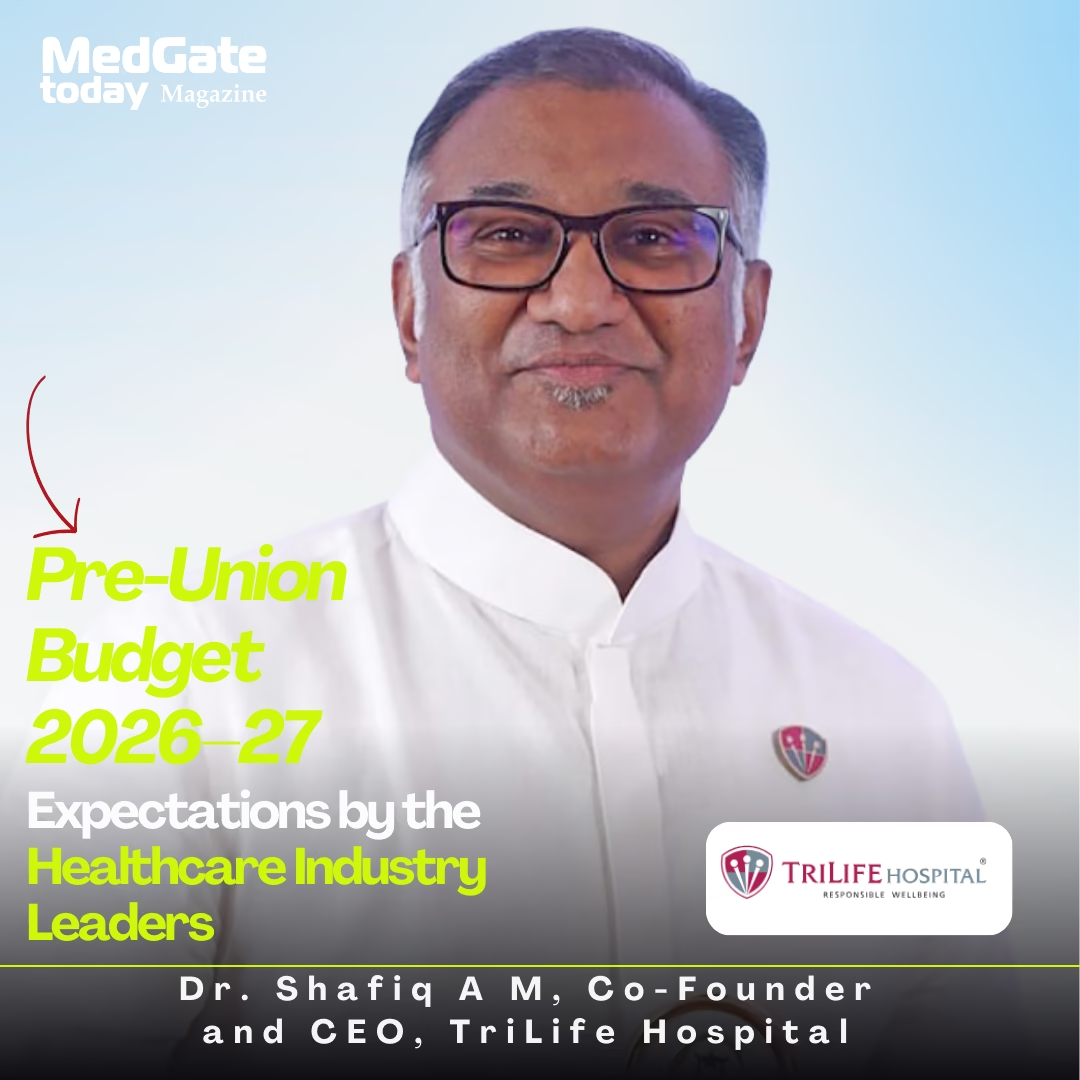
Dr. Shafiq A M, Co-Founder and CEO, TriLife Hospital
“While the Govt has made considerable strides in firming up the healthcare industry, the real opportunity for this year’s union budget lies in shifting the healthcare conversation from expansion alone to intelligent strengthening of care delivery. While increased public spending is important, equal focus must be placed on how efficiently healthcare reaches patients across the length and breadth of the country. This can be achieved by incentivising small and mid-sized hospitals, particularly in urban peripheries and tier-2 cities, which would significantly ease the burden on overstretched tertiary care centres while improving access and patient outcomes. Alongside affordable pricing, faster regulatory clearances and stronger policy support for domestically manufactured medical technology will enable hospitals to deliver advanced care without increasing costs for patients. Overall, a budget that prioritises operational efficiency, affordability and technology will not only improve patient trust but also create a sustainable healthcare ecosystem capable of meeting India’s growing clinical demands.”
Pre-Budget 2026–27 Union Budget 2026 Expectations Rajagopal G of Lifebridge Calls for Integrated Policy Framework for Senior Care and Senior Living
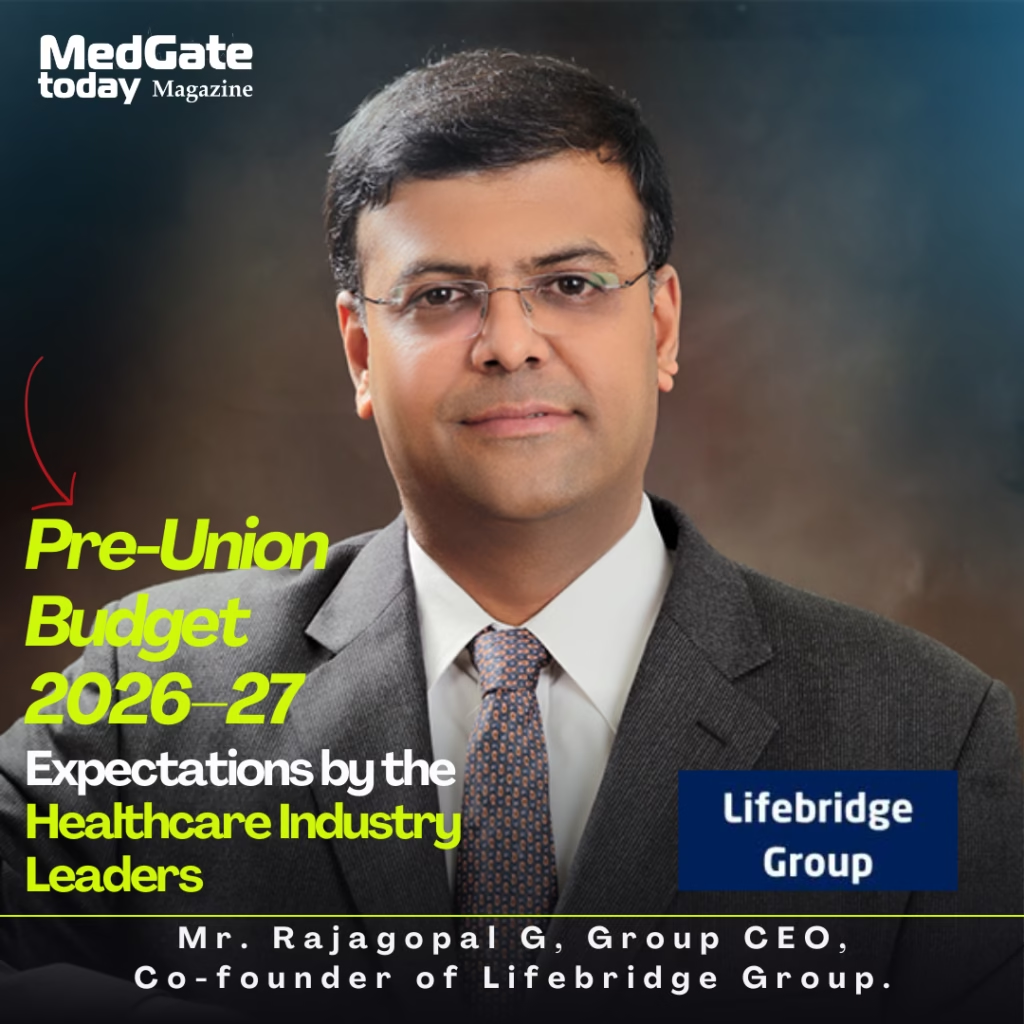
Mr. Rajagopal G, Group CEO, Co-founder of Lifebridge Group.
“India’s senior care ecosystem urgently needs an integrated policy framework that brings together healthcare, housing, financial security, and workforce development. Today, senior living and assisted care operate in silos, and are often governed by regulatory frameworks designed for hospitals or conventional real estate, rather than the continuum-of-care they actually provide,
leading to regulatory uncertainty, higher costs, and uneven quality of care. Budget 2026 is a crucial opportunity to formally recognise senior care and senior living as a distinct and essential sector, enabling fit-for-purpose governance and long-term planning.”
“By supporting this integration through clear national classification, outcome-based standards, rational GST treatment, access to long-term financing, and dedicated skill development for caregivers, the Budget can significantly improve affordability and quality of care for seniors. A cohesive senior ecosystem will not only reduce the burden on families but also create a sustainable, investable framework that prepares India for its rapidly ageing population.”
Pre-Budget 2026–27 Union Budget 2026–27: Key Direct and Indirect Tax Reforms to Reduce Litigation and Improve Ease of Doing Business
Direct Tax
Reduce pendency before CIT(A) and allow refund of taxes collected during pendency of appeal
Impact: – Reduction of pendency before CIT(A) is critical to success of new Faceless Appeal system, alleviate hardships faced by taxpayers by way of demands & blockage of refunds
Rationalise provisions to facilitate obtaining full stay of demand during pendency of appeals
Impact: – Rationalising stay of demand provisions will unlock amounts locked up in litigation, ease working capital blockage for taxpayers without adversely impacting Revenue’s interests
Provide tax neutrality for fast-track demergers
(S.2(19AA) of ITA 1961 & s.2(35) of ITA 2025)
Impact: Providing clarity on tax neutrality of fast-track demergers will facilitate demergers in small size companies and intra-group restructuring in a smaller time frame, relieve burden on NCLT for processing such applications and thereby improve “ease of doing business” without adversely impacting Revenue’s interests
Simplify compliance with respect to TDS
Impact: Simplification of the TDS rate structure will considerably ease the compliance burden on the taxpayers and avoid litigation due to characterisation disputes.
Clarify non-trigger of business connection for Non-residents on storage of components or raw material storage in India for just-in-time supply to Indian contract/ deployment of free of cost asset or equipment in India
Impact: Exempting storage of components and equipment from creating a business connection would enable Foreign OEMs to deploy advanced machinery and efficient supply chains in India.
This would strengthen Indian contract manufacturing, improve competitiveness.
Clarify non-trigger of business connection for Non-residents on storage of components or
raw material storage in India for just-in-time supply to Indian contract/ deployment of free
of cost asset or equipment in India
Impact: Exempting storage of components and equipment from creating a business
connection would enable Foreign OEMs to deploy advanced machinery and efficient supply
chains in India.
This would strengthen Indian contract manufacturing, improve competitiveness.
Restore Associated Enterprise (AE) definition in new Act as per old Act
(S. 92A of ITA 1961; S 162 of ITA 2025)
Impact: – Restoring AE definition in the new Act as per definition in the existing Act will preserve continuity of tax policy as recommended by Select Committee; provide certainty on TP compliance for taxpayers and avoid unwarranted litigation on coverage of AEs
Treat taxation of share buybacks at par with taxation of capital reduction at least for buybacks made out of share premium or fresh issue of shares
(Section 2(22)(f) of ITA 1961 and s.2(40)(f) of ITA 2025)
Impact: – Rationalisation of provisions of buy-back as deemed dividend would remove anomalies and bring fairness
Indirect Tax
Constitute more offices of the Customs Authority for Advance Rulings (AAR)
Impact: Expanding Customs AAR offices and allowing self-declared extensions would enhance trade certainty and reduce compliance burden and lower litigation on customs matters.
Allow benefit of AEO certification to newly incorporated companies of AEO accredited groups
Impact: Granting AEO status to new or restructured group companies would cut compliance delays, enhance trade facilitation and enable Customs officials to focus on high-risk taxpayers.
Pre-Budget 2026–27 Union Budget 2026 Expectations: Dr. Puneet Khanduja Calls for a Shift from Healthcare Spending to Health Systems Building
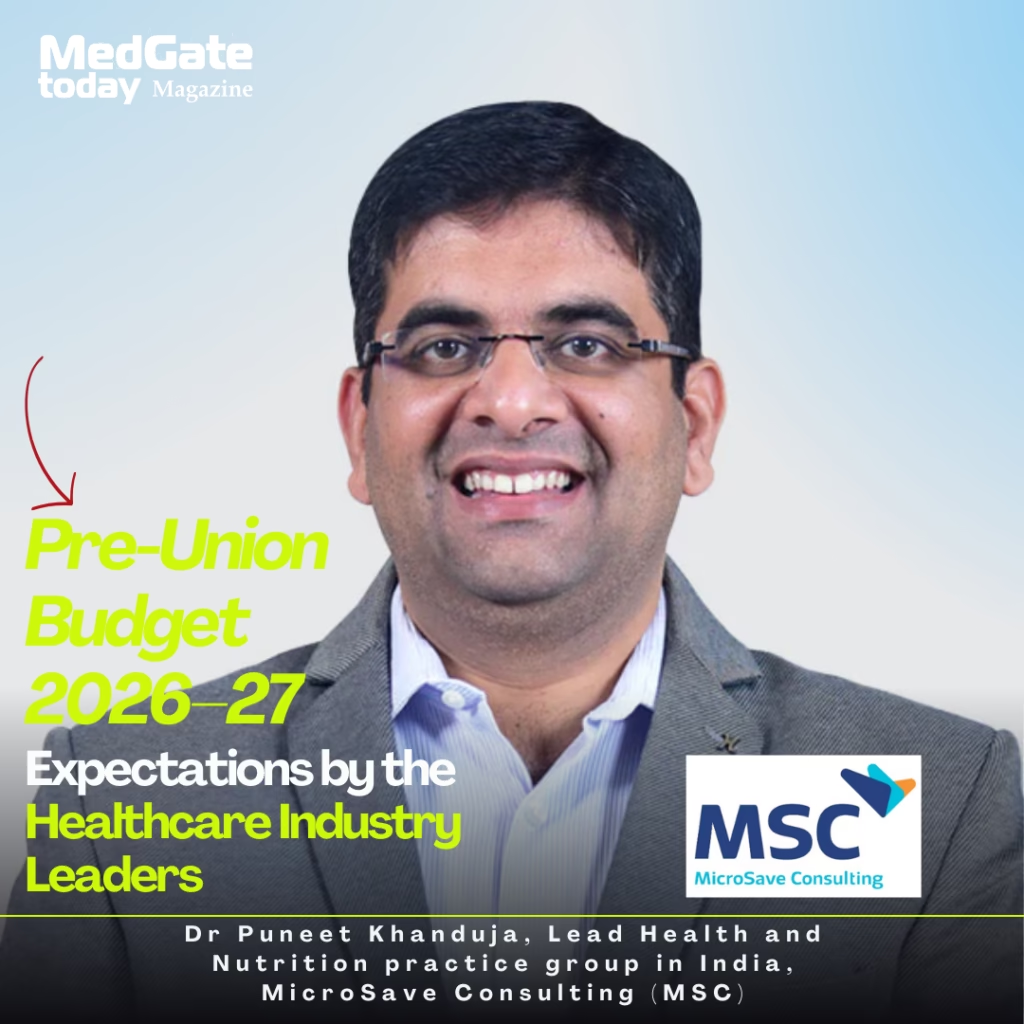
Dr Puneet Khanduja, Lead Health and Nutrition practice group in India, MicroSave Consulting (MSC)
Budget 2026 must be framed as a health systems budget, not a healthcare spending budget. The required shift is from fragmented funding to predictable financing, from service expansion to system resilience, from treatment dominance to prevention and early detection, from technology pilots to national digital infrastructure, and from cost containment to innovation-led competitiveness.
Pre-Budget Union Budget 2026–27: What India’s HealthTech Ecosystem Needs Next
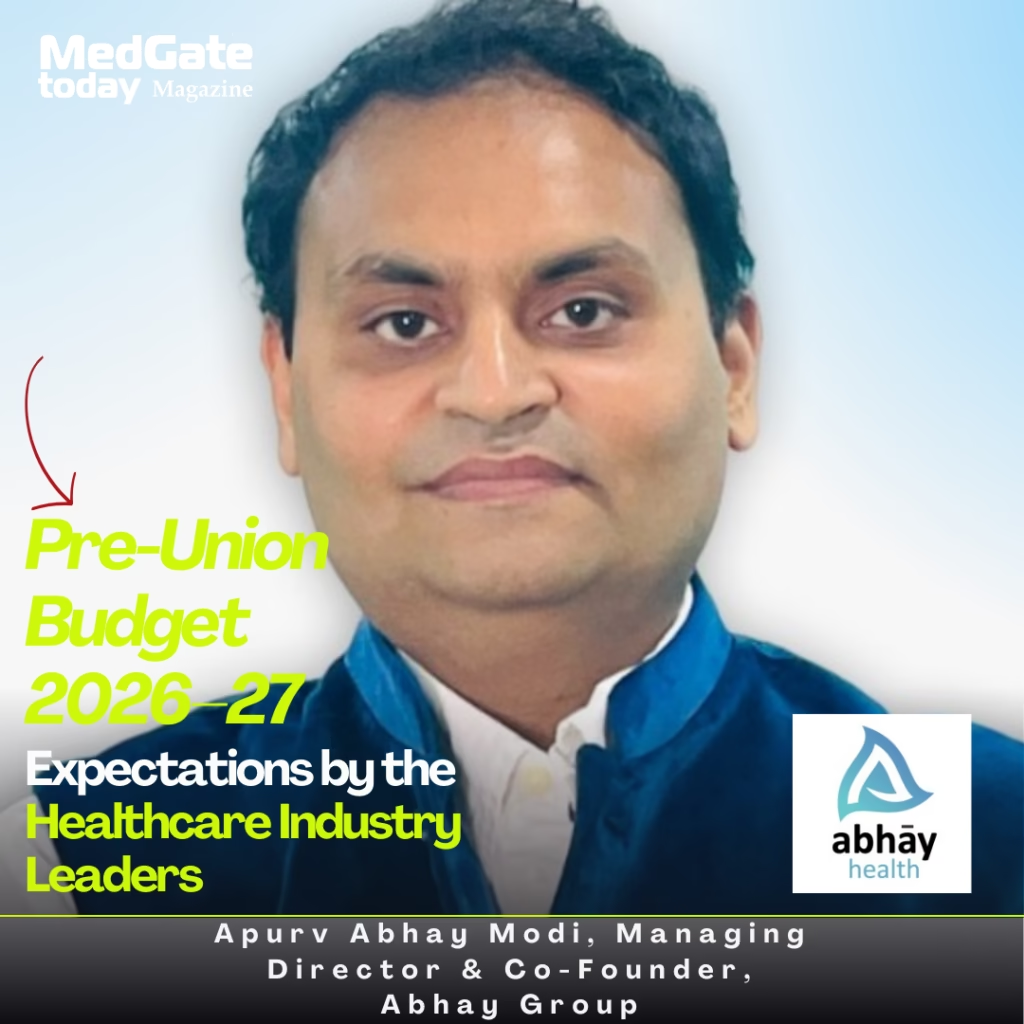
By Apurv Abhay Modi, Managing Director & Co-Founder, Abhay Group
As India prepares for Union Budget 2026–27, healthcare is no longer viewed only as a social obligation but as a key engine of economic growth and national productivity. HealthTech has moved from experimentation to becoming a structural pillar of healthcare delivery — spanning diagnostics, care access, and health data. This Budget presents a rare opportunity to strengthen the foundations of digital healthcare for long-term, sustainable growth.
From Pilots to Platforms
India has seen rapid adoption of teleconsultations, e-pharmacies, at-home diagnostics, and digital health platforms. Yet most of these solutions remain fragmented. The priority now must be to shift from isolated pilot projects to interoperable platforms that can work seamlessly across states, providers, and income groups.
Targeted public investment in broadband connectivity, cloud infrastructure, and last-mile digital access — particularly in Tier 2, Tier 3, and rural India — is essential to ensure that technology not only reaches citizens but meaningfully improves health outcomes.
MSMEs: The Backbone of HealthTech Innovation
MSMEs form the core of India’s HealthTech ecosystem — from manufacturers and diagnostics developers to digital service providers and logistics partners. However, high compliance costs, complex approvals, and delayed payments restrict their ability to scale.
The Budget should prioritize:
- Simplified and predictable compliance
- Faster regulatory approvals for validated technologies
- Access to low-interest working capital
- Clear and uniform GST treatment for digital health services
HealthTech MSMEs are not seeking subsidies, but speed, clarity, and reduced friction.
Digital Public Health and Health Data Infrastructure
India has demonstrated the power of digital public infrastructure. The next phase must focus on building secure and interoperable health data systems. Budget support is needed for:
- National interoperability standards
- Secure health data exchange frameworks
- Incentives for de-identified research data usage
- Strong cybersecurity norms for healthcare platforms
Connected health data can significantly improve early detection, evidence-based policymaking, and population health management.
Skilling: The Human Foundation of Digital Health
Technology alone cannot transform healthcare. The biggest bottleneck is the shortage of professionals skilled in both healthcare and digital systems. The Budget must invest in:
- Dedicated HealthTech skilling programs
- Cross-disciplinary training in healthcare, AI, and data science
- Digital upskilling of frontline health workers
A digitally enabled system will fail without a digitally confident workforce.
Encouraging Innovation While Preserving Trust
Healthcare innovation must move fast, but safely. Regulatory sandboxes, faster pilot approvals, and outcome-based validation frameworks can accelerate innovation without compromising patient safety or public trust. Strong post-market surveillance and quality monitoring remain essential.
Prevention, Sustainability, and Cost Control
Rising healthcare costs make prevention a strategic priority. Incentives for early screening, digital preventive care, and routine health check-ups can significantly reduce long-term public and private healthcare expenditure. Prevention is not only good medicine — it is sound fiscal policy.
Positioning India as a Global HealthTech Hub
With its scale, talent pool, and cost advantage, India is well-positioned to lead globally in HealthTech. What is needed now is a coordinated policy push linking manufacturing, digital platforms, regulatory clarity, and export facilitation. Recognising HealthTech as a strategic sector — similar to fintech or electronics — can help India transition from a service provider to a global innovation hub.
If framed wisely, Union Budget 2026–27 can help build a HealthTech ecosystem that is inclusive, scalable, and globally competitive — strengthening Indian healthcare for the decade ahead.
Pre-Budget Union Budget 2026 Expectations: Rajiv Vasudevan of Apollo AyurVAID Calls for a Dedicated Mission to Build Evidence-Based Ayurveda
Mr. Rajiv Vasudevan, MD, CEO & Founder, Apollo AyurVAID
“Over the last few years, the government has made sustained and visible efforts to build awareness and credibility for the Ayush medical system, both within India and globally. MoAyush’s own research initiatives as well as collaborations with WHO, DBT, ICMR, etc. signal a clear intent to move towards evidence-based integration. However, translating this intent into substantial reality shall require dedicated investment commitments of the order of a minimum of INR 500 cr. per year over the next 5 years whereby robust evidence is built for Ayurveda as treatment of choice for select medical conditions starting with conditions such as Diabetes, Parkinson’s, Osteoarthritis-Knee, Lumbar Spondylosis and Sciatica in addition to gut health, sleep health, etc. This provision should be to set up a separate moonshot mission for evidence building fostering strategic public-private partnerships just as DBT has successfully demonstrated in the biotechnology sector over the last 2 decades. Not only shall this reduce healthcare spends for the Government in the medium term with elective surgery and emergency care reduced/obviated, but it will also be welcomed by society at large.
On the demand side, the Government must make a separate budgetary provision for inclusion of Ayurveda-Ayush in the ABPMJAY program. This is an imperative from the public health perspective so that effective secondary and tertiary prevention is covered and out-of-pocket expenses of the common man, currently at an estimated 48% of total spend, is significantly reduced.
Pre-Budget Union Budget 2026 Expectations: Dr. M.I. Sahadulla Calls for 5% GDP Health Spend, Industry Status, and Inclusive Healthcare Growth
Dr. M.I. Sahadulla, National President, AHPI, and Chairman & Managing Director, KIMSHEALTH
Healthcare spending in India remains significantly lower than in many developing nations. To build a healthier nation and position India as a global leader in healthcare innovation, the combined healthcare expenditure of the Government of India and State Governments must be substantially increased to at least 5% of GDP. We also request the introduction of targeted tax incentives to encourage investments in underserved regions, which will support the development of quality healthcare facilities in Tier 2 and Tier 3 cities.
There should be enhanced budgetary support for oncology research and care, early detection programs, and preventive health initiatives. Similarly, India’s growing elderly population also demands specialised attention, including long-term care and home-based support under the purview of health insurance, to ensure comprehensive and holistic coverage.
While strengthening the ‘Make in India’ initiative for medical devices, it is essential to implement stringent regulations to discourage the use of imported, refurbished medical equipment. Granting ‘Industry Status’ to the healthcare sector will enable easier access to financing and help make private healthcare more affordable for citizens.
The Government should also prioritize incentives to support the adoption of digital health solutions, including EMR systems, AI-driven healthcare innovations, and robust cybersecurity infrastructure. In addition, promoting Public-Private Partnerships, particularly in preventive health areas such as cancer screening and geriatric care, will accelerate nationwide health improvements.
The Government should further encourage sustainability-driven initiatives by offering incentives for solar energy systems, green building standards, and enhanced waste-management solutions.
Pre-Budget Union Budget 2026 Expectations: Nilesh Aggarwal on Making Preventive Health and Medical Education India’s Strategic Exports
Nilesh Aggarwal, Founder Medtalks & CEO IJCP.
India already supplies doctors to the world, but we haven’t positioned ourselves as the global hub for medical education and real-world evidence. The Budget should incentivise India-led research platforms, global CME exports, and international collaborations turning medical knowledge into a strategic export.
India’s biggest economic leakage isn’t subsidies or fuel it’s preventable illness. The Budget should treat preventive health as an economic policy, not a welfare item.
Incentivising early screening, lifestyle interventions, and workplace health will add more productive years to India’s workforce than any short-term stimulus.
Healthcare policy should be designed like risk management, not emergency response. The Budget must shift focus from reacting to disease to reducing long-term health risk through prevention, early action, and continuity of care.
Pre-Budget Union Budget 2026–27 Expectations: Mr. Koji-Wada of FUJIFILM India on Healthcare Innovation, Medical Technology and Responsible AI
Mr. Koji-Wada, Managing Director at FUJIFILM India.
“As India looks ahead to Budget 2026–27, sustained policy continuity and long-term visibility will be important enablers for companies that are committed to building enduring capabilities in the country. Continued emphasis on high-quality manufacturing, technology-led innovation, and skills development can help strengthen India’s industrial depth while supporting stable and inclusive economic growth. Thus, initiatives and budget allocation that support this agenda will be welcomed.
Within this broader landscape, healthcare and medical technology are becoming increasingly central to the country’s development agenda. Investments that encourage innovation in diagnostics, medical imaging, and medical devices can significantly improve system efficiency, enable earlier detection, and support better patient outcomes. Creating stronger linkages between industry, academia, and healthcare institutions will be key to ensuring that innovation translates into scalable, real-world impact.
At the same time, the thoughtful integration of artificial intelligence across healthcare and manufacturing presents an opportunity to enhance precision, productivity, and decision-making. Policy support for digital infrastructure, applied research, and responsible AI governance, alongside workforce readiness, can help ensure that these technologies are adopted in a way that is trusted, sustainable, and aligned with India’s long-term national priorities.”
Pre-Budget Union Budget 2026 Expectations: Dr. Seema Pai, ISCR President, on Strengthening India’s Clinical Research and AI-Enabled Trials
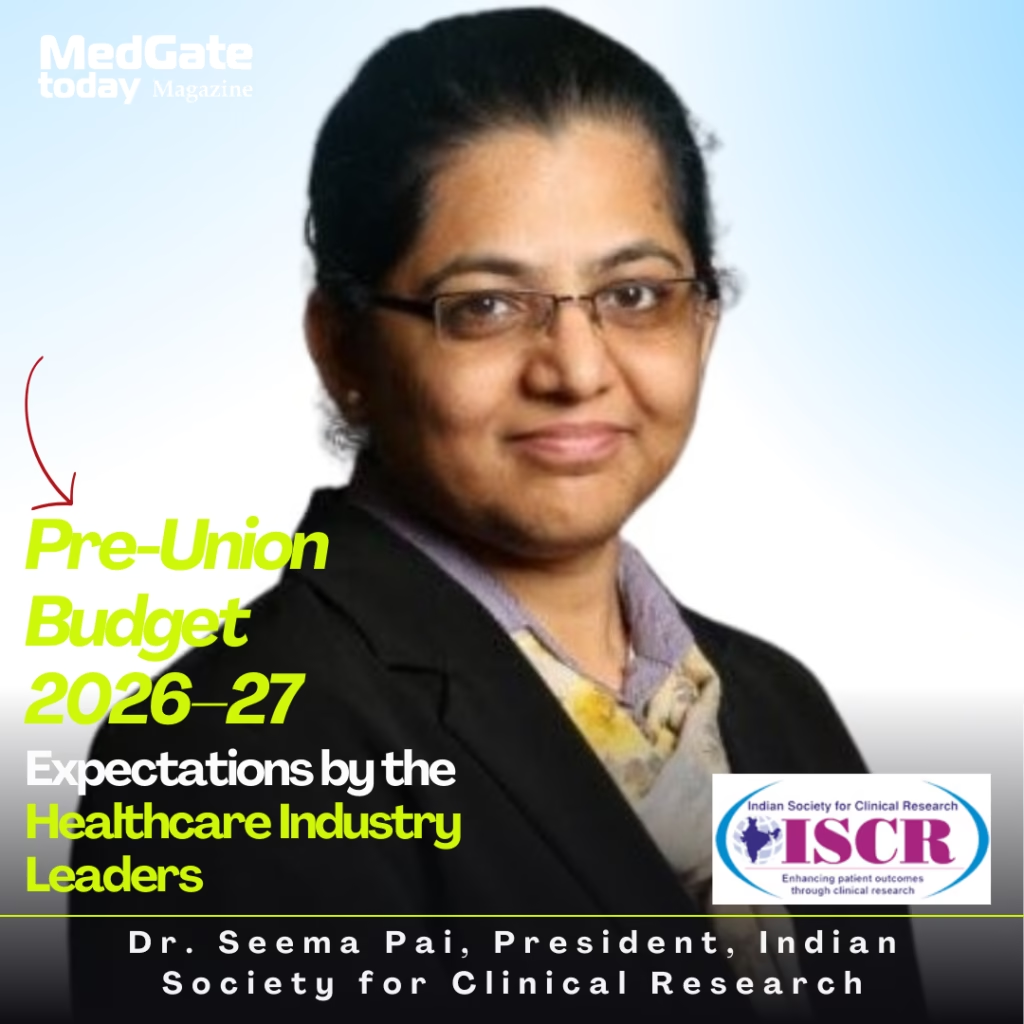
Dr. Seema Pai, President, Indian Society for Clinical Research
As we get closer to the Union Budget 2026, we have a strong opportunity to strengthen the clinical research ecosystem of India by increasing investment in academic research, infrastructure, and skill development. Major support for AI-enabled clinical trial data collection and analysis, digital health tool use and collaboration between academia and industry can help in speeding evidence-based healthcare and enable the industry to achieve the target of reaching USD 120-130 billion by 2030 and ultimately USD 450 billion by 2047. Streamlining regulations and incentives for research-led innovation, operational ease of import for technology used in these clinical trials will strengthen India’s position as a trusted global hub for high-quality, ethical clinical research, while ultimately improving patient outcomes. A key pillar of research is a focus on public-private partnerships among academic institutions, policymakers, and patients. This collaboration should aim to ensure evidence-based data generation, leveraging technology and maintaining a strong emphasis on quality.
Pre-Budget Union Budget 2026–27 Expectations: Mr. Sheetal Arora, CEO of Mankind Pharma, on Boosting R&D, API Self-Reliance and Pharma Exports
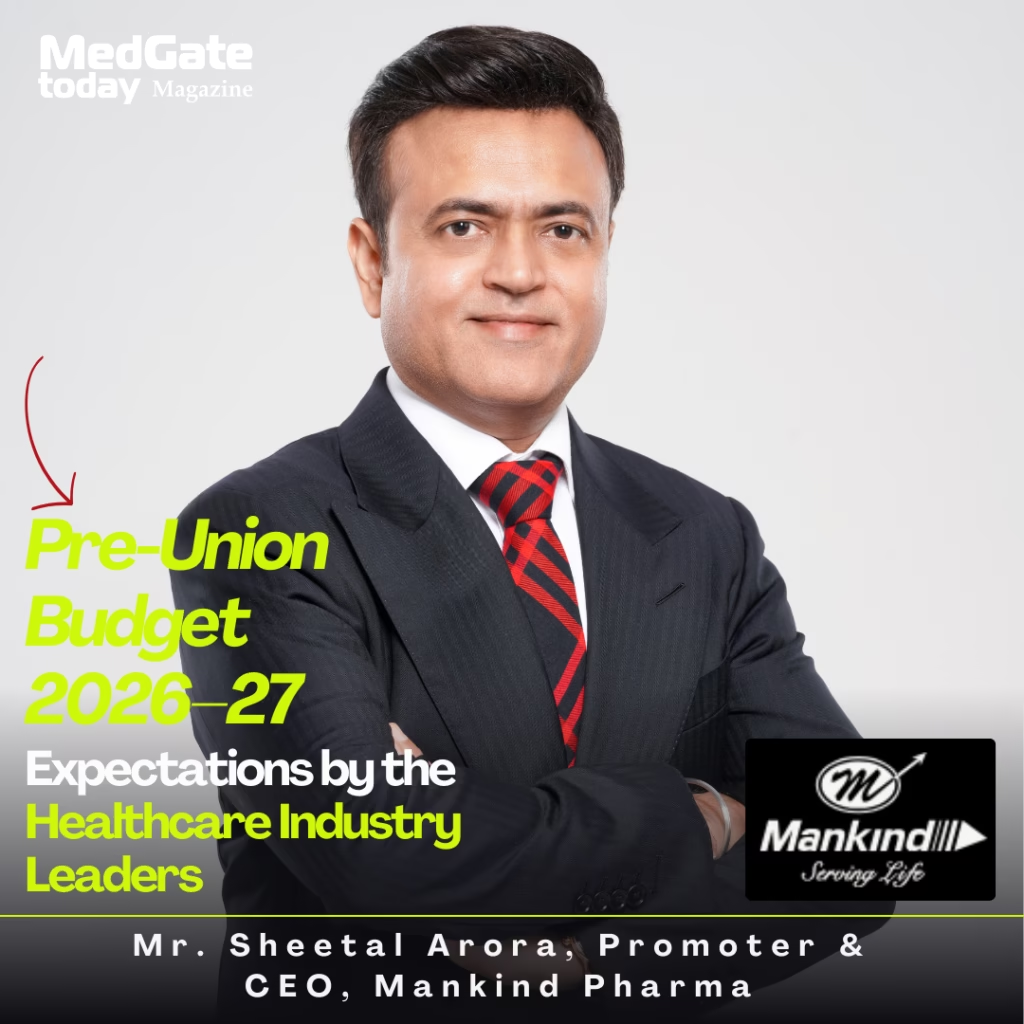
Mr. Sheetal Arora, Promoter & CEO, Mankind Pharma
“As India finalises the Union Budget 2026–27, the pharmaceutical sector stands at a pivotal juncture expanding healthcare access at home while strengthening India’s position as a global supplier of affordable medicines. With pharma exports crossing US$30 billion in FY25 and India contributing nearly 20% of global generic medicine volumes, the industry’s scale and strategic importance are well established.
As government health allocations, digital health initiatives and public healthcare schemes continue to drive demand for affordable therapies, this budget presents a timely opportunity to deepen support through enhanced R&D tax incentives, including the restoration of globally competitive weighted R&D deductions, expanded PLI-style measures and targeted duty rationalisation to strengthen API self-reliance. Building on the GST rationalisation measures introduced in 2025, we also look forward to a stable and predictable GST framework that addresses inverted duty structures, recognises the unavoidable nature of medicine expiry, quality and safety requirements, and enables smoother cost pass-through across the pharma value chain.
Fast-tracking capacity creation for regulated markets such as the US and EU, supported by customs duty rationalisation for advanced manufacturing and quality compliance infrastructure, will further unlock export growth and high-quality employment, while collectively helping secure supply chains, drive innovation and reduce the cost of medicines for millions of patients across India.
Pre-Budget Union Budget 2026–27 Expectations: Mr. Rahul Guha, MD & CEO, on GST Rationalisation, Digital Health and Diagnostics Manufacturing
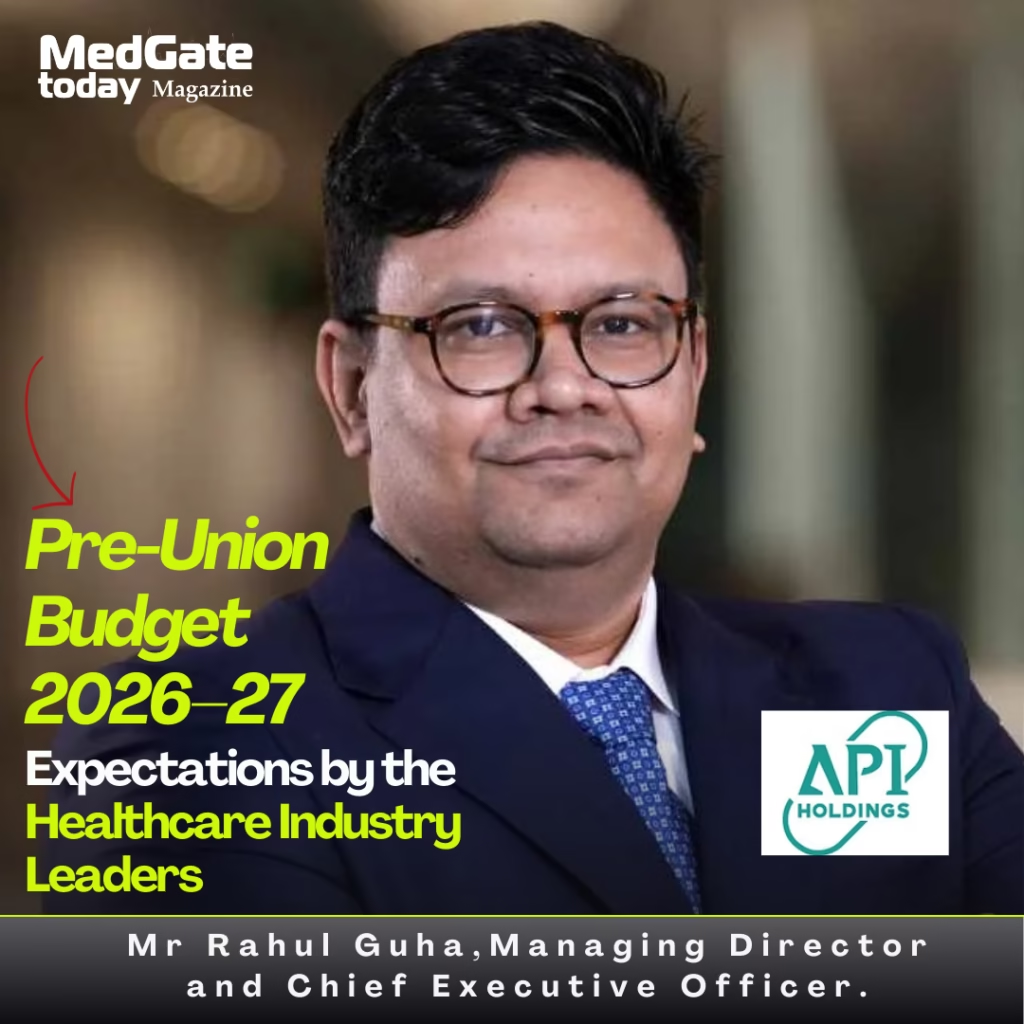
Mr Rahul Guha,Managing Director and Chief Executive Officer.
From API Holdings’ perspective –
“The government’s consistent focus on digital healthcare and startup growth has been instrumental in expanding healthcare access across India. As we approach the budget, we see exciting opportunities to further accelerate this progress.
Addressing the GST rate differential where medicines are taxed at 5% while input services attract 18% GST—would significantly improve working capital efficiency for healthcare companies. This would enable us to maintain affordability while scaling our services to reach more Indians.
As businesses adapt to evolving labour guidelines, thoughtful tax or GST measures could help ensure that compliance costs don’t impact healthcare affordability for end consumers—a shared priority for both industry and government.
We’re encouraged by the government’s continued commitment to the startup ecosystem. Further streamlining the ease of doing business will empower digital health platforms to innovate faster and serve millions more citizens. We look forward to a budget that builds on India’s healthcare transformation journey.”
From Thyrocare’s perspective –
India’s diagnostics sector has seen remarkable growth, supported by progressive government policies. As we look forward to the upcoming budget, we see outstanding opportunities to further strengthen this momentum.
Aligning employee health testing with labour guidelines could be a game-changer for preventive healthcare, benefiting both employers and employees while building a healthier workforce. We also believe that streamlining compliance frameworks across entities would enhance operational efficiency and allow diagnostic players to focus more on innovation and service quality.
Extending Production Linked Incentive schemes to domestic manufacturing of diagnostic essentials—reagents, needles, and vials—would further strengthen the government’s ‘Make in India’ vision. For companies committed to local manufacturing, this support would alleviate import dependency and create a more self-reliant healthcare ecosystem. We remain optimistic that this budget will continue to prioritise healthcare infrastructure, enabling the sector to serve India’s growing healthcare needs more effectively.
Pre-Budget Union Budget 2026–27 Expectations: Saransh Chaudhary of Venus Remedies on R&D Incentives, Antibiotic Innovation and Public Health Resilience
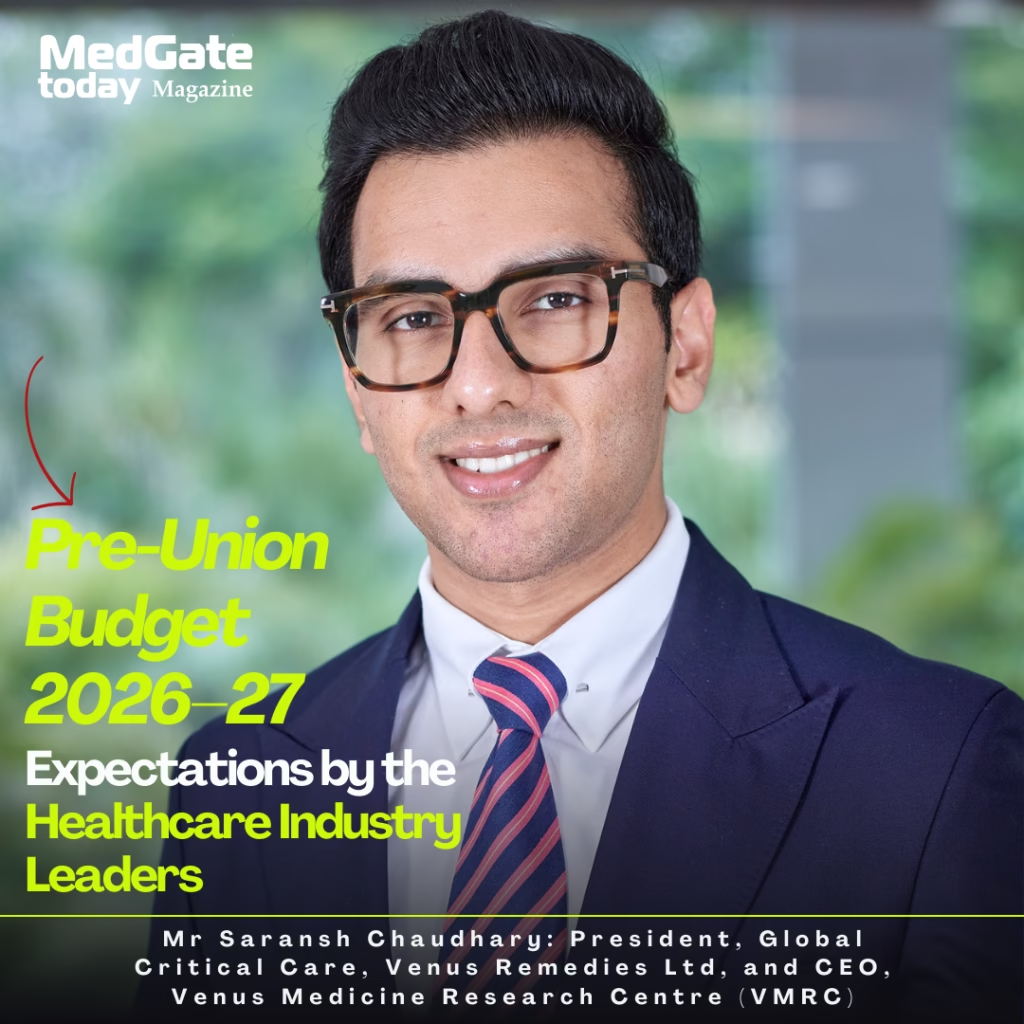
Mr Saransh Chaudhary: President, Global Critical Care, Venus Remedies Ltd, and CEO, Venus Medicine Research Centre (VMRC)
“Recent government initiatives such as the Research, Development and Innovation Scheme and the PRIP programme reflect a strong commitment to strengthening India’s research ecosystem and encouraging private sector investment in innovation. These measures provide an important foundation for shifting the pharmaceutical industry toward innovation-led growth.
To ensure these investments translate into meaningful outcomes, there is a need to further simplify the operating environment. Greater clarity and rationalisation of provisions such as Section 194R, particularly in relation to the treatment of medical samples used for patient care and clinical evaluation, would ease compliance burdens and allow companies to focus more effectively on research and development.
Reinstating a meaningful tax incentive for in-house research by restoring the weighted deduction for research and development expenditure would encourage long-term investment in complex areas such as new antibiotics, rapid diagnostics and infection control technologies. Expanding existing incentive frameworks to include critical anti-infectives, diagnostics and related active pharmaceutical ingredients would strengthen India’s preparedness against drug-resistant infections and reduce import dependence. Together, these steps can support innovation, public health resilience and sustainable industry growth.”
Pre-Budget Union Budget 2026 Expectations: Anant Bengani of Zell Education on Digital Learning, Skilling and India’s Human Capital Transformation
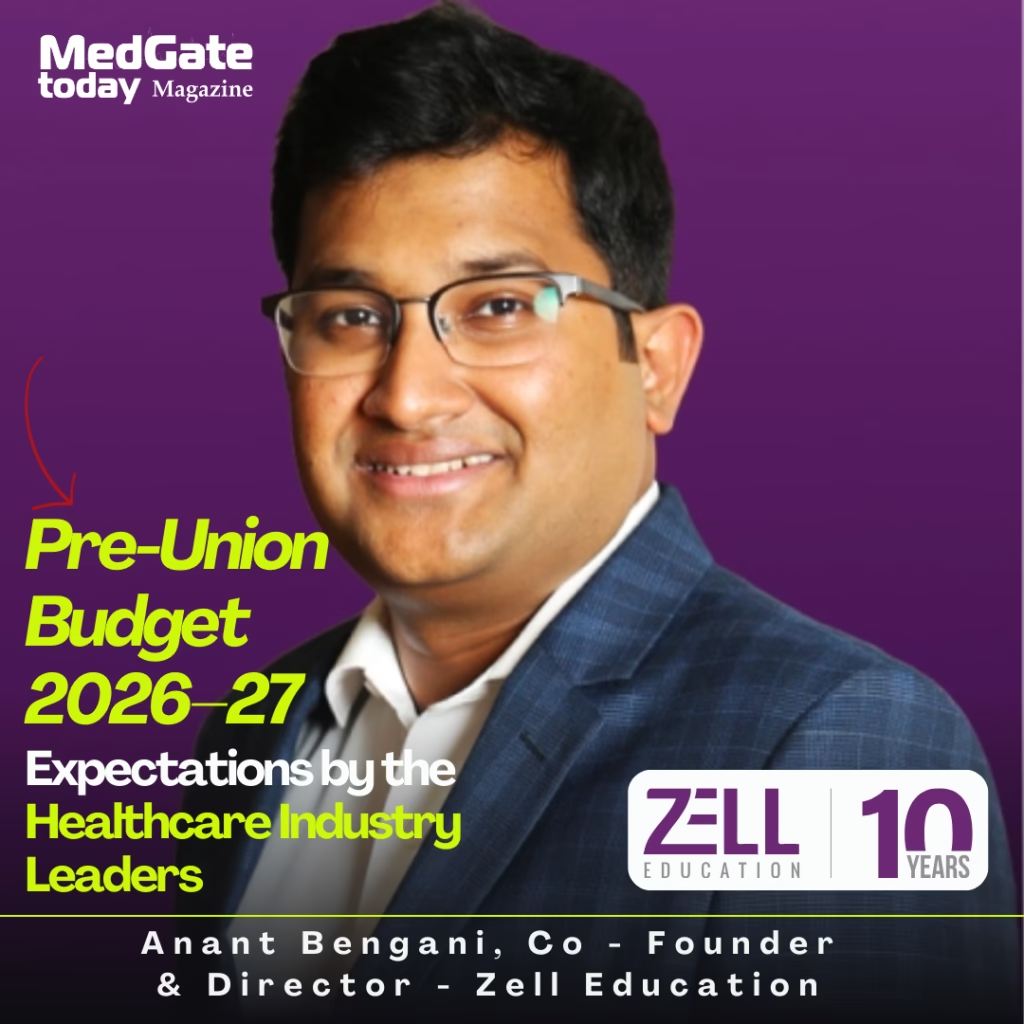
Anant Bengani, Co – Founder & Director – Zell Education
As India charts its path toward a Viksit Bharat, the Union Budget 2026 presents a pivotal moment to accelerate the nation’s human-capital transformation. We expect targeted investments in digital learning infrastructure, inclusive broadband access, and next-generation EdTech platforms to ensure that quality education reaches every learner, whether in metros or rural districts. There should be strong support for skilling and upskilling initiatives aligned with industry needs, particularly in emerging fields like AI, data science, and advanced digital technologies. Strategic budgetary measures that reduce barriers for lifelong learning and foster an industry-ready workforce will be key to bridging the gap between education and employability. By prioritising digital empowerment and skill development, the Budget can unlock equitable opportunities and position India’s youth for success in the global knowledge economy.”-
Pre-Budget Union Budget 2026–27 Expectations: Dr Debraj Shome on GST Rationalisation for Medically Induced Hair Loss in Cancer Care

Dr Debraj Shome, Senior Cosmetic Surgeon, Clinical Scientist and Mentor, QR678® Research Platform.
As India continues to strengthen its commitment to equitable, patient centric healthcare, the Union Budget presents an important opportunity to address a long standing inconsistency in how medically induced conditions are classified and taxed.
While cancer treatments such as chemotherapy, radiation therapy, mastectomy, ovarian surgery, and even post cancer breast reconstruction are rightly treated as essential medical care, one of the most visible and psychologically distressing consequences of these therapies, chemotherapy induced hair loss, continues to be taxed as a cosmetic service.
For women undergoing treatment for breast and ovarian cancers, hair loss is not a matter of appearance or choice. It is an unavoidable, treatment induced condition that significantly impacts mental health, self identity, social participation, and even willingness to continue life saving therapy. International oncology literature clearly demonstrates that untreated alopecia following cancer treatment is associated with depression, anxiety, social withdrawal, and reduced treatment adherence.
From a policy perspective, it is difficult to justify a framework where the disease and its surgical reconstruction are considered medically essential and GST rationalized, while a direct consequence of the same therapy is categorized as elective and taxed. Hair restoration and scalp rehabilitation following chemotherapy or radiation should be recognized as part of the continuum of cancer recovery and rehabilitation, similar to reconstructive procedures already acknowledged within insurance and tax frameworks.
Rationalizing GST on medically indicated hair restoration and reconstructive scalp treatments would not only reduce the financial burden on cancer survivors but also align India’s healthcare taxation policies with global best practices that recognize recovery as both physical and psychological. Such a move would reflect a mature healthcare system that values dignity, quality of life, and long term outcomes, particularly for women navigating survivorship after cancer.”
Pre-Budget Union Budget 2026–27 Expectations : Healthcare Experts, Industry Leaders Push for Boosting Healthcare Delivery, More Investment Ahead of Union Budget 2026–27
New Delhi, January 2026: As preparations for Union Budget 2026–27 gather pace, the healthcare industry leaders and experts have called on the Government of India to significantly scale up public spending on healthcare, citing persistent gaps in infrastructure, workforce availability, and access to affordable care across the country.
In the previous fiscal year, the government allocated approximately ₹99,858.56 crore to the Ministry of Health and Family Welfare, reflecting an 11% increase over the revised ₹89,974.12 crore in FY 2024–25. While the rise was welcomed, the Association of Healthcare Providers – India (AHPI) noted that public health expenditure continues to remain well below the National Health Policy target of 2.5% of GDP, and lags behind benchmarks seen in comparable developing economies.
AHPI highlighted that India’s healthcare system is facing mounting pressure from a dual disease burden—communicable and non-communicable conditions—alongside rising demand for specialty, preventive, and long-term care services. The association stressed that Budget 2026–27 should prioritise strengthening healthcare delivery in rural, semi-urban, and underserved regions to advance the goal of universal health coverage.
According to the National Health Accounts, households continue to bear nearly 48% of healthcare costs out-of-pocket, exposing families to financial vulnerability during medical emergencies. Against this backdrop, AHPI has urged higher public investment to expand medical and nursing education, establish additional training institutions, accelerate adult immunisation programmes, and scale up mental health, geriatric care, emergency services, and telemedicine networks. The association has also reiterated the need to rationalise GST on healthcare services and reform insurance regulations to improve affordability and coverage.
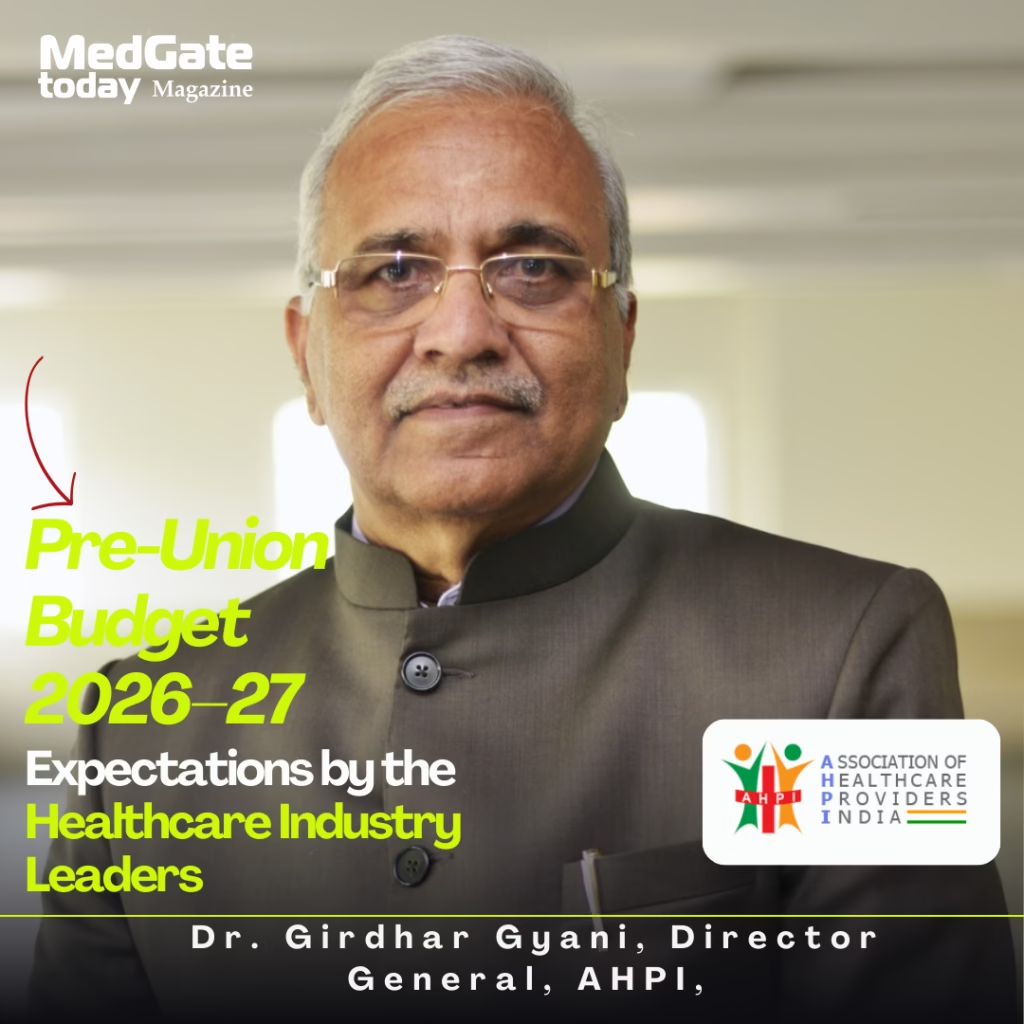
Dr. Girdhar Gyani, Director General, AHPI, stated, “To secure a healthier future for India, it is imperative to invest in robust health systems today. We urge the government to substantially enhance healthcare funding in Budget 2026–27, laying the foundation for world-class and inclusive care for every citizen. Expanding infrastructure, strengthening the workforce, and enabling equitable access to quality services, especially in tier 2 and tier 3 cities, are critical to meet the evolving healthcare needs of the nation.”
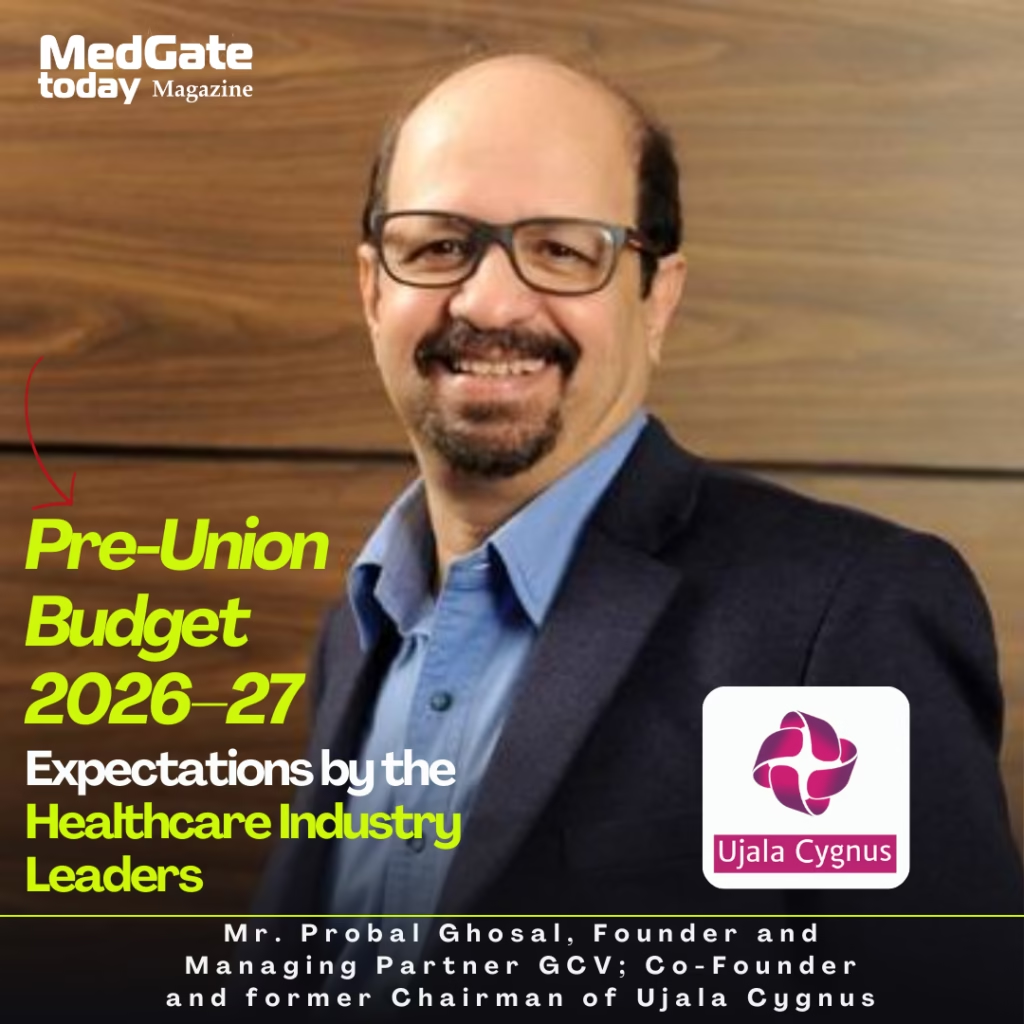
Mr. Probal Ghosal, Founder and Managing Partner GCV; Co-Founder and former Chairman of Ujala Cygnus, said: “The Budget 2026 is poised at an important moment for Healthcare in India. And the key two factors to balance is speed of growth and viable penetration. I look forward to prioritising of sustainable public healthcare schemes – which could encourage ethical providers so that their efforts remain viable and sustainable. Ayushman Bharat requires earnest streamlining of digital processes. It needs the assurance and efficiency that guaranteed, time-bound reimbursements bring by easing working capital pressures, particularly for hospitals in the hinterlands. These are the places where rational package rate revisions are crucial to maintain quality care standards. Unviable reimbursements and arbitrary deductions deter upright providers; they limit patient choice and impede access nationwide.
“One expects the government to envisage a truly integrated digital ecosystem attached Ayushman Bharat Digital Mission in order to enhance data interoperability, tele-health connectivity, and operational efficiency. Such a digital platform would prove particularly useful if it helped connect a hub-and-spoke model, invigorating the workings of thousands of under-utilised and dormant primary health centres. A public-private partnership would go a long way here. Such a robust healthcare allocation paired with fair pricing, prompt payments, and strict oversight against malpractices will rebuild trust and significantly expand quality healthcare access across India.”
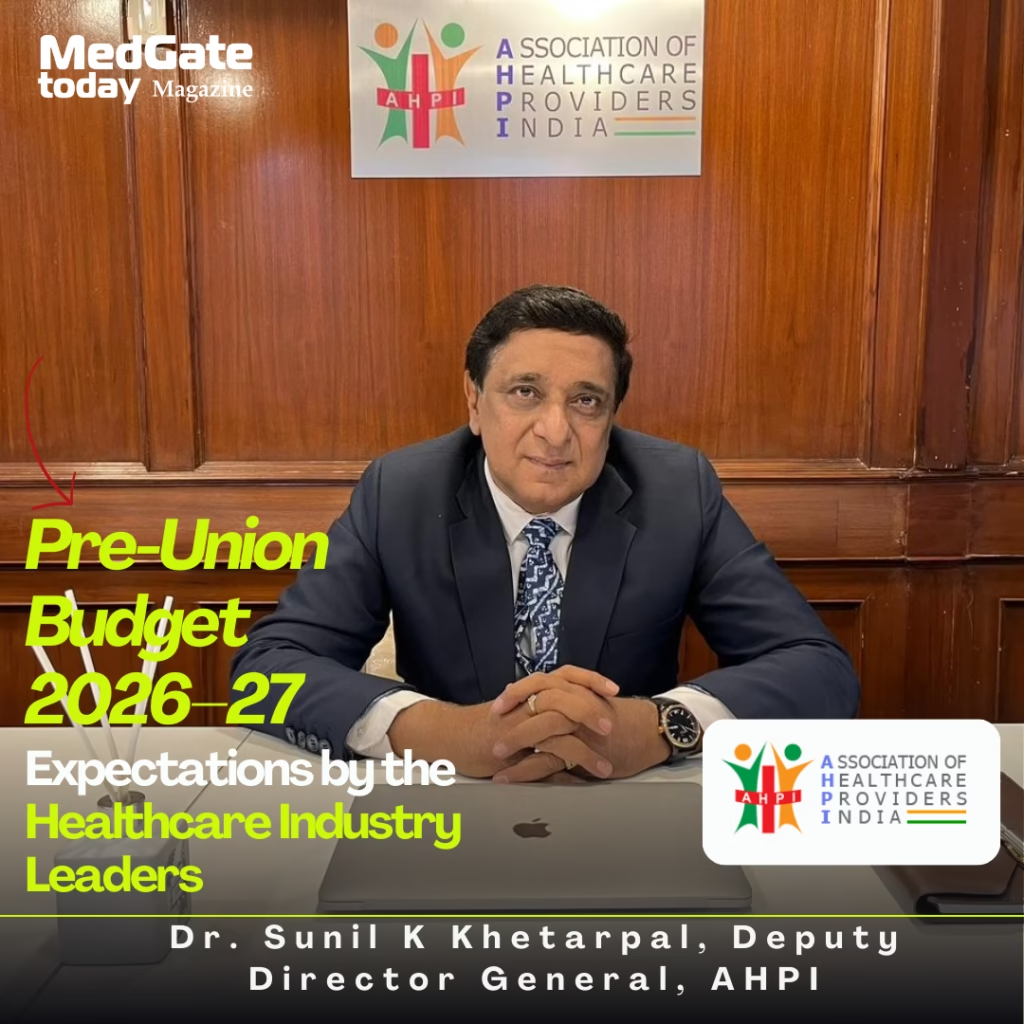
Dr. Sunil K Khetarpal, Deputy Director General, AHPI, added, “India’s healthcare demands are evolving faster than our current systems can support. The upcoming budget must accelerate investments in technology-driven care, quality assurance, and hospital capacity-building. Strengthening regulatory frameworks and enabling long-term financing for healthcare providers will be essential to create a resilient, future-ready ecosystem capable of serving a billion-plus population.”
Echoing the need for collaborative growth,

DR. V. K. GUPTA Founder-Director Silverstreak Superspeciality Hospital said, “Budget 2026–27 presents a critical opportunity to bridge regional healthcare disparities. Targeted fiscal incentives and easier access to long-term capital can encourage hospitals to expand into tier 2 and tier 3 cities, improving access to quality care while easing pressure on metropolitan healthcare systems.”
AHPI further emphasised that incentivising private sector participation in healthcare infrastructure development will be key to complement public investment. With India’s doctor-to-patient ratio still below World Health Organization norms, the association views the upcoming budget as a pivotal moment to strengthen system resilience, improve preparedness for future public health challenges, and ensure equitable access to quality healthcare nationwide.
Pre – Budget 2026 Expectations Quote on behalf of – Dr. Jothi Neeraja, Founder & Managing Director, People Tree Hospitals and Maarga Mind Care
Dr. Jothi Neeraja, Founder & Managing Director, People Tree Hospitals and Maarga Mind Care said, “In the Union Budget 2025–26, overall healthcare received a significantly higher allocation of approx. 10% as compared to the previous year, reflecting the government’s commitment to strengthening the health sector. Within this, direct mental health spending under the Ministry of Health & Family Welfare was around ₹1,004 crore, making it just 1 % of the health budget, with major support for institutions such as NIMHANS Bengaluru, the Lokpriya Gopinath Bordoloi Regional Institute of Mental Health, Tezpur, and the National Tele-Mental Health Programme.
While these allocations represent an important step and demonstrate growing recognition of mental health, the proportion remains small relative to the overall scale of need. For the upcoming Union Budget 2026, we hope to see greater and more sustained investment in mental health services for raising awareness and promoting the importance of mental health, in community programmes, early intervention, workforce training, and stronger healthcare infrastructure across urban and rural India. Continued emphasis on digital and tele-health services, integrated care pathways, and equitable access for all will play a crucial role in translating policy intent into real impact for individuals and families living with mental health conditions.”
Pre – Budget 2026 Expectations Quote on behalf of – Dr. Anand K., Managing Director & CEO, Agilus Diagnostics Ltd.
Dr. Anand K., Managing Director & CEO, Agilus Diagnostics Ltd.
“As India approaches the 2026 Union Budget, diagnostics stands at the core of strengthening the nation’s healthcare backbone. Diagnostics informs nearly every clinical decision and policy choices have a direct bearing on patient outcomes, system efficiency and long-term costs Recent budgets have signalled intent with increased allocations—over ₹95,000 crore for health and ₹20,000 crore for research. The next step is targeted execution.
A key priority should be structural issues like the inverted duty regime, where importing finished diagnostic products is often cheaper than sourcing raw materials locally. This weakens domestic manufacturing and limits value creation within the country. More balanced tax structures supported by consistent R&D incentives can ease import dependence and make diagnostics more affordable. This must be done while maintaining quality and trust in the system.
As diagnostics increasingly adopt advanced technologies including AI-enabled tools, regulatory clarity and scientific validation will be critical to ensure safety and trust. At the same time, a patient centric approach must remain central. When diagnostics are accessible, accurate and locally produced, the benefits flow across the healthcare system A forward-looking budget can position diagnostics as a strategic pillar of preventive, affordable, and outcome-driven care in India.”
Pre-Budget Union Budget 2026–27 Expectations : Nitin Jain of Iberia Pharmaceuticals Calls for Stronger R&D Support and Innovation-Led Pharma Growth

Nitin Jain, Founder and Managing Director, Iberia Pharmaceuticals
As the Union Budget approaches, we hope that the government will extend their support to the pharmaceutical industry to help the industry grow and innovate. Despite the progress, India’s healthcare spending remains low when compared to many developing nations. The upcoming budget provides an opportunity for improvement in capabilities, maintaining a steady focus on building global standards in manufacturing, and support for research and development incentives. Enhanced funding and targeted measures for centres of excellence will accelerate research and innovation, driving the next phase of advancement in India’s pharmaceutical sector, thereby enhancing our scientific ecosystem, and supporting the transition from a volume-driven model to an innovation-led approach. India is well placed to strengthen its continued rise as a trusted global pharmaceutical manufacturing hub, hence the upcoming budget should streamline regulations, along with measures to promote domestic manufacturing, while ensuring that quality and safety remain paramount. Looking ahead, we expect budget 2026–27 to promote ease of doing business by simplifying compliances, prioritise long-term reforms alongside immediate capacity building and upskilling the workforce. Since the pharma sector and healthcare are increasingly becoming major growth contributors of India’s economic growth, a well-balanced budget would boost investments in the sector.
Pre-Budget Union Budget 2026–27: Industry Calls for AI-Led Healthcare, New PLI Schemes and Rationalised Duties
Mr. Dev Tripathy, Head of Finance, Philips Indian Subcontinent
Delivering quality healthcare to the last mile is crucial for India, and this can only be achieved by leveraging AI. AI enables early diagnosis and consolidates data points, helping clinicians make accurate decisions and bridge the supply-demand gap. India has the talent to drive AI-led innovation, and incentives for AI innovation, job creation, and high-end service exports through Global Capability Centres (GCCs) must be prioritized. This will foster innovation and position India as a competitive global player. To establish India as a medical device export hub, we need a sustainable ecosystem for MedTech manufacturing. New PLI schemes should encourage holistic development, ensuring comprehensive growth across the industry. Finally, with ongoing geopolitical instability and currency pressures, rationalized duty structures are essential to make healthcare more affordable and accessible for all.”
Pre-Budget Union Budget 2026–27: Dr Arun Singhvi of ASG Eye Hospital Calls for GST Zero-Rating, AI Incentives and Cheaper MedTech Imports
Dr Arun Singhvi, MD & Group CEO, ASG Eye Hospital
The landmark GST 2.0 reforms implemented in September 2025 have provided a significant fillip to the healthcare industry. The reduction in GST rates from 12% to 5% on ophthalmic equipment is a visionary step that directly supports ASG Eye Hospital’s “Vision 2030” to democratize affordable and accessible eye care pan-India. By lowering the tax barrier on essential medical technology, the government has set the stage for a more inclusive healthcare ecosystem where advanced treatments are no longer a luxury but a standard of care.
To further this momentum, we urge the government to address the structural challenge of “embedded taxes” that continue to inflate operational costs. Since clinical services currently remain in the “exempt” category, hospitals are unable to avail Input Tax Credit (ITC) on their procurement of equipment and services. Granting “zero-rated” status to healthcare or introducing a minimal GST slab with full ITC eligibility would unlock an estimated 5–6% of costs currently trapped within the supply chain. This structural shift would allow hospitals to pass on substantial direct savings to patients, truly maximizing the impact of the recent rate rationalizations.
In addition to GST reforms, the government could significantly lower the cost of technology adoption by doing away with the residual 7.5%–10% Basic Customs Duty and the 5% Health Cess on high-precision, non-indigenous technologies. Equipment such as Femtosecond lasers and advanced retinal imaging systems are critical for sight-saving procedures but remain expensive to import. Eliminating these landed costs will facilitate deeper penetration into Tier 2 and Tier 3 cities, ensuring that patients in smaller towns have access to the same world-class surgical offerings as those in metropolitan hubs.
Furthermore, as we move toward a tech-led healthcare future, the high cost of Artificial Intelligence (AI) integration must be addressed. While AI-driven diagnostics for conditions like Diabetic Retinopathy can revolutionize early detection, the recurring costs of high-end software licenses, GPU-based computing power, and AI-integrated hardware remain prohibitive. We propose a weighted tax deduction on AI-related capital expenditure and a reduction in duties for diagnostic machines with embedded AI software. This would incentivize hospitals to deploy automated screening tools in remote areas, significantly reducing the burden of avoidable blindness through technology. Interest subsidies for medical centres branching out in under developed areas will incentivise them to adopt a pan India approach. These measures along with expanding the scope of the current PLI scheme to encourage made in India incentive for manufacturing of medical eye equipment will set the country on course to world class medical facilities.