

Trump Administration’s 2025 Tariff Strategy: Implications for India’s Medical Device and Pharmaceutical Export Sectors
The healthcare and life sciences sectors are now bracing for global ripple effects as the Trump administration, under President Donald J. Trump’s second term, enforces a new round of tariffs targeting imports from key trade

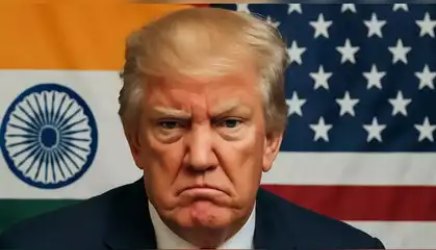
The healthcare and life sciences sectors are now bracing for global ripple effects as the Trump administration, under President Donald J. Trump’s second term, enforces a new round of tariffs targeting imports from key trade partners, including India and China. The proposed 25% tariff on Indian pharmaceutical imports, and the escalated tariffs on medical devices sourced from China, are expected to reshape global supply chains, with India emerging at a critical crossroads.
This development follows President Trump’s announcement earlier this year to reintroduce and expand Section 301 tariffs as part of the administration’s renewed “America First” policy. The strategy aims to boost domestic U.S. manufacturing, reduce reliance on strategic imports, and curtail perceived trade imbalances.
Medical Devices: A Competitive Opening, But With Conditions
One of the significant revisions under the updated Section 301 measures includes raising tariffs on Chinese-origin medical devices to 50%, now temporarily set at 30% until August 12, 2025. This move is widely seen as a strategic nudge for U.S. importers to diversify away from Chinese suppliers. For India, the world’s fourth-largest medical device market by volume, this offers a time-sensitive but highly promising export opportunity.
 Mr. Rajiv Nath, Forum Coordinator at the Association of Indian Medical Device Industry (AiMeD), offered a nuanced perspective:
“There have been too many proclamations on tariff over the last 4–5 months while both USA and India continue to negotiate. Until something definitive is announced by a notification it would be premature and speculative to comment. Suffice to say that whatever is the final duty that’s finally announced on medical devices, if it’s at least 15–20% lower than applicable duty rates by USA onto China, then there is a strong opportunity for Indian medical devices to increase their exports to U.S. market”
Mr. Nath further emphasized the pressing need for Indian manufacturers to address high regulatory costs associated with U.S. FDA approvals and to ramp up domestic production capacity. He also cautioned about the competitiveness of nations like Indonesia and Vietnam, which currently enjoy a 6% duty advantage over India.
“In many products, especially rubber-based, India may lose out to Indonesia & Vietnam. Clarity will come after August 12 as then duties on Chinese will be clear. If post-August duties on Chinese medical devices revert to over 50% and Indian at 25%, the export prospects versus China are in our favour, but GoI and manufacturers will need to work to improve our competitiveness.”
 Pavan Choudary, Chairman Medical Technology Association of India, MTaI said:
Donald Trump’s announcement today on Truth Social declaring steep tariffs on India from August 1 is troubling and seems economically shortsighted and strategically misguided.
As a sovereign nation, India makes independent choices in defence and energy based on national interest and long-term strategic priorities. Attempting to punish these decisions through coercive trade measures is not only inappropriate but also counterproductive. Framing a key democratic partner in adversarial terms sends the wrong signal and could jeopardize a relationship built on shared strategic interests and trust.
Stacking India alongside Russia and China, as Trump has done, is an attempt to cast shadows on it before European eyes.
Such mischaracterization may be coming from a deeper frustration – born of repeated failure to isolate India, despite his numerous public statements aimed at doing so.
It’s worth asking whether the recent clarifications in India’s Parliament by Prime Minister Modi and Foreign Minister Jaishankar – firmly denying Trump’s role in the Indo-Pak ceasefire – have influenced this drastic move. If so, it is unfortunate that straight talk is being met with punitive action.
History, too, offers a sobering lesson. In 1930, the U.S. passed the Smoot-Hawley Tariff Act, slapping steep duties on imports. What followed was catastrophic: U.S. exports fell by 61%, international retaliation ensued, and American farmers and industries suffered immensely. The resulting economic pain deepened the Great Depression and compelled a course reversal through the Reciprocal Trade Agreements Act of 1934 which reduced tariffs and promoted long term trade liberalization. The USA stayed the flag bearer of this economic doctrine for the next nine decades throughout the world!
Yet, despite the clear historical evidence, protectionist impulses resurface – this time aimed at partners, not a rival. Left unaddressed, such missteps could shift Indo-U.S. ties from cooperation to caution.”
India’s pharmaceutical industry often hailed as the “Pharmacy of the World” is now facing unexpected turbulence. A proposed 25% tariff on Indian pharmaceutical imports, slated to take effect from August 1, 2025, has stirred concerns across global health policy circles.
In 2022, nearly 47% of all generic prescriptions in the U.S. were filled using medicines supplied from India, highlighting the strategic interdependence between the two nations in public health.
 Mr. Bhavin Mukund, Vice Chairman of Pharmexcil and Whole Time Director at Kilitch Drugs, voiced the industry’s apprehensions:
“India has long been a cornerstone of the global pharmaceutical supply chain, especially in generics. While we understand the evolving trade policies of our global partners, the proposed 25% tariff on Indian pharmaceutical imports effective August 1 raises concerns about rising costs and potential disruptions in medicine access for U.S. patients. Such policy shifts could inadvertently affect public health outcomes”
 Also, Mr. Sanjaya Mariwala, Executive Chairman and Managing Director of OmniActive Health Technologies stated:
“The 25% penalty and fine are a serious blow to India’s exports, especially when the US has been our biggest trading partner for years. Pharma and electronics are taking the biggest hit. Beyond monetary, this move adds a layer of uncertainty to an already shaky global trade environment.
India isn’t just a key supplier of generics to the US; we are a part of the backbone of affordable global healthcare. These duties may interrupt the smooth trade flow, inflate US drug costs, stall treatments, and put even greater pressure on American healthcare budgets. Back home, the profits for Indian pharmaceutical firms may decline, and R&D may stagnate, slowing down innovation and stalling new drug clearances.
Since Trump’s return, the change in trade tone has been clear. It’s a wake-up call—India must double down on securing Free Trade Agreements with other major economies. These aren’t just about market access; they’re about securing India’s place in the world economy and advancing the vision of a ‘Viksit Bharat’.
India needs to act fast, and more importantly, act smart. Clear, confident diplomacy is the need of the hour.”
Industry insiders fear that these tariffs may create affordability issues in the U.S. healthcare system, especially in vulnerable therapeutic areas such as oncology, infectious diseases, and chronic illness management, where Indian generics play a vital role in ensuring accessible care.
Implications and Way Forward
The imposition or threat of steep tariffs sends a strong message to Indian exporters: cost-competitiveness alone will not suffice. Regulatory agility, faster approvals, alignment with ESG mandates, and strategic policy support from the Indian government will be essential to navigate the new trade landscape.
Moreover, India must urgently position itself as a reliable “China +1” supplier, especially as global buyers pivot toward resilience over efficiency in supply chain decisions. Creating tariff hedges via bilateral trade agreements, building FDA-compliant clusters, and facilitating investments in manufacturing infrastructure will be critical in this transition.
The next few weeks, especially the final announcements post-August 12, will set the tone for what could either be a watershed moment for India’s healthcare exports or a missed opportunity in the face of rising global protectionism.