
Timely Intervention Saves 24-Year-Old from Severe Blood Clots in Leg and Lungs at NewEra Hospital
Swift diagnosis, advanced interventional radiology, and coordinated ICU care at NewEra Hospital helped save a 24-year-old man suffering from deep vein thrombosis and pulmonary embolism In a remarkable example of timely diagnosis and advanced critical care,

Swift diagnosis, advanced interventional radiology, and coordinated ICU care at NewEra Hospital helped save a 24-year-old man suffering from deep vein thrombosis and pulmonary embolism
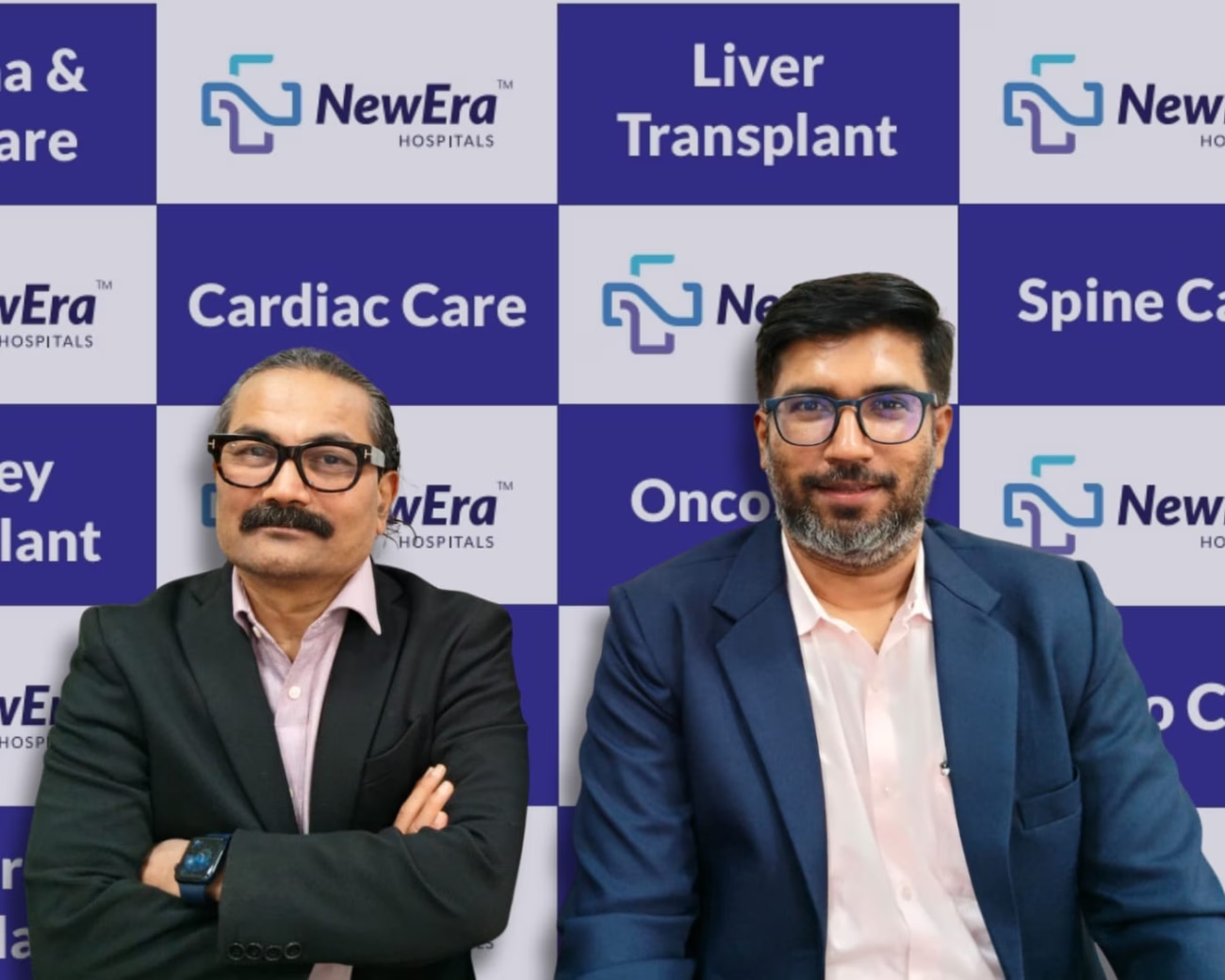
In a remarkable example of timely diagnosis and advanced critical care, a multidisciplinary team comprising Dr Chandrashekhar Tulasigeri, Director Department of Critical Care & Head A&E and Dr Nishant Tavade,Consultant Family Medicine at NewEra Hospital, Vashi, successfully treated a 24-year-old man who was suffering from a severe blood clot in his right leg (deep vein thrombosis) that had spread to the main vein in his abdomen (inferior vena cava) and also reached his lungs, causing pulmonary embolism (PE). Following prompt intervention and comprehensive care, the patient has made a strong recovery and has now resumed his daily routine under regular medical follow-up.
Mr Pratik Kamra (name changed), a 24-year-old resident of Alibaug, Raigad, Maharashtra, walked into NewEra Hospital after nearly ten days of swelling in his right leg and pain that made even standing or walking a struggle. Despite seeking outpatient treatment, his condition only worsened, leaving him exhausted, anxious, and unsure of what was happening to his body. By the time he reached the hospital, the swelling had progressed from calf to thigh, and the pain had begun to interfere with his daily life. On admission, he was found to be hypertensive and tachycardic (had a high pulse rate), clear signs that his body was under severe stress. There were clear indications that the body had been under severe stress, and examination suggested obstruction in the lungs. Doctors sensed something far more serious beneath the surface. Advanced imaging soon revealed a life-threatening reality that explained his silent suffering and demanded immediate action.
Dr Chandrashekhar Tulasigeri, Director Department of Critical Care & Head A&E said, “A Doppler and CT venogram revealed extensive deep vein thrombosis (DVT) involving the right iliac and femoral veins, extending up to the infrarenal inferior vena cava (a large vein that carries the deoxygenated blood from the lower and middle body into the right atrium of the heart). Deep vein thrombosis (DVT) is a condition in which a blood clot forms in a deep vein, usually in the legs, potentially blocking blood flow and leading to serious complications. Further evaluation with CT Pulmonary Angiography confirmed pulmonary embolism affecting all segmental and multiple subsegmental branches of both lungs. Pulmonary embolism occurs when a blood clot travels to the lungs, blocking blood flow and potentially causing life-threatening breathing and heart problems. Blood investigations revealed markedly elevated homocysteine levels, suggesting an underlying tendency toward abnormal blood clot formation. Elevated homocysteine is a well-known risk factor that can damage blood vessels and increase the likelihood of clot formation in the body. This finding may have played a significant role in the development of the patient’s condition, as several studies have shown a strong association between high homocysteine levels and thrombotic events.”
Dr Chandrashekhar Tulasigeri further added, “Initial treatment was started immediately in the emergency room, including intravenous antibiotics and low-molecular-weight anticoagulants. The patient was also given IV fluids along with other supportive care. Given the severity of the condition, the patient was shifted to the intensive care unit(ICU) for close monitoring. This was a highly aggressive and extensive clotting event in a young patient, involving not only the veins but other components of the circulatory system as well. Such cases carry a high risk of sudden deterioration and serious complications, including respiratory distress, heart failure, and even death. The patient was managed by a multidisciplinary team involving critical care physicians, hematologists, and interventional radiologists.”
Dr Nishant Tavade,Consultant Family Medicine, NewEra Hospital, said, “This was a highly aggressive and extensive clotting event in a very young patient, involving not just the leg veins but also the inferior vena cava and both lungs. We immediately planned a multimodal intervention with the support of an interventional radiologist to control the clot and save the patient’s life. In simple terms, this involved using advanced techniques called AngioJet thrombectomy to stop the clot from traveling to the lungs and remove it safely from the body. A protective IVC filter was placed in the main vein to block any further clots from reaching the lungs. A special device, like catheter-directed thrombolysis with Alteplase, was used to break and suction out the existing clots. Then the clot-dissolving medication was delivered directly to the affected area through a thin catheter. The procedure was technically challenging, but it was crucial and life-saving.”
Given the severity of the condition, the situation could have turned fatal at any moment without urgent intervention. Early recognition and rapid intervention are key in venous thromboembolism. Young patients often ignore leg swelling or pain, not realizing it can progress to a life-threatening pulmonary embolism (PE). This case highlights the importance of timely imaging, advanced interventional techniques, and coordinated ICU care..
Dr Nishant Tavade said, “Following the procedure, the patient showed steady clinical improvement. Repeat Doppler studies confirmed restoration of blood flow in the affected veins. After stabilization, he transitioned from injectable anticoagulants to oral anticoagulation for long-term management. He was mobilized gradually, shifted from the ICU to the ward, and discharged in stable condition with close follow-up advice. A comprehensive thrombophilia work-up has been planned after completion of anticoagulation therapy to evaluate for underlying genetic clotting disorders.”
“I never imagined that what started as simple swelling and pain in my leg could turn into something so serious. When I was told that blood clots had reached my lungs, I was terrified and didn’t know if I would make it. The skilled team of doctors at NewEra Hospital explained everything patiently, guiding me through every step of the treatment. Their swift action and constant care gave me hope when I was scared and weak. Today, I feel much stronger, able to move freely, and truly grateful to the team of doctors who saved my life. I can now resume my daily routine, and I feel like I’ve been given a second chance,” said patient Mr Pratik Kamra (name changed).
“This case reflects the strength of a multidisciplinary approach and the availability of advanced interventional facilities at NewEra Hospital. Prompt diagnosis, round-the-clock ICU support, and expert intervention helped prevent a potentially fatal outcome. Awareness about symptoms like persistent leg swelling and early medical attention can save many young lives,” Concluded Dr. Mataprasad B Gupta, Vice President & CEO.