
From Collapse to Recovery in 18 Minutes: Apollo Sheshadripuram Team Saves Young Man with Rapid Cardiac Intervention
· The man suffered a massive cardiac arrest while sitting in the OPD · Coordinated CPR, quick defibrillation, and Cath Lab readiness helped reverse a sudden cardiac arrest inside the hospital Bengaluru, 27 November 2025: In an

· The man suffered a massive cardiac arrest while sitting in the OPD
· Coordinated CPR, quick defibrillation, and Cath Lab readiness helped reverse a sudden cardiac arrest inside the hospital
Bengaluru, 27 November 2025: In an inspiring example of swift and coordinated emergency care, a young man’s life was saved at Apollo Hospitals, Sheshadripuram, after suffering a sudden cardiac arrest inside the hospital’s outpatient department. The entire turnaround from cardiac arrest to full revival and successful revascularisation was accomplished in just 18 minutes, thanks to timely intervention and clinical precision by the hospital’s multidisciplinary team.
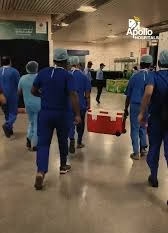
The patient, who collapsed without warning, received immediate CPR on-site. The Emergency and Cardiology and Critical care teams, led by Dr. B.E. Sharavanan, Dr. Jayaranganath M, and Dr. Himaaldev GJ, administered multiple CPR cycles and delivered five DC shocks. A pulse was regained, marking a critical turning point.
“In such high-stakes situations, an immediate response becomes important to safeguard the patient. What guided our actions was the need to stabilize him before irreversible damage set in. From securing his airway to coordinating CPR cycles and defibrillation, every step was centred on giving him a fighting chance. Our teams responded within seconds because in cardiac arrest, even a brief delay can change the outcome,” said Dr. B.E. Sharavanan, Consultant Emergency Medicine, and Dr. Himaal Dev GJ, Chief Consultant Critical Care, Apollo Hospitals Sheshadripuram.
“When cardiac arrest strikes, every second is critical. We operated with precise coordination from resuscitation to revascularisation because we are trained for moments like these. Without that speed, the risk of brain injury and even death would have been far higher,” said Dr. Jayaranganath M – Senior Consultant – Cardiology, Apollo Hospitals, Sheshadripuram. He also emphasized that while sudden cardiac events can appear without symptoms, many can be prevented through early screening, which helps identify hidden risks even in individuals who appear healthy.
Once the patient’s circulation was secured, he was quickly transferred to the Cath Lab where doctors performed an emergency revascularisation. Their rapid and skilled intervention restored his heart’s blood flow, minimizing further damage. Post-procedure, the ICU team monitored him closely, ensuring a stable recovery phase.
“One moment we were waiting in the OPD; the next, he collapsed. It felt like time froze. I was terrified he might never open his eyes again. When the doctors told me they had brought him back and restored his heartbeat, it felt like a second birth to him,” said the patient’s mother, recalling the intense situation of uncertainty before his revival.
Mr. Uday Davda, Unit Head and Vice President, Apollo Hospitals Sheshadripuram, added, “This case illustrates more than our clinical capacity; it underscores a vital public-health lesson. Sudden cardiac arrest doesn’t wait for convenience. What saves lives is rapid response, trained teams, and systems that are ready to act under pressure. We must build more awareness in the community about how critically important it is to recognize cardiac emergencies and respond without hesitation.” He further noted that a common misconception is that only individuals with known comorbidities face cardiac risk; however, recent trends show that younger and seemingly healthy individuals are increasingly experiencing cardiac events, making preventive cardiac screening essential.
The team emphasized that early CPR, rapid transfer, and Cath Lab readiness are the critical pillars that make the difference in cardiac-arrest survival. Cardiac arrest diagnosis typically involves ECG, blood tests, imaging and, when needed, advanced assessments like electrophysiology studies or coronary angiography. Treatment protocols combine immediate CPR, defibrillation, and long-term strategies such as medication, implantable defibrillators, angioplasty, or surgery. Doctors reiterated that while emergency care is crucial, prevention through timely screening, lifestyle assessment, and awareness of early symptoms remains an equally important safeguard against sudden cardiac arrest.