
Experts Decode The Importance Of Cancer Screening of Women in The Age-Group of 30-60 Years, Every 5-10 Years At Women’s Cancer Awareness Session By Suraksha Clinic & Diagnostics
Kolkata, January 23rd, 2026: In India, one woman dies of cervical cancer every 8 minutes, and for every 2 women newly diagnosed with breast cancer, one woman dies of it, as per an ICMR study.

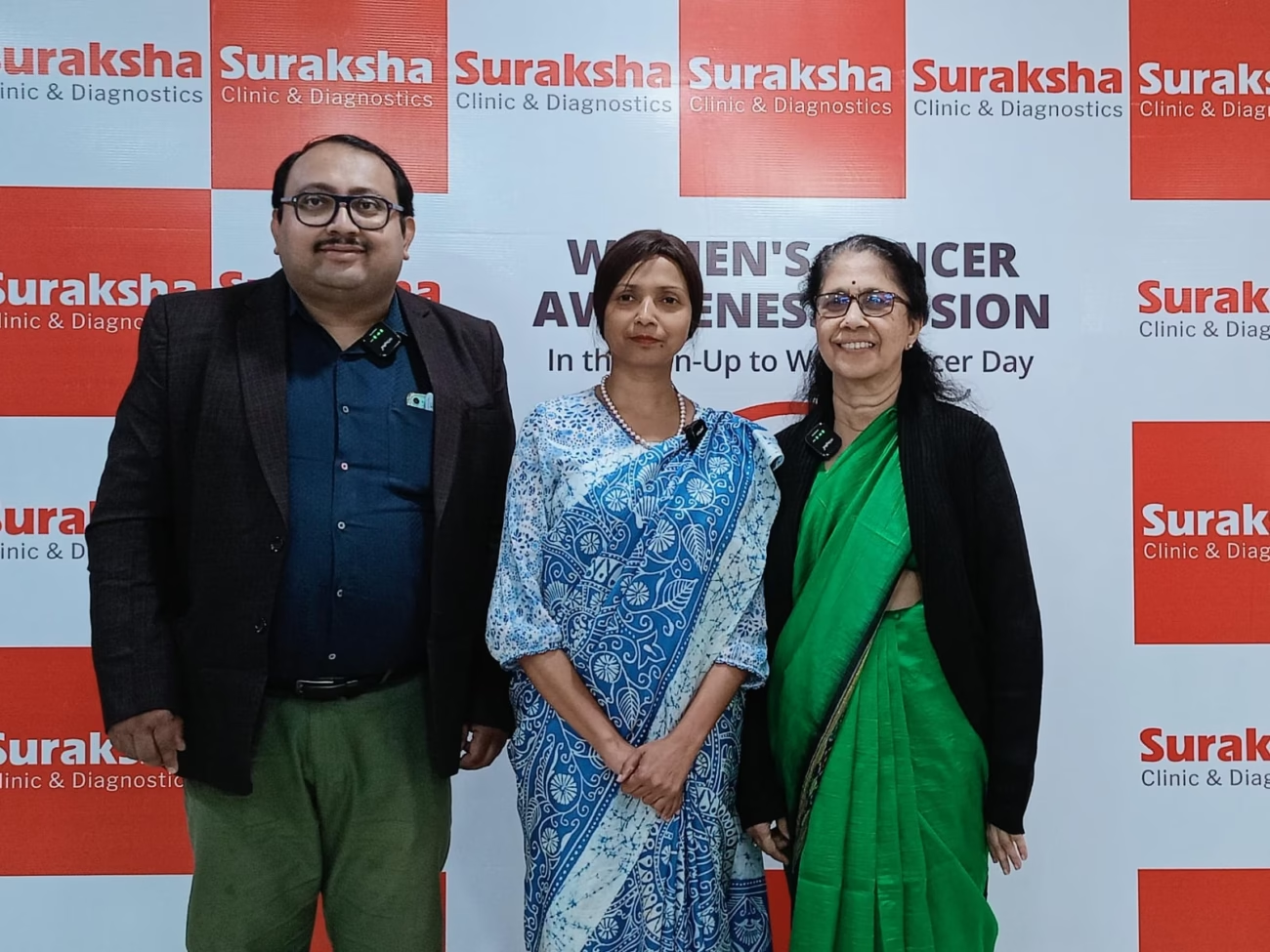
Kolkata, January 23rd, 2026: In India, one woman dies of cervical cancer every 8 minutes, and for every 2 women newly diagnosed with breast cancer, one woman dies of it, as per an ICMR study. Nearly 2.5 million people are living with cancer in India. At the Women’s Cancer Awareness session organised by Suraksha Diagnostic Limited (“Suraksha Clinic and Diagnostics”) in the run-up to World Cancer Day on February 4th, 2026, eminent doctors including Dr Gitasree Mukherjee, Gynaecologist, Bhagirathi Neotia, Women & Child Care Centre, Dr Sandipan Chowdhuri, Gynaecological Oncologist, Manipal Hospitals, Kolkata, Dr Asima Mukhopadhyay, Gynaecological Oncologist, Director of KOLGOTRG, threw a light on the three types of women’s cancer – breast, ovarian and cervical cancer as well as ways to prevent them.
In the session, experts launched the Cervical Cancer Screening Study where around 1,100 women in the tea gardens of Darjeeling district, have been screened as part of PRECERCA (Prevention of Cervical Cancer), international award winning project of KOLGOTRG (Kolkata Gynecological Oncology Trials & Translational Research Group) using the gene Xpert technology, supported by Suraksha Clinic and Diagnostics, KOLGOTRG, Cepheild, with logistical support provided through the MOHFW, Govt of West Bengal. It has been found as part of the study that 10% women who have been screened, have tested positive for high-risk HPV (Human Papillomavirus) which causes cervical cancer in women. Thereby, they have received free treatment at their workplaces, for preventing the risk of developing cervical cancer, which takes around 10-15 years to emerge. The initiative aims to do free screening for approximately 100000 women.
January is Cervical Cancer Awareness month. Cervical cancer is the second most common cancer in India among women, taking approximately the lives of 70, 000 women every year. It accounts for nearly 22.86% of all cancer cases in women and 12% of all cancer cases among both men and women. As per data, rural women are at a higher risk of developing cervical cancer in comparison to women residing in urban areas. Cervical cancer is considered the third largest cause of cancer mortality in India, accounting for nearly 10% of all cancer-related deaths in the country. The chances of survival are better if cervical cancer is diagnosed and treated at an earlier stage.
Breast cancer is the most common cancer among women in India, accounting for nearly 27% of all cancers in women. The incidence rates tend to start in the early thirties and peak at 50-64 years of age, as per data. 1 in 28 women is likely to develop breast cancer in their lifetime. In urban regions, 1 in 22 women develops breast cancer during their lifetime, in comparison to rural areas, where 1 in 60 women develops breast cancer during their lifetime.
Ovarian cancer is the third most common cancer among women in India, and it is estimated to reach around 50,000 new cases annually. In India, ovarian cancer is increasingly witnessed among younger women with a median age of diagnosis below 50-55 years. Cities such as Bengaluru, Delhi, and Hyderabad report some of the highest incidence rates, with one of the critical challenges being late-stage cancer detection.
Speaking at the session, Dr Gitasree Mukherjee shared: ‘”If diagnosis is wrong, treatment becomes wrong. We stage and grade the disease, how much the disease has progressed to a greater extent, in a less risky or intermediate way. Besides we are also deciding on therapy, since nowadays molecular medicine is very advanced. As per the reports of molecular testing, they decide the extent of sensitivity of the disease.”
Commenting on the cervical cancer screening initiative at Darjeeling Tea Gardens, Dr Asima Mukhopadhyay, shared: “In the journey to eliminate cervical cancer, young girls should be vaccinated and women in the age-group of 30-60 years should be screened at least once or ideally in every 5-10 years. Often cancer progresses to later stages, because of lack of early detection. If cancer is detected at stage 1 or stage 2, it can be cured. If we know who has cancer gene, we can prevent the next generation from falling prey to it”
Dr. Sandipan Chowdhuri shared: “Cancer patients face a situation as if they have done something wrong in life. This is the problem with cancer. If it is treated just as a disease, where tomorrow if one gets a massive heart attack, they can die. Similarly cancer is a disease and the treatment process for it is long. Awareness is the first step towards prevention, and early detection is the greatest gift one can give to their future self.”
“I did not had any symptoms of ovarian cancer. Women should go through proper testing to detect cancer risk. Before I was detected with ovarian cancer, I went in Andaman for scuba diving. I belong to the fifth generation in our family, to be detected with cancer. I went for prevention diagnostics where it was detected that I have third stage cancer. Cancer is a prolonged disease, where there is body toxicity, chemo-toxicity, financial toxicity, because you are completely inactive during that period, so if you have children, you cannot take care of them. There is possibility of recurrence of the disease. Government should make this a compulsion that after a certain age, cancer testing has to be done. In many corporates, before you join a job, all kinds of tests need to be done” shared Diya, Patient Advocate.
Sharing her thoughts at the Women’s Cancer Awareness event, Ms. Ritu Mittal, Joint Managing Director & CEO, Suraksha Clinic and Diagnostics, said: “With this Women’s Cancer Awareness session in the runup to World Cancer Day, we intend to spread more awareness and education surrounding women’s cancer in India and encourage more women to take preventive steps towards their health in a proactive manner with regular or frequent screening to prevent incidences of cancer.”
With initiatives like this, Suraksha Clinic and Diagnostics aims to prevent incidences of cancer among women in India, since awareness today saves lives tomorrow.