
Milann’s CFC 2026 Brings 350+ Fertility Specialists Together in Bengaluru to Push Standardised, Outcomes- Based IVF Care
Conclave spotlights protocol alignment, KPI-led IVF lab monitoring, and stronger male-factor integration as infertility care scales up in India Milann Fertility & Birthing Hospital brought together 350+ fertility specialists, clinicians, embryologists and academicians at the Comprehensive Fertility Conclave

Conclave spotlights protocol alignment, KPI-led IVF lab monitoring, and stronger male-factor
integration as infertility care scales up in India
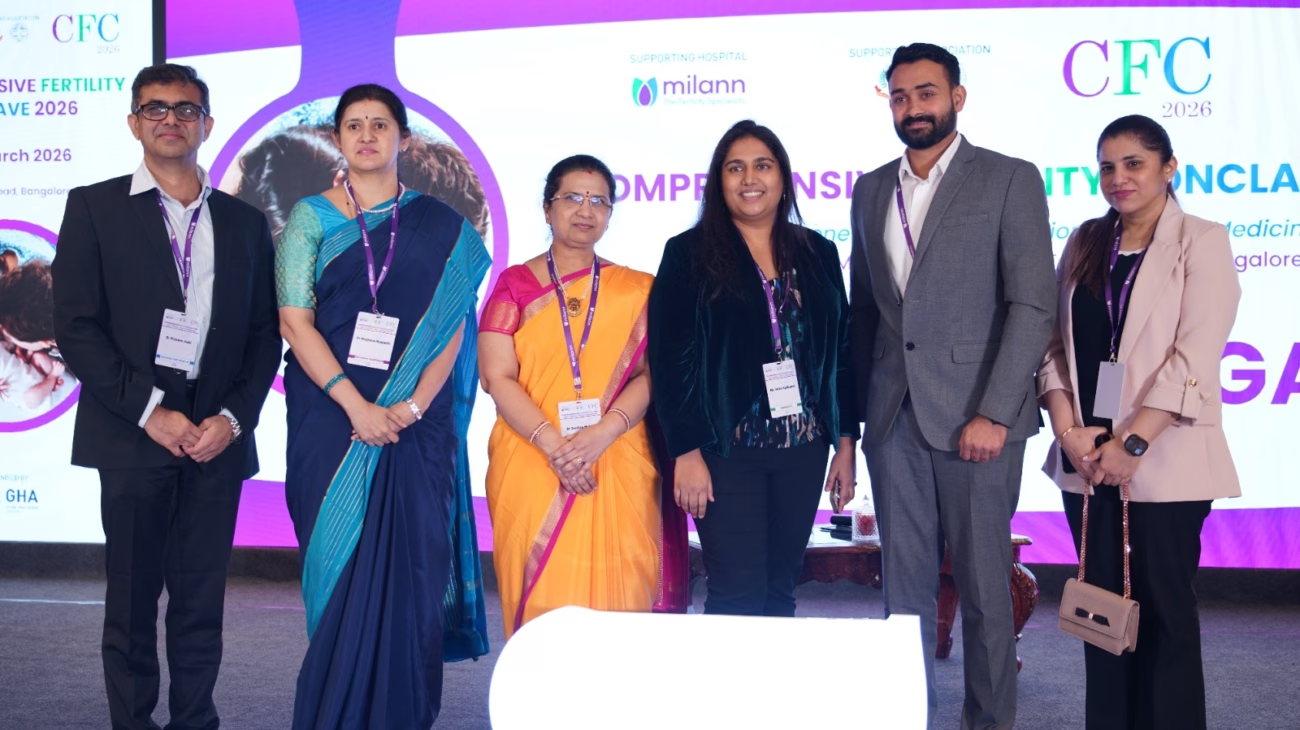
Milann Fertility & Birthing Hospital brought together 350+ fertility specialists,
clinicians, embryologists and academicians at the Comprehensive Fertility Conclave (CFC)
2026 in Bengaluru, calling for greater standardisation and measurable outcomes in assisted
reproductive technology (ART) as infertility care demand rises across the country.
Held under the theme “Genesis of Life: Innovation in Fertility Medicine”, CFC 2026 focused
on aligning evolving science with clinical practice, especially in areas where outcome
variability between centres continues to raise concerns.
The conclave was led by Dr Meghana Nyapathi (Organising Chairperson), with Dr Praveen
Joshi and Dr Sunitha Mahesh as Organising Joint Secretaries, and included international
faculty participation such as Dr Yannis Panagiotidis.
Ms Anjali Ajaikumar, Director, Milann – Fertility and Birthing Hospital, said:
“Infertility is no longer an isolated medical concern; it is emerging as a significant public
health challenge shaped by lifestyle changes, delayed parenthood, metabolic disorders like
PCOS, and rising stress levels. At Milann, we strongly believe that standardisation and
transparency are the cornerstones of patient trust. Through CFC 2026, our goal is not just
knowledge exchange, but collective accountability.”
From access to accountability: what CFC 2026 put on the table
With IVF and fertility services expanding rapidly, CFC 2026 placed a sharp emphasis on
reducing outcome variability through protocol consistency, laboratory process discipline, and
data accountability, including the use of IVF laboratory dashboards and KPI-based
monitoring.
Scientific discussions covered high-impact clinical areas including Advanced Fertility Clinic
(AFC), PCOS and obesity-linked infertility, ovarian ageing, and advanced male infertility
diagnostics (including DFI and genetic evaluation), alongside evidence-based use of PGTA,
ERA and immune therapies.
In addition, the conference agenda reinforced the need to bridge andrology and ART through
deeper male-factor workups, and showcased sessions on building IVF lab KPI dashboards,
reflecting a shift toward outcome transparency in fertility practice.
Skills and precision: hands-on workshops ahead of the conclave
Pre-conference training included hands-on workshops and simulation modules such as
Micro-TESE, rapid vitrification, and simulation-based skills for procedures including OPU, IUI
and embryo transfer, aimed at strengthening surgical ergonomics and laboratory precision.
Milann announced that participating centres will work towards strengthening structured data
tracking, integrating male fertility assessment as routine practice, and expanding skill-based
ART training programs over the next year.