
IIT Guwahati Develops ₹3,500 E-Eye Device for Rapid Detection of Toxicants in Water
Portable optical sensing device detects arsenic, lead, fluoride and E. coli on-site, offering a low-cost alternative to laboratory testing for rural and remote areas Guwahati, Assam - Researchers at the Indian Institute of Technology Guwahati (IIT

Portable optical sensing device detects arsenic, lead, fluoride and E. coli on-site, offering a low-cost alternative to laboratory testing for rural and remote areas
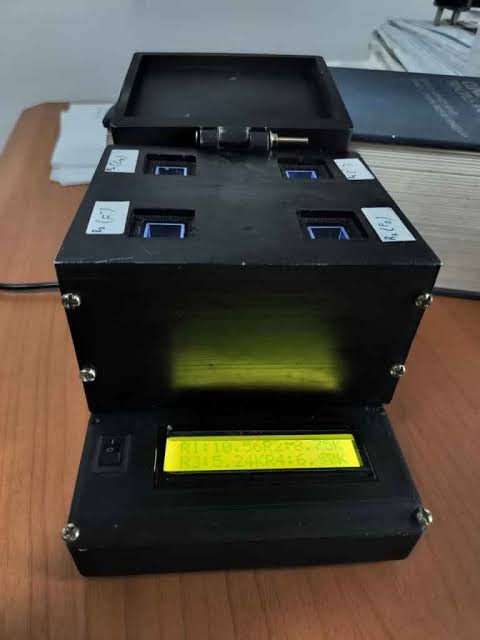
Guwahati, Assam – Researchers at the Indian Institute of Technology Guwahati (IIT Guwahati) have developed E-Eye, a portable optical sensing device designed to rapidly detect multiple toxicants in water and other environmental, biological and food samples. The low-cost technology enables on-site water-quality testing without dependence on expensive laboratory equipment, with the potential to strengthen monitoring in rural and remote areas where conventional testing is difficult to access.
How It Works
E-Eye operates on optical sensing principles, triggering a chemical reaction that produces a coloured compound whose intensity corresponds to the concentration of the targeted toxicant. The device converts this colour intensity into a digital reading. According to the research team, the system can detect arsenic, lead, iron, chromium, fluoride and Escherichia coli bacteria, with results found comparable to those from conventional UV-Visible spectroscopy and Atomic Absorption Spectrometry (AAS) during laboratory testing.
Low Cost, Broad Applicability
The device has been developed at an approximate unit cost of ₹3,500, with an estimated per-sample testing cost of around ₹2. Researchers have validated the technology across more than 2,700 samples, recording accurate results throughout. Beyond water, E-Eye’s applications extend to environmental and biological samples, as well as vegetables, food products, tea, herbal products, soil and milk.
Addressing a Growing Contamination Challenge
The innovation arrives amid rising concern over the contamination of water sources by heavy metals, chemicals and disease-causing microorganisms. By enabling testing directly at the source, E-Eye could support faster identification of contamination, helping authorities and industries take timely corrective action. The device also supports wireless data transmission, allowing recorded information to be shared with water-treatment facilities and enabling digital monitoring at scale.
Path to Commercialisation
The research underpinning E-Eye has been published in the IEEE Sensors Journal. The team is now advancing toward commercialisation through ENVIONIX Labs Pvt Ltd, a startup established with support from a research grant from the Ministry of Electronics and Information Technology (MeitY). Researchers are additionally exploring solar-powered operation and cloud connectivity to support remote monitoring and data management.
Looking Ahead
The development positions E-Eye as an affordable, indigenous alternative for water-quality surveillance, industrial effluent monitoring and food-safety applications, particularly in locations where conventional laboratory testing is costly or inaccessible. Researchers said the next phase of work will focus on technology transfer, moving the innovation from laboratory development toward wider field deployment.
About IIT Guwahati
The Indian Institute of Technology Guwahati (IIT Guwahati) is a premier public technical university dedicated to research and innovation in science, engineering and technology, with a strong focus on developing solutions relevant to India’s developmental needs.