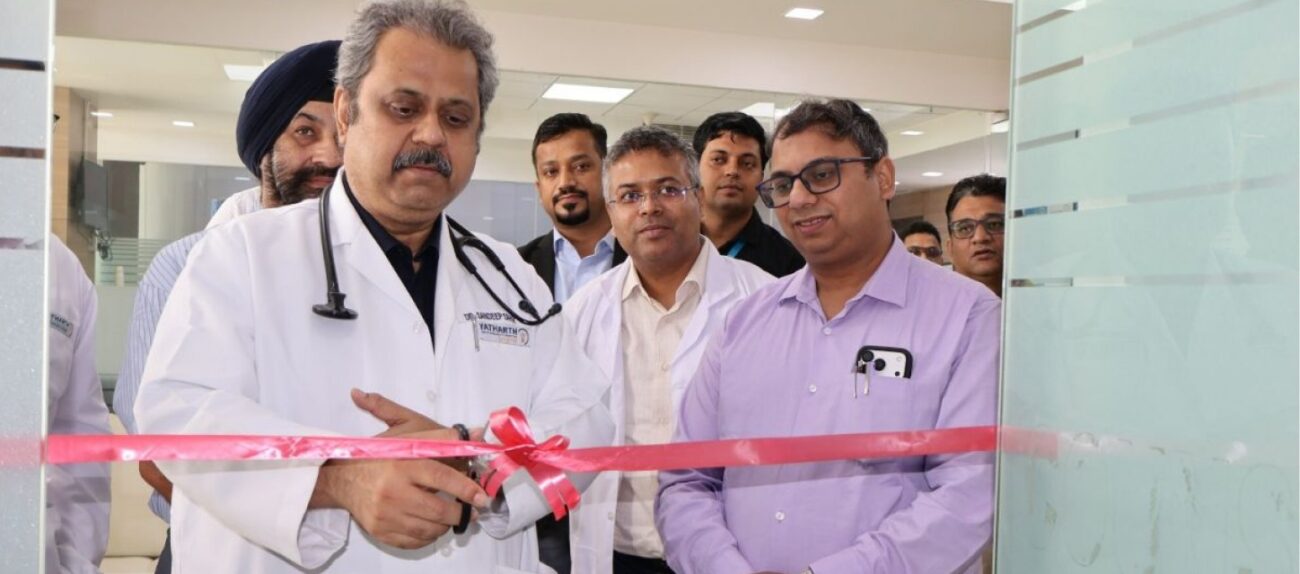

Yatharth Hospitals Draws Interest From Aster, Advent as Healthcare Consolidation Heats Up
Advent International and Blackstone-backed Aster DM Quality Care are reportedly exploring a deal to acquire a controlling stake in Yatharth Hospitals and Trauma Care Services, a listed, north India-focused specialty hospital chain, according to people

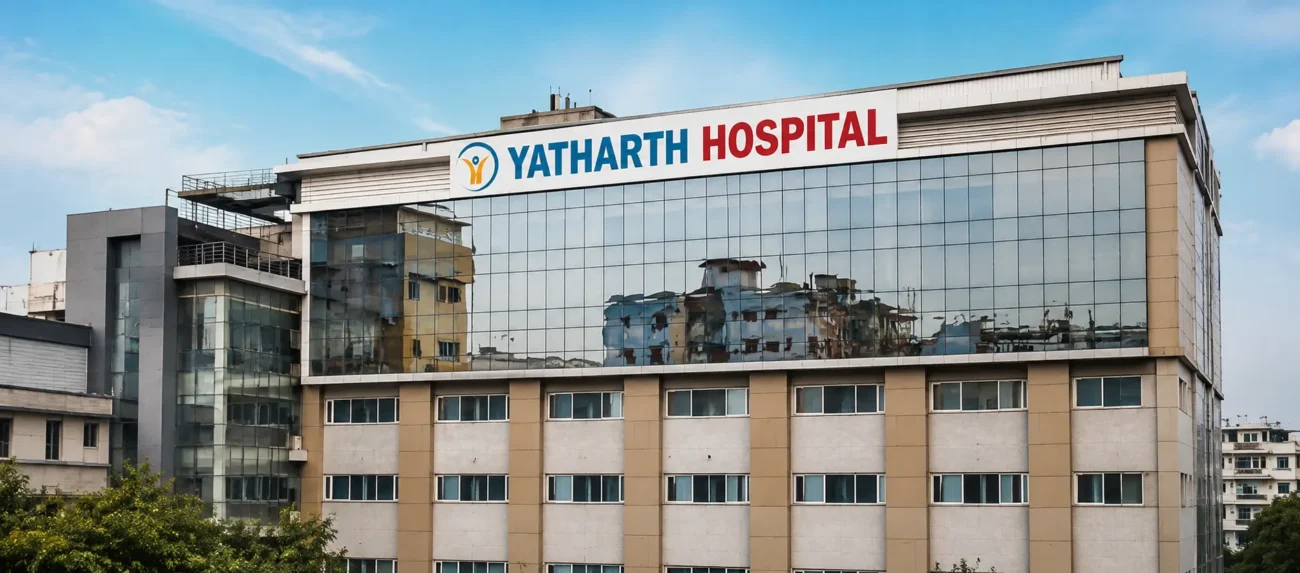
Advent International and Blackstone-backed Aster DM Quality Care are reportedly exploring a deal to acquire a controlling stake in Yatharth Hospitals and Trauma Care Services, a listed, north India-focused specialty hospital chain, according to people with knowledge of the discussions. The company, seen as India’s second-largest hospital chain, is said to be looking at consolidation opportunities amid a broader acquisition push by large private equity players. Yatharth has denied being involved in any such sale discussions.
Anticipation of a possible transaction has pushed the company’s stock up 15.3% over the past month, with shares closing at ₹973.05 on Thursday after touching a fresh 52-week high of ₹982.65 – valuing the company at roughly ₹9,462 crore. Promoters Ajay Kumar Tyagi and family, together with Kapil Kumar, hold 55.8% of the company, with the rest held by public shareholders.
Should a deal go through, it would trigger a mandatory open offer for an additional 26% stake, potentially allowing the acquirer to end up owning more than three-fourths of the company. Due diligence from both sides is said to be in its final stages.
Deal Still Uncertain, Say Sources
Sources indicate the current promoters may retain a minority stake even if a transaction is finalised, though talks are still ongoing and there’s no guarantee of an eventual agreement. A Yatharth spokesperson dismissed the report as inaccurate, stating the company is not part of any such discussions. Blackstone also denied interest in the asset, saying it is neither evaluating a deal nor part of any sale process. Aster DM did not respond to requests for comment, while Advent could not be reached.
Inside Yatharth’s Current Operations
Based out of Noida and Greater Noida, Yatharth currently runs about nine hospitals with a combined bed capacity exceeding 2,800. Over the next three years, the company plans to scale this to more than 5,000 beds through new facilities and expansion projects, with existing operations also spanning Jhansi-Orchha in Madhya Pradesh and Faridabad in Haryana.
Advent International, while a long-time investor in Indian pharma companies, has made only one prior hospital-sector bet — a 2012 investment in Care Hospitals. The firm is reportedly evaluating fresh opportunities in the Delhi-NCR healthcare market. Its India pharma-linked holdings include the Apollo 24|7 wellness retail chain, Cohance, and Bharat Serums and Vaccines.
How Aster DM Quality Care Was Formed
Aster DM Quality Care emerged from a large-scale merger between Moopen family-led Aster DM Healthcare and Quality Care India, bringing together four hospital brands — Aster DM, CARE Hospitals, Evercare and KIMSHEALTH — under one roof. The merger also united two major PE investors, TPG and Blackstone, in what is now India’s second-largest hospital network by scale, spanning roughly 40 hospitals in 27 cities and employing close to 50,000 healthcare professionals.
Earlier this month, TPG offloaded a little over 7% of its 10% holding in Aster DM Quality Care via block deals priced between ₹766.10 and ₹780 per share. As of the July 2026 shareholding data, promoters — including the Moopen family and Blackstone — jointly hold a 53.72% stake, with Blackstone as the single largest shareholder. Blackstone also separately holds a 35% stake in the demerged Aster GCC entity.
Alisha Moopen, Executive Director, Aster DM Quality Care, told ET that the group intends to expand its bed capacity to 15,000 by FY29, up from around 10,800 currently.
Aster’s stock has significantly outpaced the broader market this year, rising 22.36% against an 8% decline in the Nifty, with its market cap standing at ₹65,828.70 crore as of Thursday.
According to people familiar with the matter, a completed deal would give the acquirer a stronger foothold in north and central India — a region where it currently has limited presence. Aster is said to favour a cash transaction over a stock-based merger.
“We were largely seen as a regional player… this size and scale gives us an opportunity to become a pan-India player,” Moopen told ET. “The pan-India goal we had over seven to 10 years can now be shrunk to a much shorter timeframe. In terms of listed companies, we would be number two… and the ambition, of course, is to be number one in three to four years.”
Building a Pan-India Presence
While strengthening its base in Kerala and Karnataka, Aster has been expanding into cities such as Indore, Raipur, Aurangabad and Bhubaneswar. With specialisations in cardiology, oncology, transplants, paediatrics and neurosciences, the company is pursuing both organic growth and acquisitions to scale further.
Yatharth’s own growth roadmap — which includes robotics, oncology and transplant programmes — is viewed as complementary to Aster’s core strengths, offering potential operational synergy.
For the quarter ended June, Yatharth posted a 51% year-on-year rise in consolidated revenue to ₹392.70 crore, with average revenue per occupied bed at ₹34,758, up 7% year-on-year. Whole-time director Yatharth Tyagi told analysts the chain grew 37% in FY26 and expects to exceed that pace this year, targeting an EBITDA margin above 24% for FY27 and average revenue-per-bed growth of 9–10%.
What’s Driving the Investment Rush in Hospitals
Strong investor appetite for Indian hospital assets stems from rising demand for quality healthcare, expanding insurance coverage, the opportunity to build scalable regional networks, and robust revenue growth across hospitals and diagnostics, according to a recent EY-Parthenon Healthcare Sector report. This growth has been fuelled by higher patient volumes, better realisations, and a shift toward higher-acuity treatments.
Hospitals remain the sector’s primary growth driver, with revenue and EBITDA growth among major operators topping 15% year-on-year. Performance has been supported by steady occupancy rates — typically between 60% and 75% — along with rising average revenue per occupied bed. High-acuity specialities like cardiology and oncology have grown particularly fast, exceeding 15% in some cases and increasingly contributing a larger share of overall hospital revenue.