
World Polio Day 2026: Together, We Can End Polio for Good
World Polio Day 2026 highlights the global commitment to eradicating poliomyelitis, a highly infectious viral disease that can cause permanent paralysis, particularly among children. Although vaccination has dramatically reduced polio transmission worldwide, the disease has

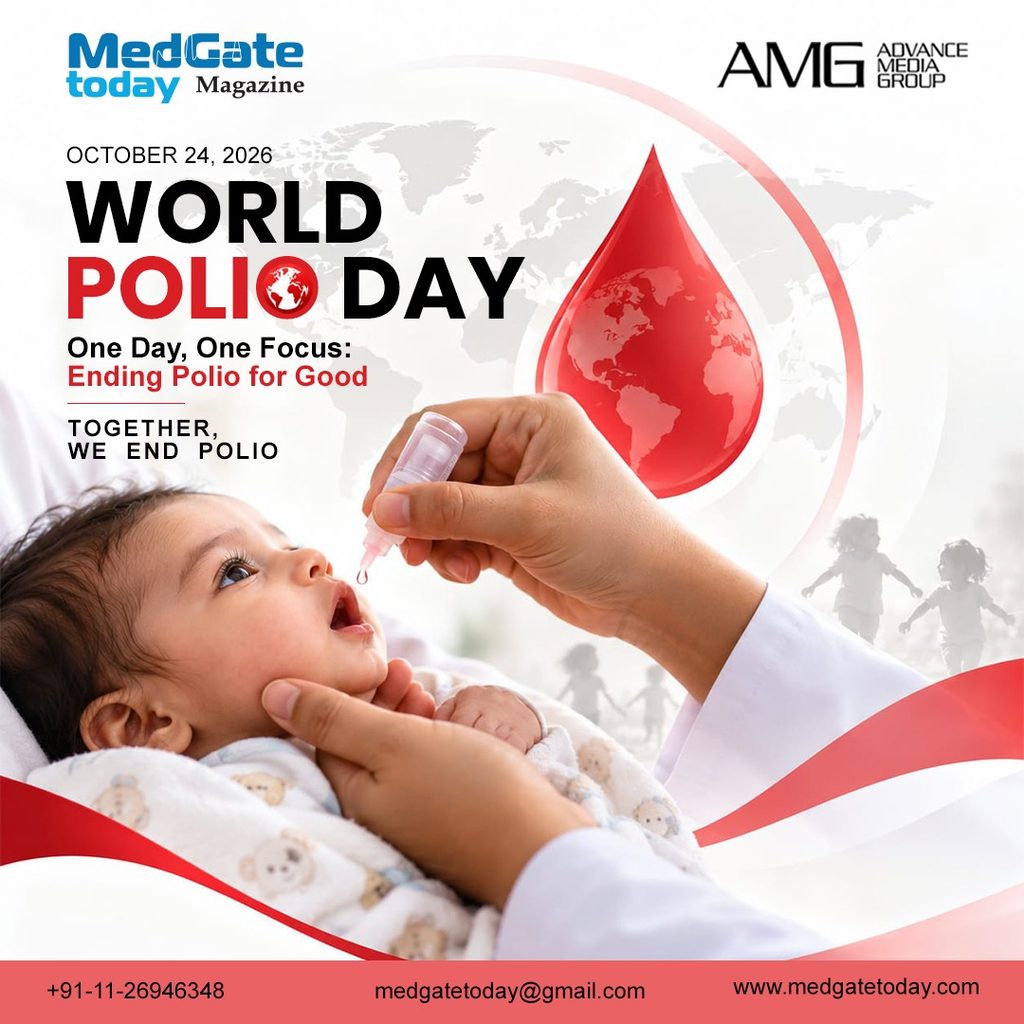
World Polio Day 2026 highlights the global commitment to eradicating poliomyelitis, a highly infectious viral disease that can cause permanent paralysis, particularly among children. Although vaccination has dramatically reduced polio transmission worldwide, the disease has not been eradicated. Continued transmission of wild poliovirus, outbreaks caused by circulating vaccine-derived poliovirus, gaps in immunisation and difficulties in reaching vulnerable populations remain significant public health challenges.
Since the launch of the Global Polio Eradication Initiative in 1988, wild poliovirus cases have declined by more than 99%, according to historical estimates published by the World Health Organization (WHO). Eradication efforts have also helped prevent more than 20 million cases of paralysis and approximately 1.5 million childhood deaths, demonstrating the impact of sustained vaccination and international cooperation.
India’s achievement provides an important example of what coordinated public health action can accomplish. The country reported its last known indigenous wild poliovirus case on January 13, 2011, and was included in the WHO South-East Asia Region’s certification of freedom from indigenous wild poliovirus transmission in March 2014.
However, India’s achievement does not mean the global threat has disappeared. Continued vaccination, environmental monitoring, disease surveillance and rapid outbreak response remain essential to protecting children.
World Polio Day 2026 is therefore an opportunity to examine the progress achieved, understand the remaining challenges and strengthen collective efforts to ensure that every child is protected against polio.
What Is World Polio Day and Why Is It Observed on October 24?
World Polio Day is observed annually on October 24 to raise awareness about poliomyelitis, promote vaccination and recognise the contributions of healthcare workers, volunteers, governments and international organisations working towards eradication.
The observance is associated with Rotary International’s long-standing involvement in polio eradication and marks the birthday of Jonas Salk, the medical researcher who led the development of the first widely used inactivated polio vaccine.
Poliomyelitis, commonly known as polio, is caused by poliovirus. The infection spreads primarily through the faecal-oral route, particularly in environments where sanitation and hygiene are inadequate. Many infected individuals do not develop recognisable symptoms, allowing the virus to spread without immediately attracting attention.
In some cases, however, the virus affects the nervous system and causes acute flaccid paralysis. The resulting weakness or paralysis can be permanent. Severe cases can also affect the muscles responsible for breathing and become life-threatening.
The Global Polio Eradication Initiative was launched in 1988 through an international partnership involving WHO, Rotary International, UNICEF and the US Centers for Disease Control and Prevention. National governments, the Bill & Melinda Gates Foundation and other partners subsequently became important contributors to the wider eradication effort.
The initiative transformed polio prevention from a series of separate national programmes into a coordinated global campaign. Its approach combines routine childhood immunisation, supplementary vaccination campaigns, laboratory testing, disease surveillance, public communication and rapid outbreak response.
World Polio Day serves as a reminder that eradication requires continued action even when the number of reported cases becomes very small.
World Polio Day 2026 Theme and Campaign Message
The editorial message for this article is “Together, We Can End Polio for Good.” It reflects the collective responsibility of governments, healthcare professionals, parents, communities and international partners in achieving a polio-free world.
An official World Polio Day 2026 theme could not be independently verified for this article. Therefore, the above wording should be treated as an editorial campaign message rather than an officially announced theme from WHO, Rotary International or the Global Polio Eradication Initiative.
The broader message remains important: every child must have access to recommended polio vaccines, healthcare services must reach underserved communities, and countries must maintain surveillance until poliovirus transmission has been interrupted globally.
Public awareness also needs to go beyond general messages encouraging vaccination. Families should understand the importance of completing recommended immunisation schedules, retaining vaccination records and seeking guidance from qualified healthcare professionals.
Global Polio Statistics 2026: Where Does the World Stand?
The global polio eradication programme has achieved substantial progress since 1988, but the final stage remains challenging. Historical figures demonstrate the scale of the achievement, while current surveillance data is needed to determine the extent of transmission in 2026.
WHO and the Global Polio Eradication Initiative distinguish between wild poliovirus and circulating vaccine-derived poliovirus. These categories must be reported separately because they have different origins and require appropriate epidemiological interpretation.
The following table summarises major historical indicators relevant to World Polio Day 2026.
| Indicator | Historical figure or milestone |
|---|---|
| Launch of the Global Polio Eradication Initiative | 1988 |
| Reduction in wild poliovirus cases | More than 99% since 1988 |
| Estimated wild poliovirus burden in 1988 | Approximately 350,000 cases annually |
| Wild poliovirus endemic countries in the established recent baseline | Afghanistan and Pakistan |
| WHO regions certified free of indigenous wild poliovirus | Five of six regions |
| Estimated paralysis cases prevented through eradication efforts | More than 20 million |
| Estimated childhood deaths prevented | Approximately 1.5 million |
Important reporting note: These are historical programme indicators, not a complete account of polio transmission in 2026. The precise number of wild poliovirus cases reported globally during 2026, the number of affected countries and the corresponding circulating vaccine-derived poliovirus figures require confirmation from the latest official surveillance reports before publication.
How much progress has the world achieved?
Before the eradication initiative began, wild poliovirus circulated across more than 125 countries. The annual burden was estimated at approximately 350,000 cases in 1988, with hundreds of thousands of children affected by paralysis.
Vaccination campaigns, stronger surveillance and coordinated international action have reduced wild poliovirus transmission by more than 99%. Millions of children have been protected from lifelong disability, and many countries that once reported regular polio cases have eliminated indigenous wild poliovirus transmission.
However, the final stage of eradication is particularly difficult. Even a small number of infections can sustain transmission in communities where immunity is inadequate. Because many infections do not cause paralysis, surveillance systems must identify the virus through clinical investigations, laboratory testing and environmental monitoring.
A current 2026 assessment should compare year-to-date cases with the same period in 2025 rather than comparing an incomplete year with a full-year total. It should also report wild poliovirus and vaccine-derived poliovirus separately.
Which WHO regions are free of indigenous wild poliovirus?
Five of WHO’s six regions have been certified free of indigenous wild poliovirus. The Americas achieved certification in 1994, the Western Pacific in 2000, Europe in 2002, South-East Asia in 2014 and Africa in 2020.
The Eastern Mediterranean Region has not achieved regional certification free of indigenous wild poliovirus, reflecting continued transmission in Afghanistan and Pakistan.
Regional certification does not mean that every country is permanently protected against imported poliovirus. Nor does it mean that vaccine-derived poliovirus outbreaks cannot occur. Continued immunisation and surveillance remain necessary even in countries that have interrupted indigenous wild poliovirus transmission.
The role of the Pulse Polio Programme
India launched its Pulse Polio immunisation initiative in 1995. The programme introduced supplementary vaccination campaigns in which children under five received oral polio vaccine, irrespective of their previous vaccination history.
The strategy helped close immunity gaps that routine immunisation alone might not address. Vaccination booths were established at designated locations, while house-to-house teams and mobile teams worked to reach children who could not attend fixed sites.
Campaigns also focused on reaching children in densely populated settlements, migrant communities and locations with substantial population movement. Repeated vaccination rounds helped improve population immunity and reduce opportunities for the virus to circulate.
The programme demonstrated that large-scale public health campaigns require careful planning, reliable vaccine supplies, trained personnel, community engagement and follow-up visits for children who are missed.
Why India must continue polio vaccination
India’s certification in 2014 marked the interruption of indigenous wild poliovirus transmission. It did not mean that the virus had disappeared worldwide.
International travel, migration and population movement can introduce poliovirus into countries that have already eliminated local transmission. If immunity gaps exist, imported virus can pose a risk to under-immunised communities.
India must therefore continue routine immunisation, implement supplementary vaccination when recommended, maintain acute flaccid paralysis surveillance and monitor environmental samples for evidence of poliovirus circulation.
Campaign-specific figures for the number of children targeted or vaccinated, the number of booths established and the size of vaccination teams must be reported with the relevant campaign date and geographical coverage. These figures vary by campaign and should not be combined into a single annual total without supporting records.
Polio Vaccination Coverage and Public Awareness in India
Vaccination coverage and public awareness are closely related but measure different aspects of public health.
Vaccination coverage measures the proportion of eligible children who receive a specified vaccine dose. Public awareness refers to what parents and caregivers know about polio, the importance of vaccination, the recommended schedule and where immunisation services are available.
A high vaccination rate does not establish that every parent understands polio or knows the full immunisation schedule. Similarly, parents may understand the benefits of vaccination but face practical barriers that prevent children from receiving doses on time.
What do vaccination statistics show?
India’s immunisation programme includes polio vaccination through routine services and supplementary campaigns. Coverage estimates for specific doses of oral polio vaccine and inactivated polio vaccine help assess whether children are receiving recommended protection.
The WHO and UNICEF Estimates of National Immunization Coverage provide national estimates based on official administrative data, household surveys and other evidence. India’s National Family Health Survey also provides information on childhood immunisation, although the specific indicators and reference periods must be checked before using them to describe polio vaccination.
For World Polio Day 2026, the latest available estimates should be presented with their reference year, dose definition and relevant age group. A percentage relating to one polio vaccine dose should not be described as the percentage of children who have completed the entire recommended schedule.
A nationally representative, polio-specific percentage measuring parents’ awareness could not be established from the source material available for this article. It would therefore be misleading to assign a national awareness percentage based on vaccination coverage alone.
How Many People and Organisations Are Working to End Polio?
Global polio eradication depends on an extensive network of national governments, international organisations, healthcare professionals, laboratory specialists, community mobilisers, researchers, donors and volunteers.
The Global Polio Eradication Initiative coordinates the work of major partners, including WHO, UNICEF, Rotary International, the US Centers for Disease Control and Prevention and the Gates Foundation. Gavi, the Vaccine Alliance, also supports relevant immunisation activities and vaccine access.
WHO provides technical guidance and supports disease surveillance, laboratory networks and outbreak response. UNICEF contributes to vaccine procurement, public communication and community engagement. Rotary International has played a major role in advocacy, fundraising and volunteer mobilisation. The CDC contributes epidemiological expertise and technical support, while the Gates Foundation provides financial and technical assistance.
National governments are responsible for implementing immunisation programmes, managing health services, monitoring disease transmission and responding to outbreaks.
The healthcare workers behind vaccination campaigns
At the local level, vaccinators administer doses, doctors and nurses support immunisation services, laboratory teams test samples, surveillance officers investigate suspected cases and community mobilisers help health teams reach families.
India’s Pulse Polio campaigns have historically required large numbers of frontline workers, temporary vaccination teams, volunteers and community representatives. Vaccination booths, household visits and transit teams help reach children in different settings.
However, workforce totals vary across campaign rounds and locations. There is no single consolidated global workforce figure that can be responsibly used here for everyone involved in polio eradication because countries count paid staff, temporary workers, volunteers and community mobilisers differently.
The same caution applies to campaign reach. The number of children vaccinated during a supplementary campaign is not identical to the number of children fully immunised through routine services.
Accurate reporting should identify the particular campaign, the dates, the geographical area and whether the figure refers to children targeted, doses administered or children reached.
The work of these teams is essential because eradication depends on reaching communities that may otherwise remain outside routine healthcare systems.
OPV and IPV: Understanding Polio Vaccines
Two principal vaccine types are used in polio prevention: oral polio vaccine and inactivated polio vaccine.
Oral polio vaccine, commonly known as OPV, is administered by mouth and contains weakened poliovirus. It stimulates intestinal immunity, which is important for reducing the spread of poliovirus within communities. This makes it a valuable tool in supplementary vaccination campaigns and outbreak response.
Inactivated polio vaccine, or IPV, is administered by injection and contains poliovirus that has been inactivated. It produces strong protection against paralytic disease and is an important component of routine immunisation schedules.
The vaccines have complementary roles. The choice and timing of doses depend on national immunisation recommendations and the epidemiological situation.
Parents should follow the current schedule recommended by India’s immunisation programme and seek guidance from qualified healthcare professionals when they have questions about vaccination.
High and equitable coverage is essential because poliovirus can spread silently. Many infections do not cause recognisable symptoms, meaning that the absence of reported paralysis does not necessarily prove that transmission is absent.
When too many children remain unvaccinated, the virus may continue circulating before a paralytic case is identified. Maintaining immunity across communities helps prevent transmission and protects children who are vulnerable to severe disease.
Wild Poliovirus and Vaccine-Derived Poliovirus: What Is the Difference?
Wild poliovirus is the naturally circulating form of the virus responsible for polio. Continued transmission of wild poliovirus remains a major obstacle to global eradication.
Vaccine-derived poliovirus has a different origin. Oral polio vaccine contains a weakened virus that can replicate in the intestine. In populations with persistently low vaccination coverage, this virus can circulate for extended periods and accumulate genetic changes. In rare circumstances, it can regain the ability to cause paralysis and sustained transmission, leading to an outbreak of circulating vaccine-derived poliovirus.
These outbreaks are associated with inadequate population immunity. They underline the importance of reaching all communities with recommended vaccination rather than suggesting that routine vaccination should be abandoned.
Both wild poliovirus and circulating vaccine-derived poliovirus can cause paralysis and require appropriate public health action. However, their origins differ, so surveillance reports must distinguish between the two categories.
A current global assessment should report wild poliovirus cases separately from circulating vaccine-derived poliovirus cases and outbreaks. It should also identify the affected countries, reporting period and relevant virus classification.
Combining the two categories without explanation would make it difficult for readers to understand the nature of transmission and the progress towards eradication.
The Role of Healthcare Professionals, Governments and Communities
Healthcare professionals play a central role in explaining the importance of vaccination, identifying missed doses and supporting routine immunisation. Doctors and nurses can provide accurate information, answer questions and help parents understand the recommended schedule.
Hospitals and healthcare facilities can support immunisation services, refer families to appropriate vaccination centres and report suspected cases through established public health channels. Laboratories and surveillance teams must maintain the capacity to investigate potential poliovirus transmission.
Governments are responsible for funding and coordinating vaccination programmes, ensuring vaccine availability and maintaining surveillance. They must also support frontline workers and coordinate public health action across districts, states and national borders.
Parents and caregivers contribute by ensuring that children receive recommended vaccine doses and by retaining vaccination records. Community leaders, teachers, local organisations and volunteers can help connect families with health services and address misinformation.
International organisations provide technical expertise, vaccine procurement support, funding and coordination. Their contributions are most effective when they strengthen national health systems and respond to local requirements.
The shared objective is to ensure that no child misses protection because of poverty, geography, displacement, misinformation or gaps in healthcare delivery.
What Must Happen Next to Achieve a Polio-Free World?
The final stage of eradication requires continued vaccination rather than a reduction in public health attention. Countries must maintain high routine immunisation coverage, identify underserved populations and conduct supplementary campaigns when recommended by health authorities.
Surveillance systems must remain capable of detecting transmission early. Acute flaccid paralysis reporting, environmental monitoring, laboratory confirmation and rapid information sharing help authorities understand where the virus is circulating and determine the appropriate response.
Outbreak response must be timely and supported by reliable vaccine supplies, trained personnel, operational funding and community engagement. Vaccination teams must be able to reach vulnerable populations safely and efficiently.
Governments and funding partners must also maintain long-term commitments. Interruptions in immunisation or surveillance can undermine previous progress and make outbreaks harder to control.
India’s priority is to protect its polio-free status through continued routine immunisation, surveillance and preparedness for imported poliovirus. Globally, the priority is to interrupt all remaining wild poliovirus transmission and control circulating vaccine-derived poliovirus outbreaks.
Progress should be measured through transparent indicators, including reported cases by virus type, affected countries, vaccination coverage by dose, surveillance quality, outbreak response timelines and the number of missed children successfully reached.
These measurable indicators provide a stronger assessment of progress than general awareness claims alone. They also help governments and public health organisations identify where resources and interventions are most urgently required.
Conclusion: World Polio Day 2026 and the Final Push Towards Eradication
World Polio Day 2026 highlights the progress achieved through decades of vaccination, disease surveillance and international cooperation. Since 1988, the global effort has reduced wild poliovirus transmission by more than 99% and helped prevent millions of cases of paralysis.
India’s achievement in interrupting indigenous wild poliovirus transmission and its 2014 certification milestone demonstrate what sustained public health action can accomplish. However, the persistence of wild poliovirus in endemic settings and the occurrence of vaccine-derived poliovirus outbreaks show that the global effort remains unfinished.
The next stage requires high vaccination coverage, reliable surveillance, rapid outbreak response, sustained funding and stronger community trust. It also requires transparent reporting so that current case numbers, vaccination estimates and campaign results can be evaluated accurately.
A polio-free world remains an achievable public health goal, but progress cannot be taken for granted. Every child reached with recommended vaccination, every immunity gap closed and every outbreak detected promptly brings the world closer to ending polio for good.
On World Polio Day 2026, MedGate Today recognises the contribution of healthcare professionals, frontline workers, volunteers, governments and communities working towards this shared goal. Sustained collective action will be essential to protect future generations from this preventable disease.