

Khan Sir’s Patna Hospital Highlights Affordable Healthcare With Low-Cost Tests and MRI Services
Access to affordable medical care remains a major challenge for millions of families in India. For patients with limited financial resources, the cost of consultations, diagnostic tests and advanced imaging can become a significant barrier

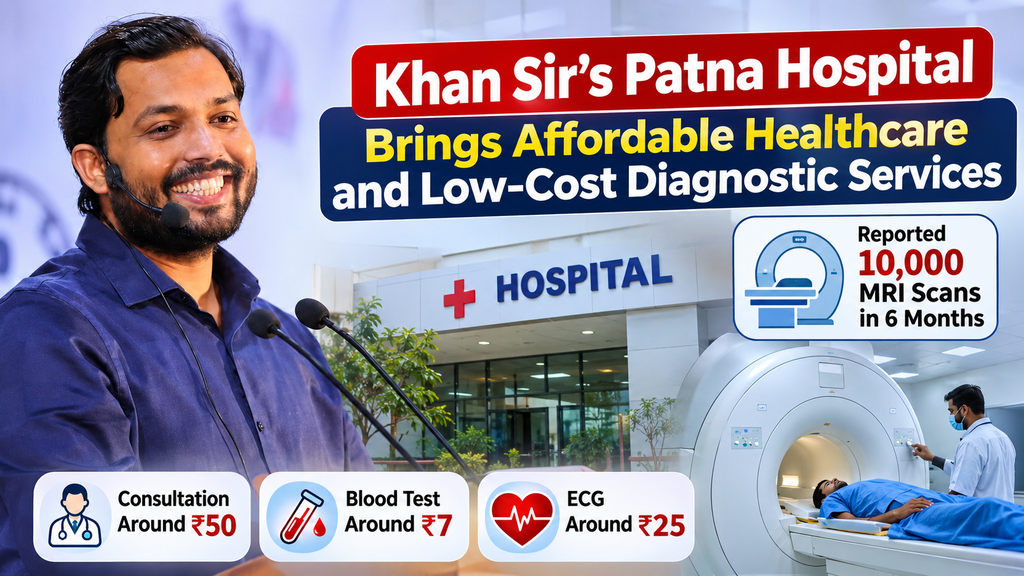
Access to affordable medical care remains a major challenge for millions of families in India. For patients with limited financial resources, the cost of consultations, diagnostic tests and advanced imaging can become a significant barrier to timely treatment. A healthcare initiative associated with Khan Sir in Patna is drawing attention to the importance of making medical services more accessible to ordinary people.
The initiative has highlighted the role of low-cost consultations and diagnostic services in reducing the financial burden on patients. Reports also indicate that the hospital has performed around 10,000 MRI scans within six months, generating discussion about the potential of affordable healthcare models in India.
Khan Sir Hospital Patna Focuses on Affordable Medical Services
The healthcare initiative in Patna has brought renewed attention to the affordability of medical consultations and diagnostic investigations. According to reports, consultations at the facility are available for approximately ₹50, while selected diagnostic services are offered at significantly reduced prices.
Reported examples include blood tests costing around ₹7 and ECG services priced at approximately ₹25. These figures highlight an approach that seeks to make essential healthcare services accessible to patients who may otherwise delay seeking medical attention because of financial constraints.
For many households, even a relatively inexpensive medical consultation can lead to additional expenses. Diagnostic investigations, medicines, transportation and follow-up appointments can increase the overall cost of treatment.
Affordable healthcare initiatives can help reduce some of these financial pressures, particularly for families that depend on daily wages or have limited access to medical insurance.
Hospital Reports 10,000 MRI Scans in Six Months
Advanced diagnostic imaging plays an important role in identifying medical conditions and supporting treatment decisions. However, MRI scans can be expensive for patients who do not have access to insurance coverage or subsidised healthcare facilities.
Reports associated with the Patna initiative indicate that the hospital performed approximately 10,000 MRI scans over a six-month period. The reported activity has also been linked to substantial savings for patients, with figures suggesting that the initiative helped save more than ₹5.5 crore.
These reported numbers highlight the potential impact of making advanced diagnostic services more affordable.
MRI technology is used across several medical specialties, including neurology, orthopaedics and oncology. Access to timely imaging can help clinicians investigate symptoms, assess medical conditions and plan appropriate treatment.
Nevertheless, the availability of diagnostic equipment alone does not guarantee better healthcare outcomes. Qualified medical professionals, appropriate clinical referrals, accurate reporting and proper patient follow-up remain essential components of effective medical care.
Why Affordable Healthcare Matters for Indian Families
Healthcare expenses can place considerable pressure on families, especially when treatment involves multiple investigations or long-term medical management.
Patients in smaller cities and economically disadvantaged communities may face additional difficulties accessing specialised healthcare. Limited availability of diagnostic facilities can require them to travel to larger cities, increasing both direct and indirect expenses.
Affordable diagnostic services in India can help address some of these challenges by reducing the financial barriers associated with medical investigations.
The importance of such initiatives extends beyond the price of individual tests. Lower costs may encourage patients to seek medical advice earlier rather than postponing consultations until symptoms become more serious.
However, affordability should always be supported by appropriate clinical standards. Medical investigations must be prescribed according to a patient’s condition, and diagnostic services should maintain established quality and safety requirements.
Healthcare Technology and the Future of Affordable Medical Services
The Patna initiative also raises important questions for India’s growing healthcare technology sector.
Healthcare innovation is frequently associated with artificial intelligence, advanced imaging equipment, digital health platforms and sophisticated medical software. However, the real-world value of these technologies depends significantly on whether patients can access and afford the services they support.
Healthcare technology can contribute to affordability through better appointment management, improved equipment utilisation, digital diagnostic reporting and more efficient hospital operations.
For example, hospital management systems can help coordinate patient appointments and reduce administrative delays. Digital medical records can support continuity of care, while appropriate technology-assisted workflows can help healthcare facilities manage resources more effectively.
At the same time, technology must complement qualified clinical professionals rather than replace essential medical judgement.
Healthcare providers must also consider equipment maintenance, staffing, patient privacy and long-term financial sustainability when developing affordable service models.
A Wider Conversation About Healthcare Accessibility in India
Khan Sir’s healthcare initiative in Patna has brought an important issue into public discussion: access to medical care should not depend entirely on a family’s financial circumstances.
The reported availability of low-cost consultations, diagnostic investigations and MRI services highlights the need to explore healthcare models that balance affordability with clinical quality.
For policymakers, healthcare providers and technology companies, the challenge is to make essential medical services more accessible while maintaining patient safety and reliable standards of care.
As India’s healthcare sector continues to evolve, initiatives that focus on affordability may offer valuable lessons for improving access to medical services across different communities.
Ultimately, the success of healthcare innovation should be measured not only by the sophistication of medical equipment but also by its ability to improve access, support timely diagnosis and reduce the financial burden on patients.
Disclaimer: This article is intended solely for general information and awareness and does not constitute professional advice, recommendation or endorsement; MedGate Today assumes no liability for decisions made based on its contents.