

Delhi Healthcare Infrastructure Gets Major Push as CM Rekha Gupta Highlights Medical Expansion
Delhi Chief Minister Rekha Gupta has outlined an ambitious vision to strengthen the capital's healthcare system, emphasising public-private partnerships, improved hospital infrastructure, medical workforce expansion and technology-driven healthcare services. Speaking at the inauguration of a newly

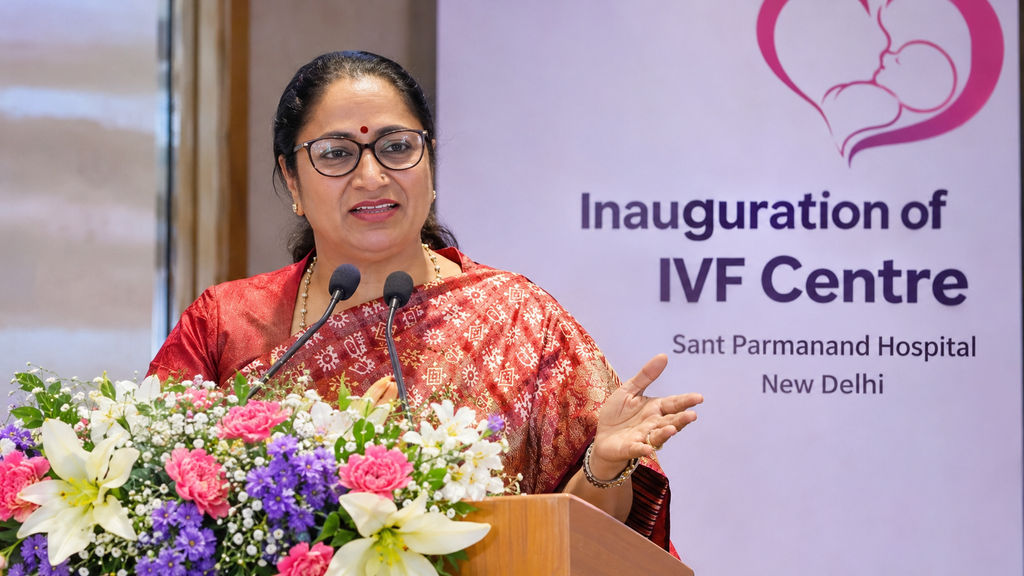
Delhi Chief Minister Rekha Gupta has outlined an ambitious vision to strengthen the capital’s healthcare system, emphasising public-private partnerships, improved hospital infrastructure, medical workforce expansion and technology-driven healthcare services.
Speaking at the inauguration of a newly established In Vitro Fertilisation (IVF) Centre at Sant Parmanand Hospital, the Chief Minister highlighted the importance of collaboration between government institutions and private healthcare providers to make quality medical services more accessible and affordable.
Delhi Expands Healthcare Coverage Under Ayushman Bharat
A major component of the Delhi government’s healthcare strategy is expanding financial protection for patients. Under the Ayushman Bharat scheme, the government has increased the annual health coverage from the Centre’s ₹5 lakh to a combined ₹10 lakh per eligible beneficiary family.
According to the Chief Minister, more than 8.94 lakh Ayushman cards have been approved in Delhi. Additionally, over 3.09 lakh senior citizens above 70 years have enrolled under Ayushman Vay Vandana, while more than 5.28 lakh beneficiaries associated with widow and disability pensions, along with their families, have received coverage.
Government Hospitals Receive Infrastructure Boost
The Delhi government is also focusing on strengthening healthcare services closer to residential communities. So far, 415 Ayushman Arogya Mandirs and 29 Jan Aushadhi Kendras have been operationalised.
Five major healthcare infrastructure projects, involving an investment of ₹503.49 crore, are currently underway across government hospitals. Existing improvements include a Neuro ICU at GB Pant Hospital and the availability of 300 dialysis machines across 16 government hospitals.
These developments are aimed at improving access to specialised treatment and reducing the burden on patients seeking advanced medical services.
Medical Education and Healthcare Recruitment to Expand
Addressing the shortage of trained medical professionals, the Chief Minister highlighted plans to increase MBBS seats from 595 to 820 and postgraduate medical seats from 553 to 762.
A new medical college is also being developed at Indira Gandhi Hospital in Dwarka, with an estimated investment of ₹805.99 crore.
The government has additionally recruited more than 1,200 nurses and 954 senior resident doctors, while approving over 4,000 new healthcare positions.
Digital Healthcare and Preventive Screening Initiatives
Digital transformation is another priority in Delhi’s healthcare development strategy. More than one crore ABHA IDs have been generated, and the Digital Health Management System has been introduced across 38 government hospitals.
Preventive healthcare measures include 56 free screening tests for newborns, 10,000 free cancer screenings and HPV vaccination initiatives for girls aged 9 to 14 years.
Sant Parmanand Hospital Opens Advanced IVF Centre
The newly inaugurated IVF Centre at Sant Parmanand Hospital adds another specialised reproductive healthcare facility to Delhi’s medical infrastructure.
The centre offers advanced fertility procedures, including Intracytoplasmic Sperm Injection (ICSI), supported by fertility specialists and embryologists. Its services include clinical assessment, fertility treatment and patient counselling.
The developments reflect the Delhi government’s broader focus on expanding healthcare capacity, improving medical access and strengthening the capital’s position as a leading healthcare destination.
By MedGate Bureau