
AIIMS Delhi Performs India’s First Open Fetal Surgery to Repair Unborn Baby’s Spine at 25 Weeks
Healthcare News Doctors at the All India Institute of Medical Sciences (AIIMS), New Delhi, have successfully performed India's first open fetal surgery to repair a severe spinal birth defect in an unborn baby at 25 weeks

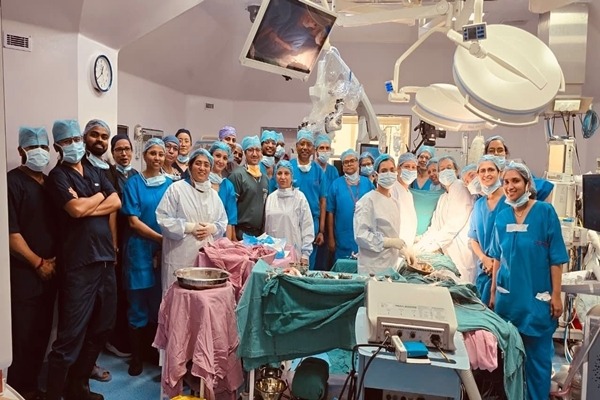
Doctors at the All India Institute of Medical Sciences (AIIMS), New Delhi, have successfully performed India’s first open fetal surgery to repair a severe spinal birth defect in an unborn baby at 25 weeks of pregnancy. The six-hour procedure, conducted on November 12 at the AIIMS Neurosciences Centre, marks a significant development in the country’s fetal medicine and paediatric neurosurgery capabilities.
The surgery was performed to treat lumbosacral myelomeningocele, the most severe form of spina bifida. The condition occurs when the neural tube does not close properly during early pregnancy, leaving an opening in the baby’s spine through which the spinal cord and its protective coverings protrude. This exposure can cause progressive nerve damage and lead to lifelong complications, including paralysis, bladder and bowel dysfunction and hydrocephalus, a condition involving excess fluid accumulation in the brain.
The procedure was performed by a multidisciplinary team led by Professor Dr Deepak Gupta, with the maternal-fetal medicine and obstetric teams led by Dr Neena Malhotra and Dr K Aparna Sharma. More than 30 clinicians and nurses from neurosurgery, obstetrics, maternal-fetal medicine, anaesthesia, plastic surgery, radiodiagnosis and neonatology participated in the operation.
The surgical intervention followed more than five weeks of preparation, involving detailed fetal imaging, parental counselling, anaesthetic planning and operative simulation. The team performed the repair using high-end surgical microscopy and continuous ultrasonography assistance, allowing the exposed spinal defect to be repaired while the baby remained inside the uterus.
According to AIIMS, both the mother and fetus were stable following the procedure and will continue to receive close multidisciplinary monitoring throughout the remainder of the pregnancy, delivery and newborn period. The surgery was provided free of cost under the Government of India’s Janani Shishu Suraksha Karyakram (JSSK).
The significance of prenatal repair is supported by international clinical evidence. The landmark Management of Myelomeningocele Study (MOMS) compared fetal surgery with conventional surgery performed after birth. Its findings showed that 40% of children who underwent prenatal surgery required a cerebrospinal-fluid shunt by 12 months of age, compared with 82% of children who received postnatal repair. Prenatal intervention was also associated with reduced hindbrain herniation and improvements in selected motor outcomes.
The procedure is particularly relevant in India, where the burden of neural tube defects remains a public health concern. According to estimates cited by specialists, approximately 1.2 lakh babies are born with neural tube defects annually, including an estimated 20,000–30,000 with open defects. A 2024 review of 27 Indian studies reported a pooled prevalence of 9.46 cases per 1,000 births, highlighting the need for stronger national surveillance and preventive interventions.
However, fetal surgery is not a cure and is suitable only for carefully selected pregnancies. Potential risks include premature labour, preterm delivery, bleeding, infection and complications associated with the uterine scar, which can also affect future pregnancies. Long-term neurosurgical, urological, orthopaedic and rehabilitation care may still be required.
AIIMS has indicated that it plans to develop a structured fetal-care programme to make the intervention available to eligible families. The development follows efforts initiated at the institute in 2012 to establish the expertise and infrastructure required for fetal spinal surgery.
The achievement highlights the importance of advanced tertiary-care infrastructure, specialised surgical teams and coordinated maternal-fetal services in expanding access to complex medical interventions within India’s public healthcare system.
.
By MedGate Bureau