
India’s Digital Healthcare Push Gains Momentum as ABHA IDs Link Millions of Health Records
Healthcare News India is advancing towards a connected digital healthcare ecosystem, with the Ayushman Bharat Digital Mission (ABDM) enabling patients to link medical records across participating hospitals, laboratories and healthcare providers through a unique ABHA ID. India's

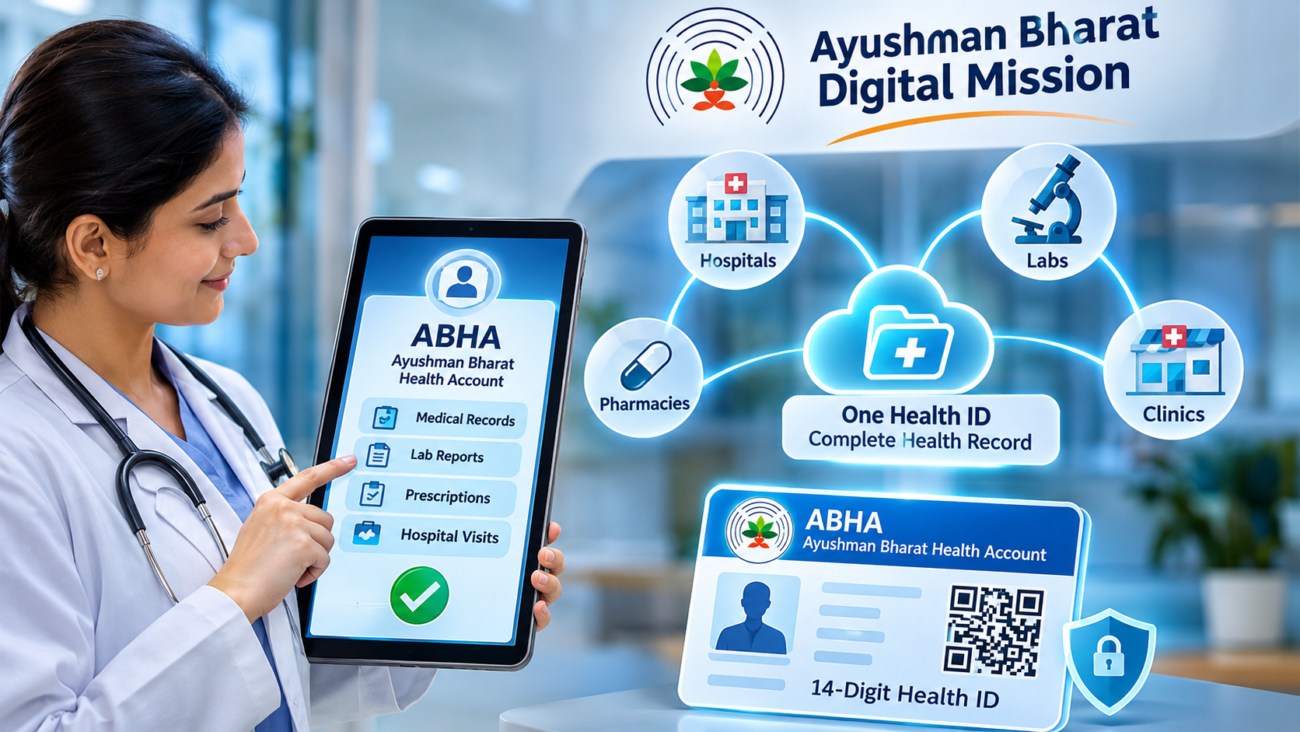
India is advancing towards a connected digital healthcare ecosystem, with the Ayushman Bharat Digital Mission (ABDM) enabling patients to link medical records across participating hospitals, laboratories and healthcare providers through a unique ABHA ID.
India’s healthcare system is moving towards a more connected and technology-driven model as digital health infrastructure continues to expand across the country. The Ayushman Bharat Digital Mission (ABDM) is playing a central role in this transformation by creating a digital framework that allows patients to manage and access their health information more conveniently.
At the centre of this initiative is the Ayushman Bharat Health Account (ABHA), a unique 14-digit identification number designed to digitally connect an individual’s health records across participating healthcare facilities.
ABHA Health ID Aims to Simplify Medical Record Management
Traditionally, patients have had to carry physical medical reports, prescriptions, diagnostic results and discharge summaries whenever they visit a new doctor or hospital. This process can make medical consultations time-consuming and sometimes leads to incomplete patient information.
Under the ABDM framework, individuals can link their medical records to their ABHA account through participating healthcare providers. With the patient’s consent, these records can be accessed and shared digitally, helping doctors understand medical history and make more informed clinical decisions.
The system is designed to improve continuity of care while reducing dependence on physical documentation.
India Expands Its Digital Health Infrastructure
The scale of India’s digital healthcare initiative is becoming increasingly significant. Figures highlighted in the accompanying report indicate approximately 98 crore ABHA health IDs and 121 crore linked medical records.
The growing digital database could also support healthcare research, public health planning and the development of artificial intelligence applications. However, the usefulness of this infrastructure will depend on data quality, interoperability, privacy safeguards and wider adoption by healthcare providers.
Can Digital Health Records Transform Healthcare Like UPI?
The ABDM framework follows a federated approach, allowing different healthcare systems to connect through common digital standards rather than requiring every hospital to operate on one central platform.
The National Health Authority oversees the mission, while technology providers and private healthcare organisations can develop compatible digital services.
Similar to how digital payment infrastructure simplified financial transactions, interoperable health records could reduce information gaps between healthcare providers. However, access to medical information remains subject to applicable consent and privacy requirements.
Adoption and Data Privacy Remain Important Priorities
Despite significant progress in creating ABHA IDs, wider adoption remains essential. Registration alone does not guarantee that patients and doctors will regularly use digital health services.
Healthcare facilities must integrate compatible systems, patients need to understand consent-based data sharing, and strong security measures must protect sensitive medical information.
India’s digital healthcare transformation will ultimately depend not only on the number of health IDs created but also on how effectively these records improve patient experience and healthcare delivery.
By MedGate Bureau