

AIIMS Nagpur Secures ₹30 Crore Funding for Advanced BSL-3 Laboratory
AIIMS Nagpur is set to expand its capacity for investigating high-risk infectious diseases following the approval of ₹30 crore for a Biosafety Level-3 (BSL-3) laboratory. The proposed facility is expected to strengthen advanced diagnostic capabilities,

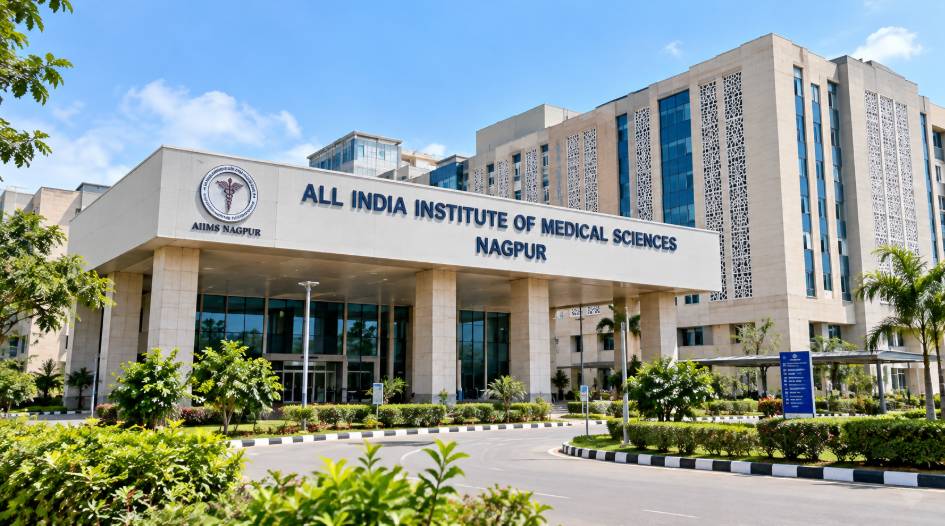
AIIMS Nagpur is set to expand its capacity for investigating high-risk infectious diseases following the approval of ₹30 crore for a Biosafety Level-3 (BSL-3) laboratory. The proposed facility is expected to strengthen advanced diagnostic capabilities, support infectious disease research and improve regional preparedness for emerging health threats.
The funding has been sanctioned by the National Centre for Disease Control (NCDC), New Delhi. According to information shared by AIIMS Nagpur leadership, the laboratory is expected to become operational in approximately one year. The approved amount will be used to develop the facility’s infrastructure, while staffing and laboratory equipment will be supported through separate budgets.
AIIMS Nagpur BSL-3 Laboratory to Strengthen Disease Investigation
The proposed BSL-3 laboratory is expected to enhance the institute’s ability to investigate infectious diseases that require specialised laboratory infrastructure and stringent biosafety precautions. Strengthening such facilities can support the timely examination of suspected infections and improve the capacity of healthcare institutions to respond to emerging disease threats.
AIIMS Nagpur Executive Director Prashant Joshi said that space had already been earmarked for the laboratory and that the sanctioned funding would be directed towards infrastructure development.
The project is also expected to reduce the region’s dependence on the National Institute of Virology (NIV), Pune, for certain advanced testing requirements. Developing additional diagnostic capacity within Maharashtra could support more efficient disease investigation and strengthen the state’s infectious disease surveillance network.
Why Advanced Biosafety Laboratories Matter
The need for advanced infectious disease laboratories has gained importance as public health systems face evolving challenges associated with emerging pathogens. Changes in land use, deforestation, climate conditions and increasing contact between humans and animals can influence the emergence and spread of zoonotic infections.
Laboratories equipped for specialised diagnostic work play an important role in identifying infectious agents and supporting investigations into unusual disease patterns. Their contribution extends beyond individual patient diagnosis, helping public health authorities gather evidence needed for surveillance, outbreak assessment and appropriate response measures.
A BSL-3 facility operates under enhanced containment and biosafety requirements designed for work involving specific infectious agents that can pose serious health risks. Its capabilities depend on the laboratory’s approved scope, validated infrastructure, trained personnel and established operating procedures.
AIIMS Nagpur Highlights the Role of Early Disease Detection
Meena Mishra, head of the Department of Microbiology at AIIMS Nagpur, emphasised the importance of combining syndromic surveillance with genomic surveillance to identify emerging infections at an early stage.
Syndromic surveillance involves monitoring symptoms and clinical patterns to identify unusual increases in illness. Genomic surveillance, meanwhile, can help researchers and public health specialists examine the genetic characteristics of pathogens, identify mutations and detect emerging infectious agents through methods such as whole-genome sequencing.
Together, these approaches can provide complementary information for assessing potential public health threats. Early identification of unusual disease trends can help authorities investigate possible outbreaks and implement preventive measures where necessary.
The development of stronger laboratory infrastructure, supported by surveillance systems and trained professionals, can therefore contribute to a more coordinated approach to infectious disease preparedness.
AIIMS Nagpur Also Upgrading Its Infectious Disease Laboratory
Alongside the proposed BSL-3 facility, AIIMS Nagpur is upgrading its existing Virus Research and Diagnostic Laboratory (VRDL) into an Infectious Disease Research and Diagnostic Laboratory (IRDL).
The separate project has an estimated cost of ₹17 crore and is being funded by the Indian Council of Medical Research’s Department of Health Research (ICMR-DHR). According to the reported project timeline, the upgraded laboratory is expected to become functional within three months.
The proposed IRDL will cover several areas of microbiology, including bacteriology, mycology, parasitology and virology. The expansion is intended to broaden the range of infections that can be investigated and strengthen the institute’s regional diagnostic and research capabilities.
AIIMS Nagpur’s microbiology department has also participated in national surveillance programmes. Mishra noted that the department had contributed to the process of granting PCR-testing status to more than 250 laboratories.
What the Laboratory Developments Mean for Maharashtra
The ₹30 crore BSL-3 laboratory project and the separate ₹17 crore IRDL upgrade represent two distinct investments in infectious disease infrastructure at AIIMS Nagpur.
While the proposed BSL-3 facility is expected to strengthen specialised biosafety and advanced disease investigation, the IRDL upgrade will broaden diagnostic coverage across multiple branches of microbiology. Together, the developments could support a stronger regional framework for laboratory testing, surveillance and infectious disease research.
The practical impact will depend on the timely completion of infrastructure, commissioning of the facilities, availability of trained personnel and implementation of appropriate laboratory protocols.
As both projects progress, their capabilities may become an important part of Maharashtra’s efforts to improve infectious disease preparedness and reduce dependence on external facilities for selected diagnostic requirements.
Disclaimer -The information contained herein is for general informational purposes only, does not constitute professional advice, and the publication assumes no responsibility for any actions taken based on this content.