
Gleneagles Hospital Saves 70-Year-Old Woman From Rare Esophageal Rupture Using Advanced Endoscopic And Fat Grafting Techniques
The patient developed a large tear in the lower food pipe following forceful vomiting. A multidisciplinary team at Gleneagles Hospital successfully treated her through advanced endoscopic vacuum therapy and autologous fat grafting, avoiding the need

The patient developed a large tear in the lower food pipe following forceful vomiting. A multidisciplinary team at Gleneagles Hospital successfully treated her through advanced endoscopic vacuum therapy and autologous fat grafting, avoiding the need for major surgery
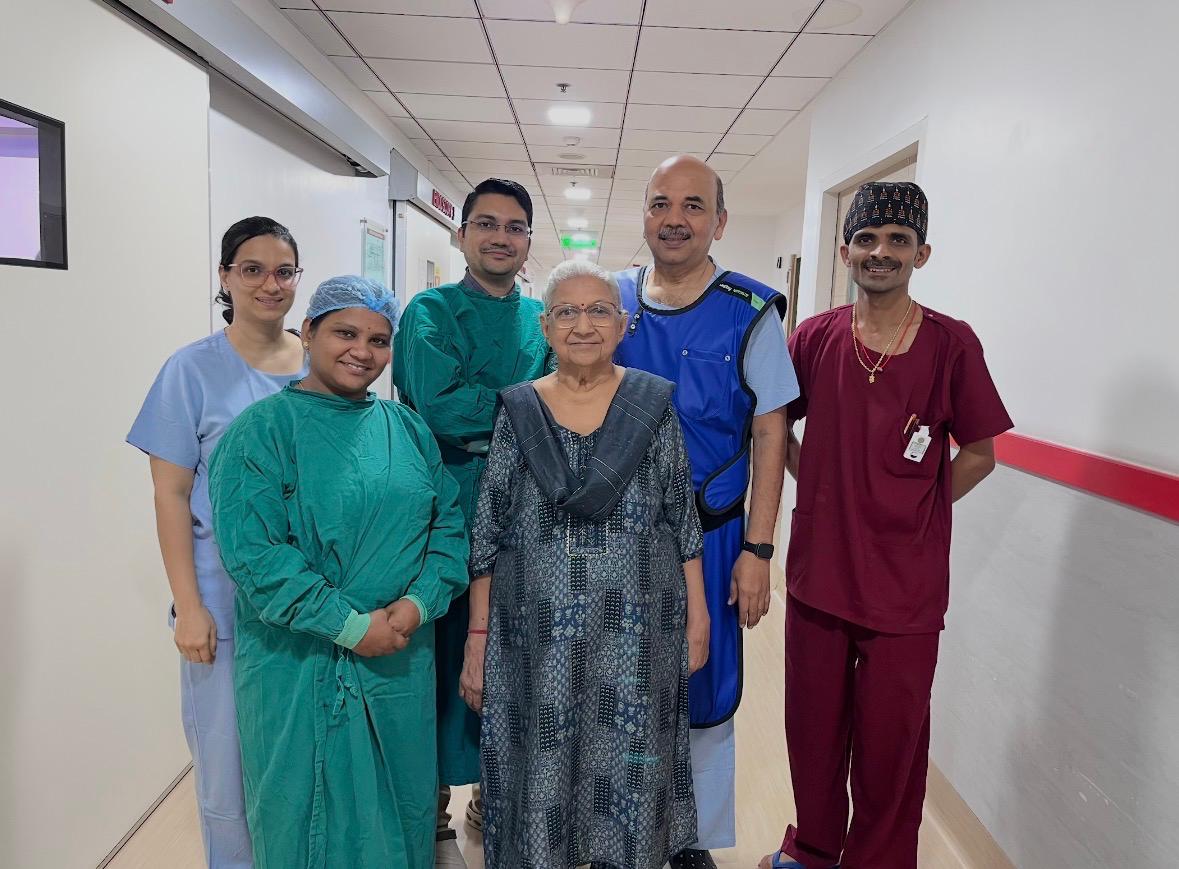
Mumbai: A team led by Dr. Shankar Zanwar, Senior Consultant Gastroenterologist, including Dr. Raj Kishore Agarwal, Internal Medicine Expert, Gleneagles Hospital Mumbai, successfully treated a 70-year-old woman suffering from a rare and life threatening rupture of the food pipe caused by forceful vomiting. The 70-year old patient arrived at the hospital with severe chest pain, difficulty swallowing, and breathing problems.
Detailed evaluation revealed a big hole in her lower esophagus (foodpipe), allowing food and infected material to leak into the chest cavity. Considering the complexity of the condition and the associated infection, the medical team opted for an advanced non surgical approach involving endoscopic vacuum therapy followed by autologous fat grafting. After multiple treatment sessions and weeks of dedicated care, the defect closed successfully, allowing the patient to recover without undergoing major surgery.
Patient Mrs. Manjula Shah, a resident of Parel, Mumbai, had been in good health until she experienced a severe episode of forceful vomiting and eating problem for 2 months. The family tried home remedies but failed to provide her much-needed relief. Soon after, she developed intense chest pain, increasing difficulty in swallowing food and liquids, and breathlessness. She was admitted to Gleneagles Hospital. After a gastroenterological evaluation because of swallowing difficulties, further investigations revealed a large perforation in the lower part of her food pipe. The condition was particularly concerning because leakage from the defect had already caused contamination and infection within the chest cavity.
Dr Shankar Zanwar, Senior Consultant Gastroenterologist, Gleneagles Hospital, Mumbai, said, “Detailed evaluation showed a large defect in the lower oesophagus, commonly known as the food pipe. Such tears are rare but can become life threatening because food particles, saliva, and infected material can leak into the chest cavity, leading to severe infections and complications. She was admitted for specialized care and managed through a coordinated multidisciplinary approach involving gastroenterologists, physicians, intensivists, anesthetists, and plastic surgeons.”
In most cases, surgery is considered the standard treatment option. However, due to the infection already present and the patient’s overall condition, we believed a less invasive approach would offer a safer pathway to recovery. Early diagnosis and timely intervention played a critical role in preventing further deterioration.
Dr. Shankar further added, “We decided to perform Endoscopic Vacuum Therapy (EVT), an advanced technique that helps promote healing. During the procedure, a specially designed vacuum enabled tube was placed endoscopically inside the food pipe at the site of the defect. The tube continuously removed infected fluids and stimulated healthy tissue growth, allowing the tear to gradually shrink. The vacuum system had to be replaced every three to four days, and the patient underwent nearly five to six treatment sessions over several weeks. This treatment reduced the size of the cavity and shrank the hole that had formed in the lower esophagus. However, a small residual opening remained, which required an additional innovative step to achieve complete closure.”
Dr. Shankar added, “To close the remaining defect, we harvested a small amount of the patient’s own fat tissue from her thigh. The fat was carefully processed through centrifugation and then injected into the residual defect. Using the patient’s own tissue helped enhance healing and tissue regeneration while reducing the risk of rejection or complications. The defect subsequently closed completely, eliminating the need for major surgery. The patient was discharged after three to four weeks in a stable condition. What made this case truly remarkable was the patient’s commitment to a prolonged treatment process. Without timely intervention, this condition could have resulted in severe infection, sepsis, respiratory complications, and even death. This case highlights how advanced endoscopic techniques, combined with multidisciplinary expertise, can successfully manage even highly complex gastrointestinal emergencies while avoiding major surgery.
“Early this year, my mother was admitted to Gleneagles Hospital in a critical condition. What initially seemed like severe vomiting and chest discomfort turned out to be a rare and life threatening oesophageal rupture or Boerhaave syndrome. She also developed serious infections and complications. We, as a family, were worried. The entire experience was frightening because she had never imagined that vomiting could lead to such a serious condition. Eating, drinking, and even breathing became difficult, and we were worried about undergoing major surgery at this age. The treatment required patience and multiple procedures, but the doctors explained every step and gave us confidence throughout the journey. We are thankful to the entire team of doctors, nurses, and hospital staff for their dedication, care, and support. Today, she is relieved to be able to eat comfortably and return to her normal life. Our family will always remain grateful to Gleneagles Hospital and Dr Shankar for giving my mother a second chance at life,” said son CA Bhavesh Shah.
“This case demonstrates the importance of advanced medical innovation and collaborative care in managing highly complex conditions. We are delighted to see Mrs. Gala recover well and regain her quality of life,” concluded Dr. Bipin Chevale, CEO, Gleneagles Hospital Mumbai.