
India Backs Indigenous 32-Slice CT Scanner; Karnataka-Based Panacea Medical Technologies to Lead Development
India has taken another step towards strengthening domestic medical device manufacturing, with the Technology Development Board (TDB), under the Department of Science and Technology (DST), signing an agreement with Karnataka-based Panacea Medical Technologies Pvt. Ltd.

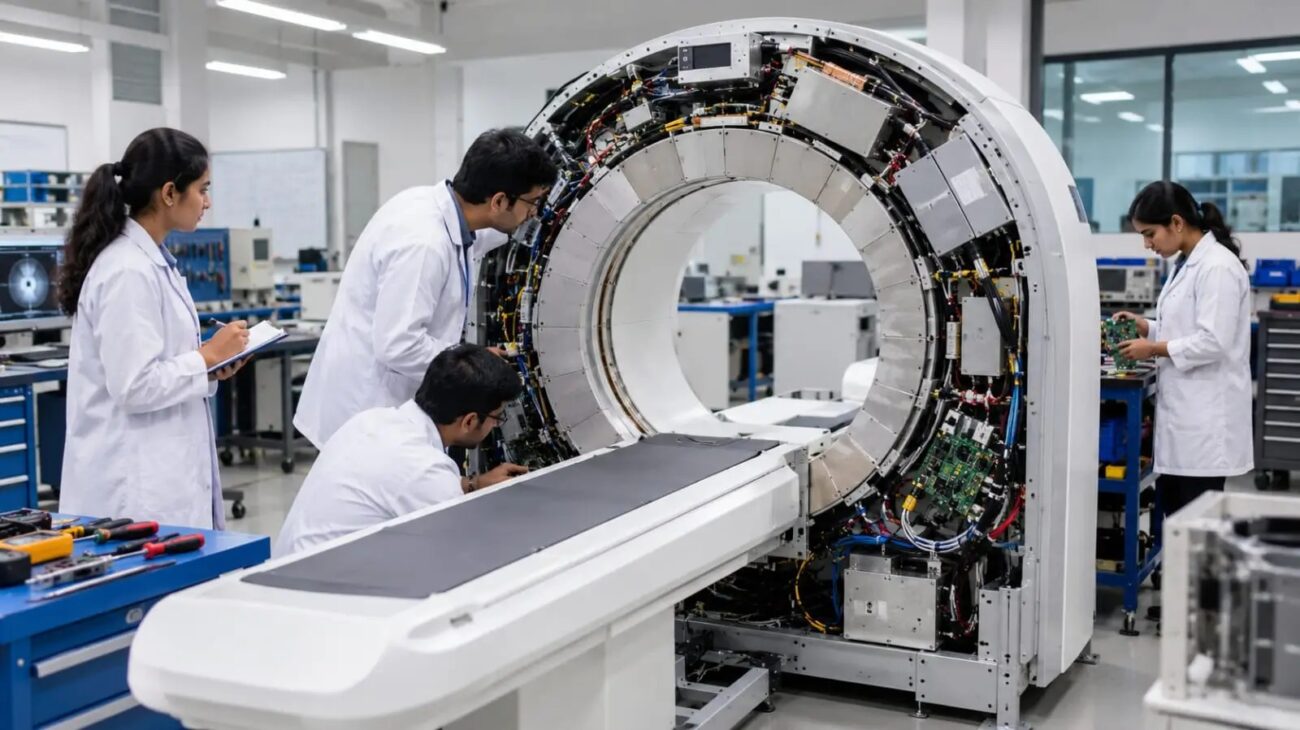
India has taken another step towards strengthening domestic medical device manufacturing, with the Technology Development Board (TDB), under the Department of Science and Technology (DST), signing an agreement with Karnataka-based Panacea Medical Technologies Pvt. Ltd. to support the development and commercialisation of an indigenous 32-slice computed tomography (CT) scanner.
The initiative aims to expand India’s capabilities in advanced diagnostic imaging and reduce dependence on imported medical technologies. The project aligns with the Government of India’s Make in India initiative, which identifies medical devices as a priority sector for domestic manufacturing and technology development.
Based in Malur, Karnataka, Panacea Medical Technologies specialises in radiology, radiotherapy and medical equipment used in cancer treatment. The company plans to build on its existing expertise in high-precision imaging to develop a diagnostic CT scanner for use across multiple clinical disciplines.
A CT scanner uses rotating X-ray systems and digital detectors to capture cross-sectional images of the body. Computer algorithms reconstruct these images, helping clinicians examine internal structures and support the diagnosis and assessment of a range of medical conditions. Developing such systems requires the integration of imaging components, precision engineering and rigorous calibration to ensure image quality and patient safety.
The proposed 32-slice scanner is intended to strengthen India’s indigenous capabilities in diagnostic imaging equipment. However, the government’s announcement does not specify a commercial launch date, the project’s funding amount, the scanner’s final technical specifications or its expected pricing.
Commenting on the initiative, Rajesh Kumar Pathak, Secretary of the Technology Development Board, said the project aligns with the government’s vision of strengthening domestic manufacturing of high-end medical devices. He noted that support for indigenous technology development could help Indian companies create solutions suited to domestic healthcare needs while opening opportunities in international markets.
Panacea Medical Technologies said the collaboration would accelerate its efforts to develop indigenous diagnostic imaging technology and contribute to making advanced CT imaging more accessible across India.
The initiative comes amid growing demand for diagnostic imaging, driven by expanding healthcare infrastructure, the rising burden of chronic diseases and the need for timely diagnosis. Developing locally manufactured imaging systems could help build domestic technical expertise and create opportunities to strengthen the medical device supply chain.
For India’s healthcare infrastructure, the project represents a development milestone rather than an immediate addition to diagnostic capacity. Its eventual impact will depend on successful technology development, validation, regulatory requirements, commercialisation and adoption by healthcare providers.