

India makes history in spine surgery: First human implantation of AI-designed ceramic disc, American CEO walks within 90 minutes
Dr. V. Anand Naik performs the first human implantation of Nivalon EvoFlex at Paras Health, Gurugram, combining artificial intelligence, patient-specific implant engineering and advanced ceramic 3D printing in a new approach to personalised spine surgery. Gurugram,

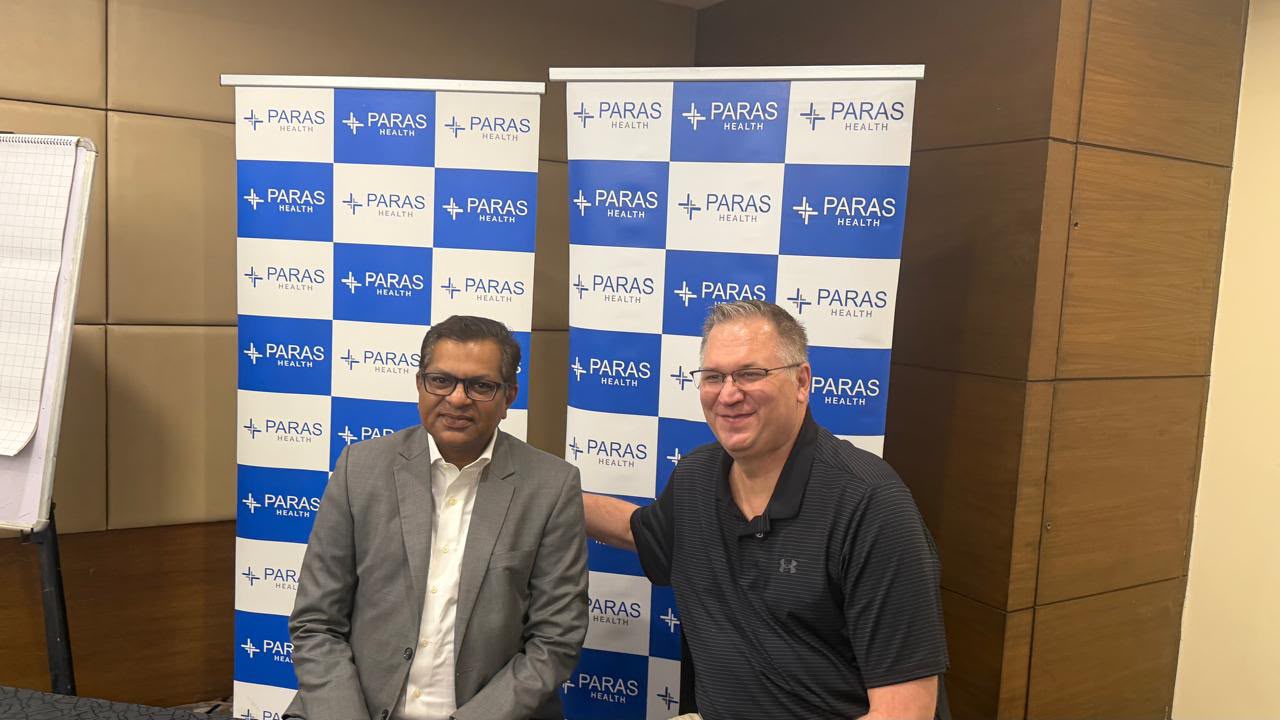
Dr. V. Anand Naik performs the first human implantation of Nivalon EvoFlex at Paras Health, Gurugram, combining artificial intelligence, patient-specific implant engineering and advanced ceramic 3D printing in a new approach to personalised spine surgery.
Gurugram, 17th November 2026: In a landmark development in global spine surgery, the world’s first documented human implantation of an artificial lumbar disc independently designed by artificial intelligence has been successfully performed in India. The Nivalon EvoFlex, a next-generation, individually customised, non-metallic, 3D-printed ceramic viscoelastic artificial disc, was implanted by Dr. V. Anand Naik, Director – Orthopaedics Spine & Limb Reconstruction, Paras Health, Gurugram on 30 October 2026. The procedure brings together AI-generated implant design, patient-specific anatomical modelling and advanced ceramic manufacturing to explore new possibilities in personalised, motion-preserving spine surgery.
The patient, Mr. Todd Hodrinsky, a 54-year-old American citizen and CEO of Nivalon, had been suffering from severe lower back pain for nearly 10 years. In an encouraging early recovery, he was able to stand and start walking just 90 minutes after surgery, despite having been bedbound before the procedure. Dr. Naik was the operating surgeon and a key clinical contributor to the development of the implant, bringing his surgical expertise and understanding of spinal biomechanics into the design process.
Mr. Hodrinsky’s condition progressively affected his mobility, independence and ability to carry out everyday activities. His symptoms eventually left him confined to bed, with severely restricted movement and significant neurological weakness in his right lower limb. His muscle power had reduced to Grade 3, and prolonged conservative treatment had failed to provide satisfactory relief.
Preoperative CT and MRI scans revealed degenerative disc disease at the L4-L5 and L5-S1 levels. The condition involves the gradual deterioration of the cushioning discs between the vertebrae and can cause persistent pain, restricted movement and, in some cases, nerve-related weakness in the legs. The scans helped assess his spinal anatomy and degenerative condition and also formed the basis for designing an implant tailored to his individual requirements. Given the severity of his symptoms and neurological impairment, surgical intervention was recommended.
Commenting on the procedure, Dr. V. Anand Naik, Director – Orthopaedics Spine & Limb Reconstruction, Paras Health, Gurugram, said, “Artificial disc replacement has traditionally relied on implants manufactured in standard sizes and configurations. With Nivalon EvoFlex, the aim was to explore an approach in which the implant could be designed around an individual’s anatomy. Artificial intelligence independently generated the design using the patient’s CT and MRI data, which was then manufactured through advanced ceramic 3D printing. This combines personalised implant engineering with the principles of motion preservation. The patient’s ability to stand and walk within 90 minutes of surgery is particularly encouraging. However, continued clinical follow-up will be essential to assess the implant’s long-term performance, safety and ability to preserve spinal movement.”
Sharing his experience, Mr. Todd Hodrinsky, CEO of Nivalon, said, “Choosing to undergo a procedure involving a first-of-its-kind technology was a significant decision, and I am grateful for the confidence and reassurance I received throughout the process. I would like to sincerely thank Dr. Anand Naik for his expertise, guidance and commitment, and the entire team at Paras Health for the care and attention they extended to me. I am encouraged by the progress so far and hopeful about what this approach could mean for patients with similar spinal conditions in the future. My focus now is on continuing my recovery and making steady progress towards better health and mobility.”
The choice of artificial disc replacement over conventional spinal fusion was guided by the objective of preserving movement at the operated segment and maintaining more physiological spinal biomechanics. While spinal fusion joins two adjacent vertebrae and eliminates movement at that level, artificial disc replacement removes the damaged disc and replaces it with an artificial one designed to maintain mobility between the vertebrae. For appropriately selected patients, this motion-preserving approach may offer an alternative to fusion.
Nivalon EvoFlex seeks to address a longstanding limitation of conventional artificial discs, which are generally manufactured in predetermined sizes and configurations. Individual anatomical variations can make achieving an optimal fit challenging. The implant brings together three key technological elements: AI-assisted digital design, patient-specific anatomical modelling and advanced ceramic 3D printing. Together, these enable an approach in which the implant is designed around the patient’s anatomy rather than requiring the patient’s anatomy to accommodate a standard-sized device.
For Mr. Hodrinsky, artificial intelligence independently generated the implant design using his CT and MRI imaging data, without direct human intervention in the design-generation process. The resulting design was manufactured using advanced ceramic 3D-printing technology, which enables complex geometries tailored to individual anatomical and biomechanical requirements. Its ceramic viscoelastic architecture is intended to support movement at the operated spinal segment, bringing together personalised engineering and the principles of motion preservation in a single artificial disc.
The surgery lasted approximately four hours, with intraoperative blood loss of less than 50 mL and no reported complications. Following implantation, Mr. Hodrinsky reported complete relief from his preoperative pain. His neurological function also showed progressive improvement, with motor power in the affected lower limb recovering by the time of discharge. He was discharged on 3 November 2026, four days after surgery. His recovery will continue to be monitored as he progresses towards resuming his routine activities.
The first human implantation of Nivalon EvoFlex marks an important milestone in the development of personalised spinal implants, bringing artificial intelligence and advanced manufacturing into the field of motion-preserving spine surgery. While the patient’s early recovery is encouraging, continued clinical follow-up will be necessary to evaluate the implant’s long-term performance, safety and effectiveness, and assess its potential role in the future of artificial disc replacement.
.
By MedGate Bureau