
Nanomedicine to Drive Next Generation of Precision Medicine and Personalised Healthcare: Jitendra Singh
Nanomedicine is expected to play a major role in advancing the next generation of precision medicine and personalised healthcare, Union Minister of State for Science and Technology Dr Jitendra Singh said at the inaugural session

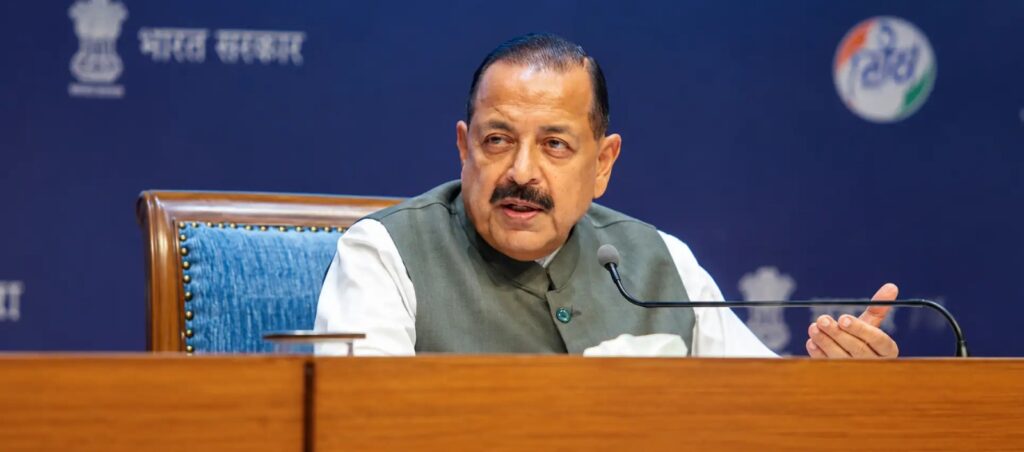
Nanomedicine is expected to play a major role in advancing the next generation of precision medicine and personalised healthcare, Union Minister of State for Science and Technology Dr Jitendra Singh said at the inaugural session of the World Congress on Nanomedicine 2026 at Vigyan Bhawan, New Delhi. He highlighted India’s growing capabilities in nanomedicine research and its potential to develop indigenous healthcare solutions with global applications.
Nanomedicine involves the application of nanotechnology in medicine, working with structures at the scale of one-billionth of a metre. According to Singh, the technology could enable interventions at the cellular level and support more individualised treatment based on factors such as a patient’s genetic profile, lifestyle, dietary habits and environmental conditions.
The government is currently supporting 210 nanomedicine research and development projects through the Department of Biotechnology (DBT), with financial assistance of ₹174 crore. The projects cover areas including targeted drug delivery, cancer and infectious-disease nanomedicine, nucleic-acid and vaccine delivery, nano-diagnostics and imaging, regenerative medicine, wound healing, nanotoxicology and regulatory science.
Singh also highlighted research areas such as oral insulin nanoparticles, breast cancer nanobots, precision nanoinjection and targeted breast cancer nanomedicine. He noted that nanotechnology could potentially address challenges associated with oral insulin delivery, including absorption and the impact of digestive enzymes.
The World Congress on Nanomedicine 2026, hosted by the Institute of Nano Medical Sciences, Faculty of Medical Sciences, University of Delhi, has brought together more than 2,000 participants, including scientists, researchers and young professionals. Singh also emphasised that technologies such as AI and nanotechnology should complement, rather than replace, doctors’ clinical judgement. India has additionally established nanopharmaceutical guidelines developed jointly by DBT, ICMR and CDSCO covering safety, quality and efficacy evaluation.