
NITI Aayog Unveils Strategic Roadmap to Position Ayurveda as a Global Healthcare System by 2047
In a major push to establish India as a global leader in traditional medicine, NITI Aayog has released a comprehensive report titled "Strategic Roadmap for Making Ayurveda Global", outlining a phased strategy to transform Ayurveda

In a major push to establish India as a global leader in traditional medicine, NITI Aayog has released a comprehensive report titled “Strategic Roadmap for Making Ayurveda Global”, outlining a phased strategy to transform Ayurveda into a globally recognized, evidence based healthcare system by 2047. The report recommends the creation of a Global Ayurveda Register (GAR), a World Federation for Ayurveda and Yoga, and an Ayurvedic Pharmacopoeia Export Edition to strengthen international acceptance and market access for Ayurvedic products and services.
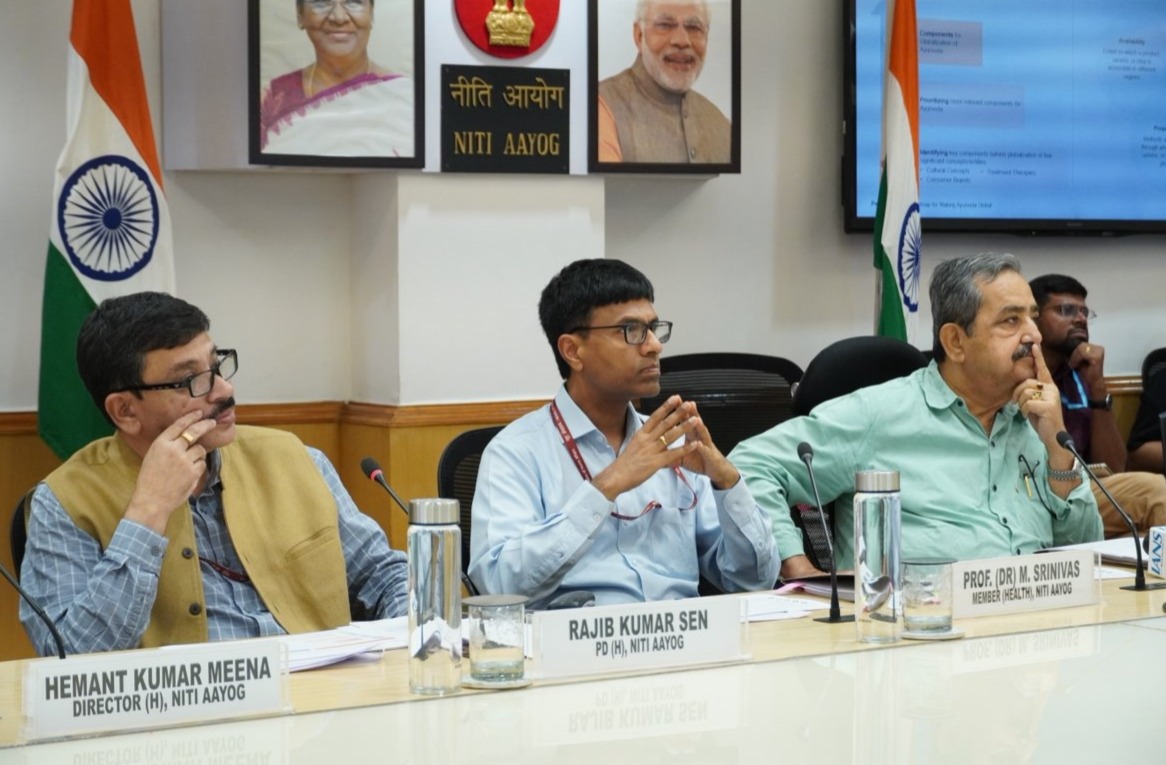
The report was launched by Dr. Ashok Kumar Lahiri, Vice Chairman, NITI Aayog, in the presence of Prof. (Dr.) M. Srinivas, Member, NITI Aayog, and Vaidya Rajesh Kotecha, Secretary, Ministry of Ayush. Developed by NITI Aayog’s Health Division in collaboration with PricewaterhouseCoopers (PwC), the study draws upon stakeholder consultations, international benchmarking and evidence based analysis to identify key barriers and opportunities for the globalization of Ayurveda.
The roadmap proposes a strategic framework based on three pillars -Availability, Acceptability and Propagation to expand Ayurveda’s global footprint. Key recommendations include establishing a real time Ayurveda trade dashboard, strengthening collaboration between industry and academia, creating internationally recognized licensing and accreditation systems, and promoting high value finished Ayurvedic products over raw material exports.
According to the report, India currently has more than 3.55 lakh trained Ayurveda practitioners, accounting for nearly 95 percent of the world’s qualified Ayurveda workforce. However, the international presence of Ayurveda professionals remains limited, highlighting the need for global regulatory harmonization, standardized education frameworks and expanded international training programmes.
The roadmap also emphasizes upgrading manufacturing standards to align with WHO GMP equivalent norms, developing globally accepted quality standards, chemical fingerprinting systems and evidence generation frameworks to improve international acceptance of Ayurvedic products and therapies. It further recommends strengthening the role of the Ayush Export Promotion Council as a specialized body for market intelligence, regulatory facilitation and export promotion.
India’s AYUSH sector has witnessed rapid growth in recent years, with the country’s bioeconomy and wellness sectors benefiting from increasing global interest in traditional and integrative medicine. Healthcare experts believe that the globalization of Ayurveda presents significant opportunities not only for healthcare exports but also for medical value travel, wellness tourism, employment generation and India’s soft power diplomacy.
Speaking at the launch, NITI Aayog officials emphasized that the globalization of Ayurveda extends beyond market expansion and aims to provide evidence based, holistic healthcare options to populations worldwide. Experts noted that achieving this vision would require coordinated action involving the Ministry of Ayush, industry stakeholders, academia, international organizations and regulatory authorities.
The strategic roadmap marks one of the most comprehensive policy efforts undertaken to internationalize India’s traditional medicine systems and reinforces the country’s ambition to position Ayurveda as a globally recognized pillar of healthcare, wellness and preventive medicine by the centenary of India’s independence in 2047.