
₹8,447 Crore in Medicine Overcharging Claims Remain Unpaid as Supreme Court Seeks Wider Price Controls
More than ₹8,447 crore in medicine overcharging claims remains outstanding in India, highlighting persistent enforcement challenges in pharmaceutical price regulation as the Supreme Court examines whether price controls should be extended to more medicines and

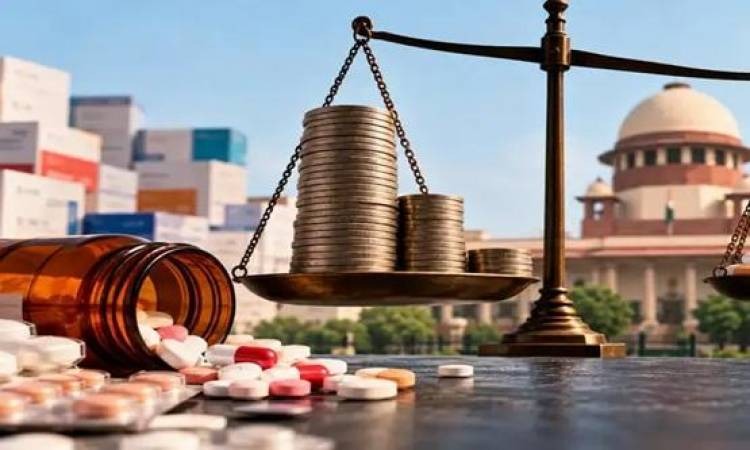
More than ₹8,447 crore in medicine overcharging claims remains outstanding in India, highlighting persistent enforcement challenges in pharmaceutical price regulation as the Supreme Court examines whether price controls should be extended to more medicines and medical products.
According to data reported by The Hindu, the National Pharmaceutical Pricing Authority (NPPA) had demanded approximately ₹10,029.8 crore from companies for overcharging, but had recovered only ₹1,582.4 crore as of March 2026. The outstanding amount of ₹8,447.4 crore represents approximately 84.2% of total demands, leaving the bulk of the claimed dues unrecovered.
More than ₹5,800 crore of the outstanding amount is tied up in court cases. A further ₹200 crore relates to matters referred to district collectors for recovery, while ₹2,369.3 crore remains under processing. The figures underline the difficulty of translating regulatory findings into actual recoveries.
The developments come as the Supreme Court presses the Centre to examine broader controls on medicine prices and trade margins. The government has indicated a 30% trade-margin cap for non-scheduled anti-cancer medicines, which are not covered by the standard ceiling-price list. The Court has questioned whether similar measures could be considered for other medicines and medical products.
Under the Drugs (Prices Control) Order, 2013, the NPPA fixes ceiling prices for scheduled formulations. Prices of non-scheduled medicines are subject to different provisions, including restrictions on annual price increases. This distinction leaves many medicines outside the direct ceiling-price mechanism applied to scheduled formulations.
The issue has significant implications for patients who pay for medicines out of pocket, as well as public healthcare programmes that reimburse treatment costs. A 2025 expenditure comparison cited in the report showed that medicines accounted for ₹6,368 of an average rural hospitalisation bill of ₹32,884 and ₹6,948 of an urban bill of ₹46,774.
However, recovering overcharging claims from pharmaceutical companies is separate from compensating individual patients. The outstanding figures therefore reflect regulatory recovery demands and should not be interpreted as a direct estimate of refunds owed to consumers.
The Supreme Court is scheduled to revisit the matter on October 27, 2026. Any expansion of price controls will depend on the government’s response and subsequent policy or regulatory action. For India’s pharmaceutical sector, the case places renewed focus on pricing transparency, timely recovery of dues and the balance between commercial practices and affordable access to medicines.