
51-Year-Old Woman Survives Life-Threatening Pulmonary Embolism and Giant Uterine Fibroid at Medicover Hospital
The patient was rushed to the hospital after experiencing sudden breathlessness, severe calf pain, collapse, and loss of consciousness, requiring immediate and urgent medical intervention to avert a potentially fatal outcome A multidisciplinary team consisting of Dr

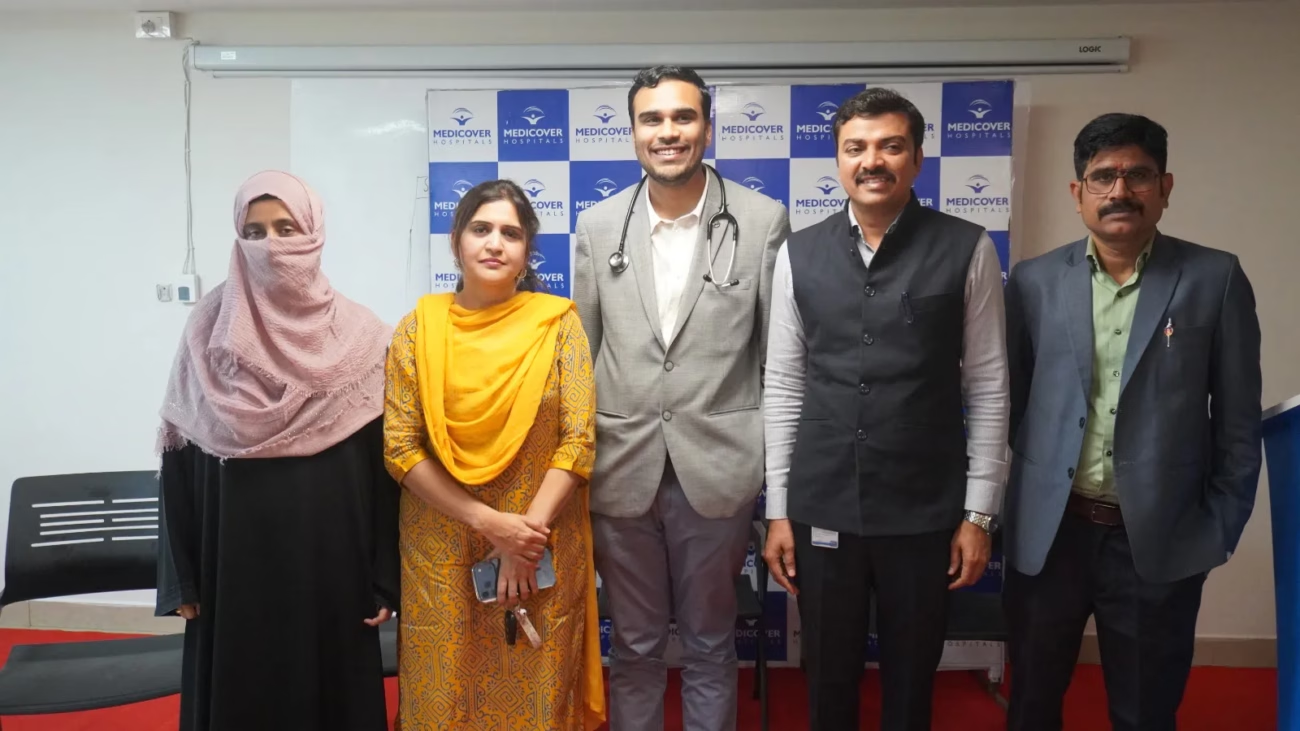
A multidisciplinary team consisting of Dr Badal Taori, Internal Medicine, Dr Anuranjita Pallavi, Gynecologist, Dr Dharmik Bhuva, Interventional Radiologist, Dr Vivek, Surgical Oncologist, successfully treated a 51-year-old woman who was brought to the emergency department after sudden breathlessness, severe calf pain, collapse, and loss of consciousness. What initially appeared to be leg pain quickly turned into a critical emergency when investigations revealed a massive saddle-shaped blood clot lodged in the main artery of her lungs, a condition known as pulmonary embolism, along with a giant uterine fibroid extending up to the chest region. Thanks to immediate ICU admission, advanced interventional procedures, and complex surgery, the patient has now recovered well.
Patient Mrs. Oneza Gite, a homemaker and resident of Dighi Village in Shrivardhan Taluka, Raigad district, had been silently struggling with her health for nearly eight months. During this time, she experienced significant weight loss and repeated episodes of heavy menstrual bleeding, which gradually began to affect her strength and daily life. Despite visiting the doctor, her condition did not improve, and the symptoms continued to trouble her.
On 4th February 2026, her condition suddenly worsened. While bending down at home, she fainted and collapsed, leaving her family extremely worried. Realizing the seriousness of the situation, she was first taken to Shrivardhan Hospital for immediate attention. However, due to the complexity of her condition, she was shifted to Medicover Hospital for further evaluation and advanced treatment.
The patient was admitted on 5th February, 2026, under the care of Dr Badal Taori after experiencing acute breathlessness, a cold sensation in her lower limb, sudden collapse, and repeated vomiting while being rushed to the hospital. She also reported loose motions and persistent calf pain before the episode. Given the severity of her symptoms, she was immediately shifted to the ICU. A CT Pulmonary Angiography (CTPA) confirmed a life-threatening saddle-shaped thrombus in the main pulmonary artery extending into both the right and left pulmonary arteries, a condition that can rapidly turn fatal if not treated immediately. Further CT abdomen imaging revealed a giant uterine leiomyoma (fibroid) with degenerative changes, reaching up to the xiphisternum (lower part of the chest bone).
Dr Badal Taori, Internal Medicine, said, “When the patient arrived, she was breathless, unstable, and had already suffered a collapse. Her oxygen levels were fluctuating, and her pulse was high. The CT scan showed a saddle pulmonary embolism, which means a large blood clot was sitting at the main junction of the lung arteries and blocking blood flow to both lungs. This is one of the most dangerous forms of pulmonary embolism because it can suddenly strain the heart and lead to cardiac arrest. Immediate ICU monitoring and urgent intervention were crucial. Pulmonary embolism can present with sudden breathlessness, chest discomfort, fainting, or collapse. Many people ignore early symptoms like calf pain or leg discomfort, but these can sometimes signal underlying clot formation. In middle-aged individuals, risk factors may include prolonged immobility, hormonal factors, obesity, underlying tumors, or blood clotting disorders.”
On 7th February, Dr Dharmik Bhuva, Interventional Radiologist, performed a mechanical catheter-directed thrombectomy along with thromboaspiration and thrombolysis through the femoral vein. The procedure involved inserting a thin tube through a vein in the leg and guiding it carefully up to the lung arteries to mechanically break and remove the clot, while simultaneously delivering clot-dissolving medication directly at the site. A Doppler study of the lower limb did not reveal deep vein thrombosis. On 10th February, the patient underwent venoplasty and infrarenal IVC filter placement to prevent any future clots from traveling to the lungs.
Dr Anuranjita Pallavi, Gynecologist, said, “This was a complex and high-risk case because the patient had not only a massive pulmonary embolism but also a giant uterine fibroid occupying significant abdominal space. The priority was stabilizing her breathing and removing the life-threatening lung clot. Once her condition improved, we addressed the underlying cause. Large pelvic tumors can sometimes compress veins and increase the risk of clot formation. After careful planning and stabilization, a total abdominal hysterectomy with bilateral salpingo-oophorectomy was performed under general anesthesia. The fibroid was extremely large, reaching up to the xiphisternum. A massive 30 cm, 4 kg uterine mass was surgically removed through an abdominal incision in a complex procedure that lasted three hours. Not treating her at the right time could have led to loss of life. Managing such a case requires coordination between critical care, interventional radiology, and gynecology teams. Early recognition, quick decision-making, and teamwork saved her life.”
Following surgery, the patient was closely monitored in the ICU and responded well to treatment. She was gradually stabilized, shifted to the ward on 18th February 2026, and physiotherapy was initiated. With supervised out-of-bed mobilization and rehabilitation, she steadily regained strength.
Dr Badal Taori said, “After the procedures and surgery, the patient showed steady improvement. Her breathing normalized, her heart function stabilized, and she was gradually mobilized. She has been started on appropriate blood-thinning medications to prevent recurrence. On follow-up, she is doing well and has resumed light daily activities. We are seeing an increasing number of pulmonary embolism cases in the 40–60 age group, often linked to sedentary lifestyle, hormonal changes, obesity, long travel, or undiagnosed tumors. The key message is that sudden breathlessness, unexplained leg pain, or fainting should never be ignored. Early medical attention can be life-saving.”
Sharing her experience, the patient Oneza Gite said, “I remember feeling sudden breathlessness, and then everything went blank. I was told later that my condition was critical. I never imagined that calf pain could lead to something so serious. The skilled team of doctors constantly reassured my family and took immediate action. From the emergency treatment to the surgery, every step was explained to us with patience. Today, I feel grateful and blessed to be alive. I am slowly getting back to my routine and focusing on recovery. I truly feel I have been given another chance at life.”
“This case highlights the importance of coordinated expert care and the availability of advanced interventional and surgical facilities at Medicover Hospital. Timely imaging, round-the-clock ICU care, and coordinated expertise across departments prevented a fatal outcome. Creating awareness about early symptoms and seeking immediate care can save many lives,” concluded Sandip Joshi, Centre Head, Medicover Hospitals, Navi Mumbai.