
Redefining Possibility: How ABO-Incompatible Transplants Are Expanding Donor Options
The interactive discussion recently happened with prof hiroto egawa, considered as world's authority on ABOI, at PSRI hospital. It focused on current challenges in ABOI transplantation and the way forward. “Hosting Dr. Egawa was an

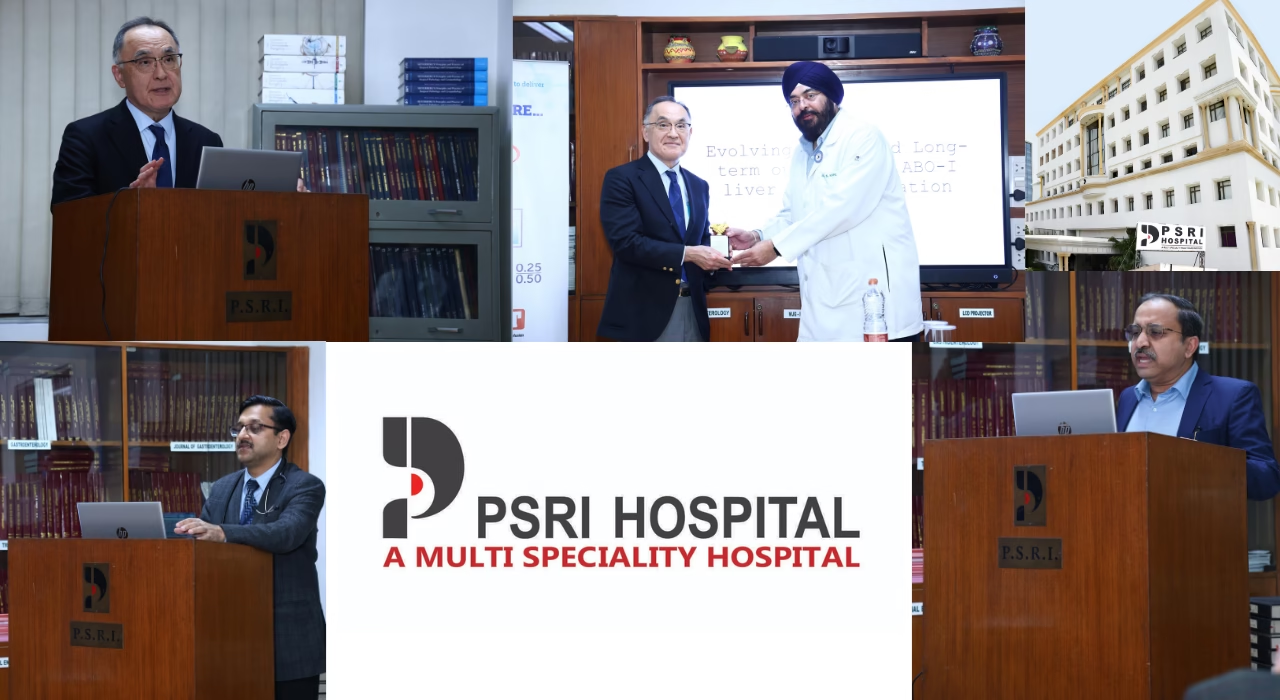
The interactive discussion recently happened with prof hiroto egawa, considered as world’s authority on ABOI, at PSRI hospital. It focused on current challenges in ABOI transplantation and the way forward. “Hosting Dr. Egawa was an honour for PSRI Hospital. His insights significantly strengthened our protocols and help us offer safer, more accessible transplant options to patients.”
ABO-incompatible (ABOI) tranplants or transplants across blood group barriers historically are regarded as contraindications for living donor liver transplantation (LDLT).
ABOI transplants now however, have advanced from once-prohibitive risk to a widely viable clinical option thanks to progress in and better understanding of transplant immunology and post transplant immunosuppressive and clinical management.
“With nuclear families becoming the norm, finding a blood-group compatible living donor is one of the biggest challange towards a successful transplant.
In an ABOI transplant the recipients are tested for antibody levels against the proposed donor’s blood group and they can be considered for transplant if antibody levels are in accepted range after extensive evaluation of both recipient and donor.
Pre transplant preparations for such recipients are extensive and require special medications to let body stop making further antibodies and multiple sessions of a special form of dialysis to remove already per-formed antibodies in the blood.
Additional immunisuopressive and other medications are given as a part of preparation before transplants can be advised.
Post transplant care of such patients are also different and various groups of medications are given during the period of recovery to prevent or treat the rejections that might happen. Post transplant surveillance for antibodies and use of plasmapheresis as and when needed along with biopsies of the newly transplanted liver are the cornerstones of management.
Results of ABOI transplants are now in acceptable clinical success range and are getting close to non ABOI or standard blood group compatible transplants.