
International Day of Persons with Disabilities 2025- Bridging the Gaps in Disability Care: India’s Missed Opportunities and the Road Ahead
Each and every year, the International Day of Person with disabilities provides a reminder that despite of the vast healthcare capacities of India, many people suffering from disabilities continue to remain outside of the formal

Each and every year, the International Day of Person with disabilities provides a reminder that despite of the vast healthcare capacities of India, many people suffering from disabilities continue to remain outside of the formal care ecosystem. As per the world health organization, around 16% of the global population lives with disability, in which India alone accounts for nearly 2.2% of population. Multiple factors such as rapid urbanisation, road accidents Bridging the Gaps in Disability Care: India’s Missed Opportunities and the Road Ahead have significantly increase the challenge of long-term disabilities.
Since India has made progress, the pace of infrastructure, accessibility and early rehabilitation continue to remain uneven. Even Hospitals, policymaker and stakeholders also acknowledge that disability care can no longer be considered as standalone service but must me positioned as a continuum of prevention, early diagnosis, multidisciplinary care and long-term support.
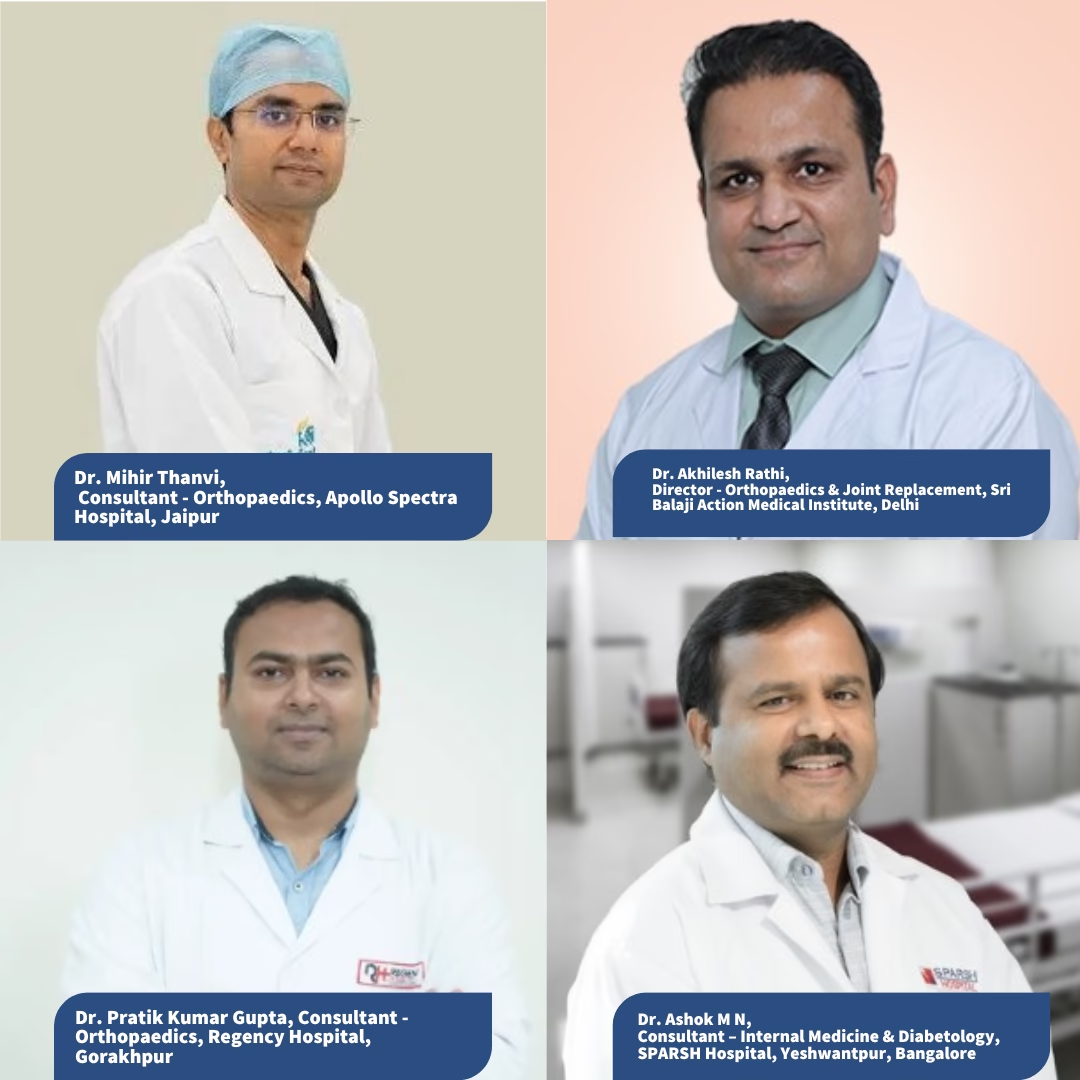
Speaking on the evolving nature of disability care, Dr. Mihir Thanvi, Consultant – Orthopaedics, Apollo Spectra Hospital, Jaipur, explains: “We often tend to associate disability with congenital conditions or severe trauma, but around 60-70% of disabilities we treat in today’s times develop gradually due to untreated issues in joints, spinal degeneration, diabetic neuropathy and chronic arthritis. Early medical intervention in orthopaedics, affordable diagnostics and community level screening helps to prevent the large percentage of mobility related disabilities. Care in disability should start much before the disability actually start harming the individual”.
Assessment of doctors also reflects a ground reality mainly supported by several studies A recent Lancet Disability & Health Review notes that India loses nearly 7.6 million productive life-years annually due to preventable musculoskeletal and neurological disabilities. Despite of this rehabilitation services continue to remain very much concentrated in Tier 2 and Tier 3 Cities.
Hospitals who always prioritise structured rehabilitation pathways are also demonstrating the better patient outcomes, especially in the cases of post-injury recovery, age-related decline and chronic illnesses. This have also made many healthcare systems to invest in the area of muti speciality rehab units, gait labs and home-based therapy models. However, affordability and awareness continue to limit this penetration.
Highlighting the need for stronger integration of rehabilitation with general medicine, Dr. Ashok M N, Consultant – Internal Medicine & Diabetology, SPARSH Hospital, Yeshwantpur, Bangalore notes: “Most of people don’t realise that some chronic conditions like diabetes, stroke, kidney disease, long COVID and severe infections often leave behind some hidden disabilities. They are not visible easily, but they cause impact on the mobility, cognition, confidence and quality of life. Disability care should be the main part of chronic disease management, not an afterthought. India also needs preventive rehab models that begin right from the first diagnosis”
Experts of Internal Medicine also points out that around 40% of long-term disabilities in India roots from lifestyle disorders and untreated complications. But the main gap lies in the literacy of patients and follow through as well. Studies by the Indian Journal of Public Health reveal that only 28% of people prescribed rehabilitation programs complete them for more than three months.
Adding perspective from the rehabilitation standpoint, Dr. Akhilesh Rathi, Director – Orthopaedics & Joint Replacement, Sri Balaji Action Medical Institute, Delhi, emphasises: “Diabetic is not only a medical condition – it is a social and economic challenge as well. One of the main issues we observe is that patients don’t get timely medical care such as physiotherapy or follow up care after the surgery and injuries. Hospitals and policy makers should always work together in order to ensure continuity of care and community-based support system as well”
This challenge becomes even more pronounced among the elderly individual. With India projected to have over 190 million senior citizens by 2030, the need for the age friendly healthcare system is in high demand. Hospitals should invest in ramps, accessible washrooms, safe flooring, digital appointment support, and disability-sensitive training for staff and this responsibility should extend beyond the infrastructure.
Reflecting on the challenges in semi-urban India,
Dr. Pratik Kumar Gupta, Consultant – Orthopaedics, Regency Hospital, Gorakhpur, shares: “In tier 2 and tier 3 cities, care of disability begins very late. Patients come to us when mobility is severed restricted or when complication have already occurred. What we need in today’s time is early screening at the primary centres and awareness that prevention of disability begins at home with the help of timely treatment, physiotherapy and lifestyle control as well”
As India continues to advance towards the universal healthcare, care regarding the disability can no longer operate on the fringes. The country should prioritise early screening, preventive orthopaedics, chronic disease integration, inclusive design and affordable rehabilitation. Prevention of disability is as important as taking care of those who are already affected. A truly inclusive system of healthcare should ensure dignity, independence and equal opportunity for each and every individual longe before disability becomes a lifelong label.