
India Demonstrates How Tradition and Modern Science Can Advance Together, Says WHO Chief Dr Tedros at Global Summit on Traditional Medicine
The Second World Health Organization (WHO) Global Summit on Traditional Medicine concluded today in New Delhi, with WHO Director-General Dr Tedros Adhanom Ghebreyesus emphasising India’s leadership in bridging traditional wisdom and modern scientific innovation to

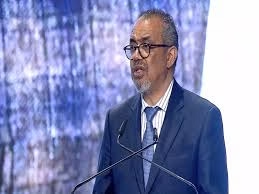
The Second World Health Organization (WHO) Global Summit on Traditional Medicine concluded today in New Delhi, with WHO Director-General Dr Tedros Adhanom Ghebreyesus emphasising India’s leadership in bridging traditional wisdom and modern scientific innovation to strengthen global health systems.
Addressing ministers, healthcare leaders, scientists, indigenous practitioners and delegates from over 100 countries, Dr Tedros underlined the importance of an integrated, inclusive approach to healthcare that unites heritage and evidence-based practice. He stated that traditional medicine is vital to addressing contemporary health challenges, including the rising burden of noncommunicable diseases, inequitable access to healthcare services, and economic pressures confronting health systems worldwide.
Highlighting India’s contribution on the global stage, Dr Tedros said:
“India has shown the world that traditional wisdom and modern science are not inconsistent, but complementary to each other.”
He commended India’s institutional strides including the establishment of a dedicated Ministry of AYUSH and the WHO Global Centre for Traditional Medicine in Jamnagar as models for integrating traditional systems into broader health frameworks.
Dr Tedros also praised India’s visionary leadership, noting how it has elevated traditional medicine from heritage practice to a globally recognised, evidence-informed healthcare element. He acknowledged initiatives that support safety, quality and public trust through risk-based regulation, biodiversity protection, intellectual property respect, and responsible use of digital technologies to expand research and data generation.
As the summit drew to a close, the WHO Director-General called for collective action and a shared conviction that health’s future must be integrative, inclusive and informed by both science and tradition. He urged nations to restore balance between people, communities and the planet to build healthier societies for coming generations.
The summit, jointly organised by the World Health Organization and the Government of India, facilitated global consensus on incorporating traditional medicine into modern health systems reinforcing a collaborative roadmap toward universal health coverage and sustainable development. ([The Economic Times][4])