
Improvements in EoDB and expanded FTAs with UK, Oman, New Zealand, and EFTA are unlocking new markets for Indian chemicals sector: Anupriya Singh Patel, MoS, Chemicals & Fertilizers, GoI
Govt initiatives are helping reduce production costs by up to 20 per cent, freeing resources for innovation, R&D, and sustainability NEW DELHI, 22 January 2026: Ms Anupriya Singh Patel, Minister of State for Chemicals & Fertilizers

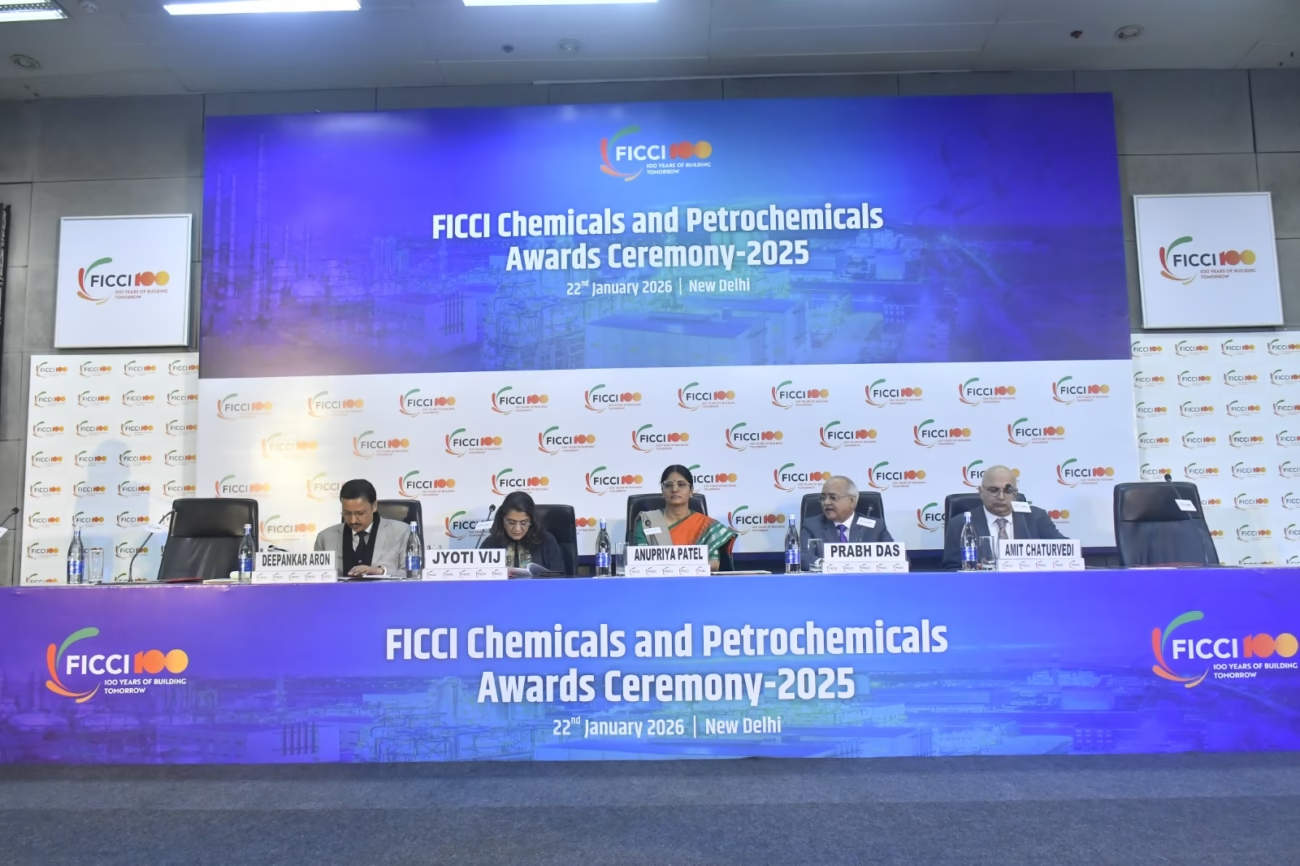
Govt initiatives are helping reduce production costs by up to 20 per cent, freeing resources for innovation, R&D, and sustainability
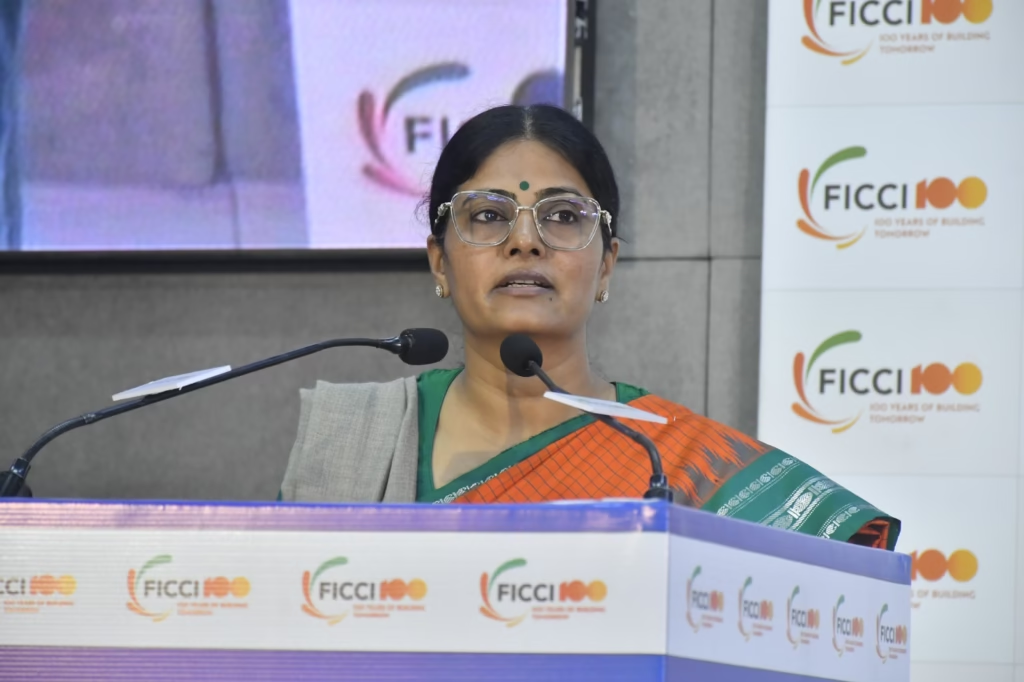
NEW DELHI, 22 January 2026: Ms Anupriya Singh Patel, Minister of State for Chemicals & Fertilizers and Health & Family Welfare, Govt of India today said that the Chemicals and Petrochemicals sector is backbone of India’s manufacturing ecosystem. It supports agriculture, pharmaceuticals, textiles, infrastructure, mobility, and clean energy, making it both an economic driver and a strategic asset. “Under the visionary leadership of Prime Minister Shri Narendra Modi, India’s industrial journey has entered a defining phase. The year 2025 marked a shift toward Next-Gen Reforms, reforms that emphasise trust over control, facilitation over regulation, and partnership between government and industry. These reforms are structural in nature, designed to prepare Indian industry for the demands of the 21st century,” she added.
Addressing the ‘FICCI Chemicals and Petrochemicals Awards 2025’, Ms Patel stated that as we move toward the vision of Viksit Bharat, modernising our energy and labour frameworks has been equally important. “The SHANTI Act of 2025 is a transformational reform that enables safe private participation in nuclear energy, ensuring reliable, clean, and affordable power for energy-intensive industries such as chemicals and petrochemicals. At the same time, the consolidation of 29 labour laws into four modern labour codes has created a safer, more productive, and more flexible work environment—benefiting both workers and employers,” she noted.
The Minister also added that improvements in Ease of Doing Business, faster environmental approvals, and expanded Free Trade Agreements with the UK, Oman, New Zealand, and EFTA are unlocking new markets for Indian chemicals. “These initiatives are helping reduce production costs by up to 20 percent and freeing resources for innovation, R&D, and sustainability,” emphasized Ms Patel.
Speaking on the Awards, Ms Patel said that the awardees demonstrate world-class efficiency and scale. Sustainability leaders are redefining circular economies, reducing emissions, and adopting bio-based innovations aligned with global green standards. Innovation pioneers are delivering advanced solutions—from specialty chemicals for electric mobility to next-generation agro-formulations that enhance farmer incomes.
Safety awardees exemplify zero-harm workplace cultures, while leadership honourees inspire through strategic vision, inclusive growth, and meaningful CSR initiatives that uplift communities. “Together, the awardees represent the very best of Indian industry: responsible, resilient, and future-ready,” she added.
Ms Nivedita Shukla Verma, Secretary, Department of Chemicals & Petrochemicals, Ministry of Chemicals & Fertilizers, GoI said that considering the ever-changing global geo-political scenario, the focus on innovation and improvement in production processes is the need of the day. “We are at a juncture where the industry may have to constantly adapt to the dynamic global situations and look for new sources of material, new markets at short notice. The solution lies in enhancing our own capacities and developing our own technologies,” she added.
Ms Verma further stated that efforts are being made to integrate Indian chemical industry into global value chains by fostering complementarity with partner economies. FTAs have been signed with the New Zealand, Oman, UK and EFTA countries and a few more are being negotiated. “The Department has been holding detailed stakeholder consultations to ensure best outcomes for industry in the ongoing FTA negotiations. We are also analysing the global developments to understand the trends for e.g. there is an opportunity to increase our chemical exports to the United Kingdom by almost $ 2 billion,” she emphasized.
Mr Prabh Das, Chairman, FICCI National Petrochemicals Committee and MD & CEO, HPCL-Mittal Energy Ltd said that industry must increase its efficiencies, improve productivity, and upgrade technology. “We must also look at adopting AI, digitisation, automation, the use of robotics, and real-time optimisation,” he added.
Ms Jyoti Vij, Director General, FICCI said, “The FICCI Chemicals and Petrochemicals Awards were instituted to recognise organisations that demonstrate excellence across key areas such as innovation, sustainability, safety, energy efficiency, and exports. They highlight best practices, encourage continuous improvement, and inspire the industry to adopt higher standards of performance and responsibility.”