
WHO Declares Ebola Outbreak Global Health Emergency; India Issues Travel Advisory for Congo, Uganda and South Sudan
WHOhas declared the ongoing Ebola outbreak a Public Health Emergency of International Concern (PHEIC), raising global concern over the spread of the deadly viral disease across parts of Africa. Simultaneously, the Africa Centres for Disease

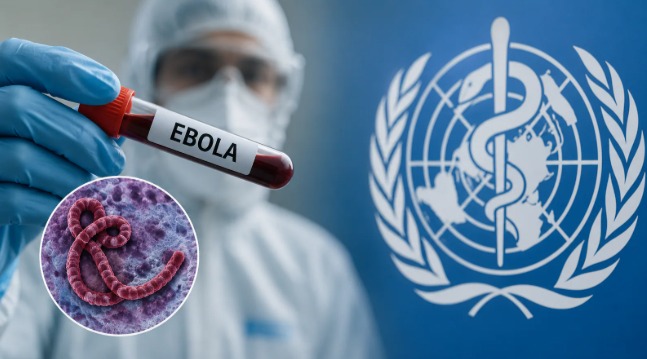
WHOhas declared the ongoing Ebola outbreak a Public Health Emergency of International Concern (PHEIC), raising global concern over the spread of the deadly viral disease across parts of Africa. Simultaneously, the Africa Centres for Disease Control and Prevention (Africa CDC) has classified the outbreak as a “Public Health Emergency of Continental Security,” highlighting the seriousness of the situation.
Following the global alerts, the Government of India has advised citizens to avoid non essential travel to the Democratic Republic of the Congo, Uganda, and South Sudan, where surveillance and outbreak monitoring have been intensified.
According to WHO updates, the Ebola outbreak has affected multiple regions, with health authorities monitoring rising infections, suspected cross border transmission risks, and increasing pressure on local healthcare systems. Ebola Virus Disease (EVD) is a severe and often fatal illness transmitted through direct contact with infected bodily fluids, contaminated materials, or infected animals.
WHO data indicates that previous Ebola outbreaks have recorded fatality rates ranging between 25% and 90%, depending on the virus strain and healthcare response capacity. Symptoms typically include high fever, severe weakness, vomiting, diarrhea, bleeding complications, and organ failure in severe cases.
The Africa CDC stated that the emergency declaration is aimed at strengthening continental coordination, improving surveillance systems, accelerating laboratory testing, and mobilizing medical resources to contain the outbreak before wider international spread occurs.
Indian health authorities have reportedly increased airport screening, surveillance protocols, and monitoring mechanisms for travelers arriving from affected regions. Officials have also advised healthcare institutions to remain alert for suspected symptoms and strengthen infection control preparedness measures.
Global public health experts warn that fragile healthcare systems, cross-border movement, and limited medical infrastructure in certain African regions could complicate containment efforts. According to WHO estimates, Africa has experienced several Ebola outbreaks over the past decade, with the 2014 – 2016 West Africa outbreak remaining the deadliest, causing more than 11,000 deaths and over 28,000 reported cases.
The latest emergency declaration has once again brought international attention to global epidemic preparedness, rapid response systems, vaccine deployment, and international health cooperation. Health experts continue to emphasize that early detection, isolation, contact tracing, and public awareness remain critical in controlling Ebola transmission and preventing wider global health risks.