
India Hosts First BRICS TB Research Network Meet on Novel Diagnostics, Strengthening Global Fight Against Tuberculosis
India has hosted the inaugural meeting of the BRICS Tuberculosis (TB) Research Network focused on advancing novel diagnostics, marking a significant step toward strengthening global collaboration in the fight against tuberculosis. The meeting brought together

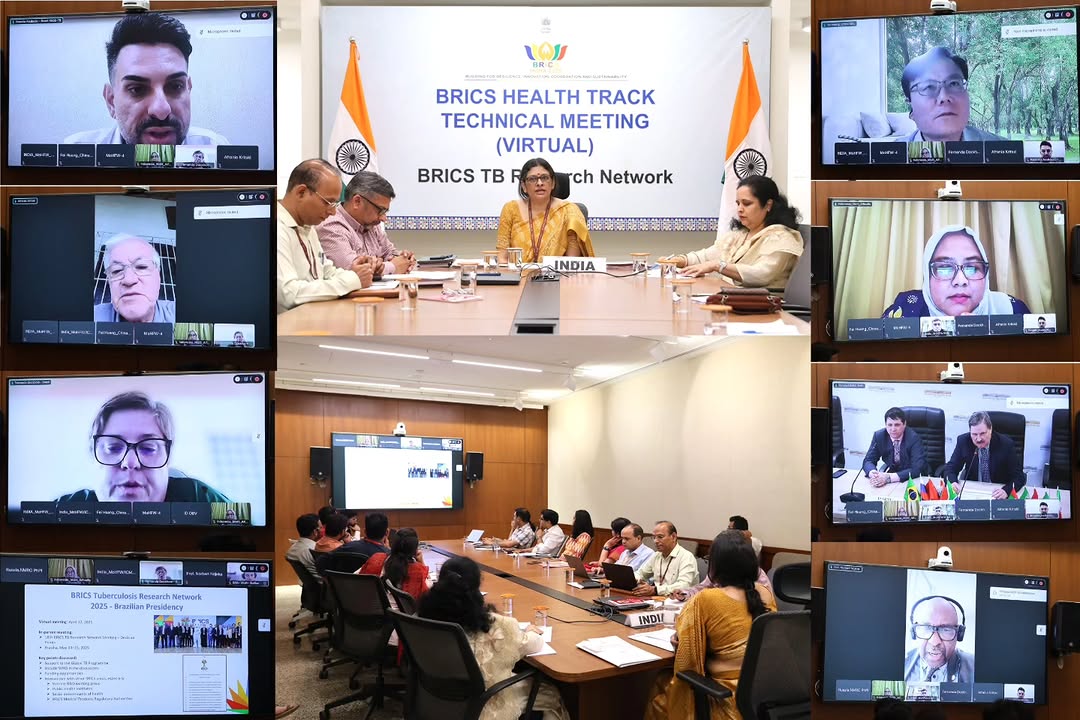
India has hosted the inaugural meeting of the BRICS Tuberculosis (TB) Research Network focused on advancing novel diagnostics, marking a significant step toward strengthening global collaboration in the fight against tuberculosis. The meeting brought together leading scientists, public health experts, and policymakers from BRICS nations—Brazil, Russia, India, China, and South Africa—to accelerate research, innovation, and knowledge exchange in TB detection and management.
The initiative aligns with India’s intensified efforts to eliminate tuberculosis under the Ministry of Health and Family Welfare and its flagship program, the National Tuberculosis Elimination Programme. The focus on novel diagnostics comes at a critical time, as early and accurate detection remains one of the biggest challenges in controlling the spread of TB, particularly in high-burden countries.
The BRICS TB Research Network aims to foster collaborative research on next-generation diagnostic tools, including rapid molecular testing, biomarker-based detection, and AI-driven screening technologies. These innovations are expected to significantly improve early diagnosis, reduce transmission rates, and enhance treatment outcomes. The platform will also facilitate data sharing, joint clinical studies, and coordinated policy approaches among member nations.
India’s leadership in hosting the first meeting highlights its growing role in global health diplomacy and infectious disease research. With one of the highest TB burdens globally, the country has been actively investing in strengthening diagnostic infrastructure, expanding access to molecular testing, and integrating digital health solutions into TB care pathways.
Experts at the meeting emphasized the need for scalable, cost-effective, and accessible diagnostic solutions that can be deployed across diverse healthcare settings, particularly in resource-limited regions. The collaboration is expected to play a crucial role in accelerating progress toward the global goal of ending TB as a public health threat.
The inaugural BRICS TB Research Network meeting reinforces the importance of international cooperation in tackling infectious diseases and positions innovation in diagnostics at the forefront of global TB elimination strategies.