
Experts Call for Universal Screening, Adult Immunisation and Maternal Care to Eliminate Viral Hepatitis by 2030
Experts advocate a prevention-first approach, emphasising early diagnosis, equitable treatment and stronger maternal healthcare. India has the knowledge, vaccines, diagnostics and treatments needed to eliminate viral hepatitis as a public health threat. The next challenge is

Experts advocate a prevention-first approach, emphasising early diagnosis, equitable treatment and stronger maternal healthcare.
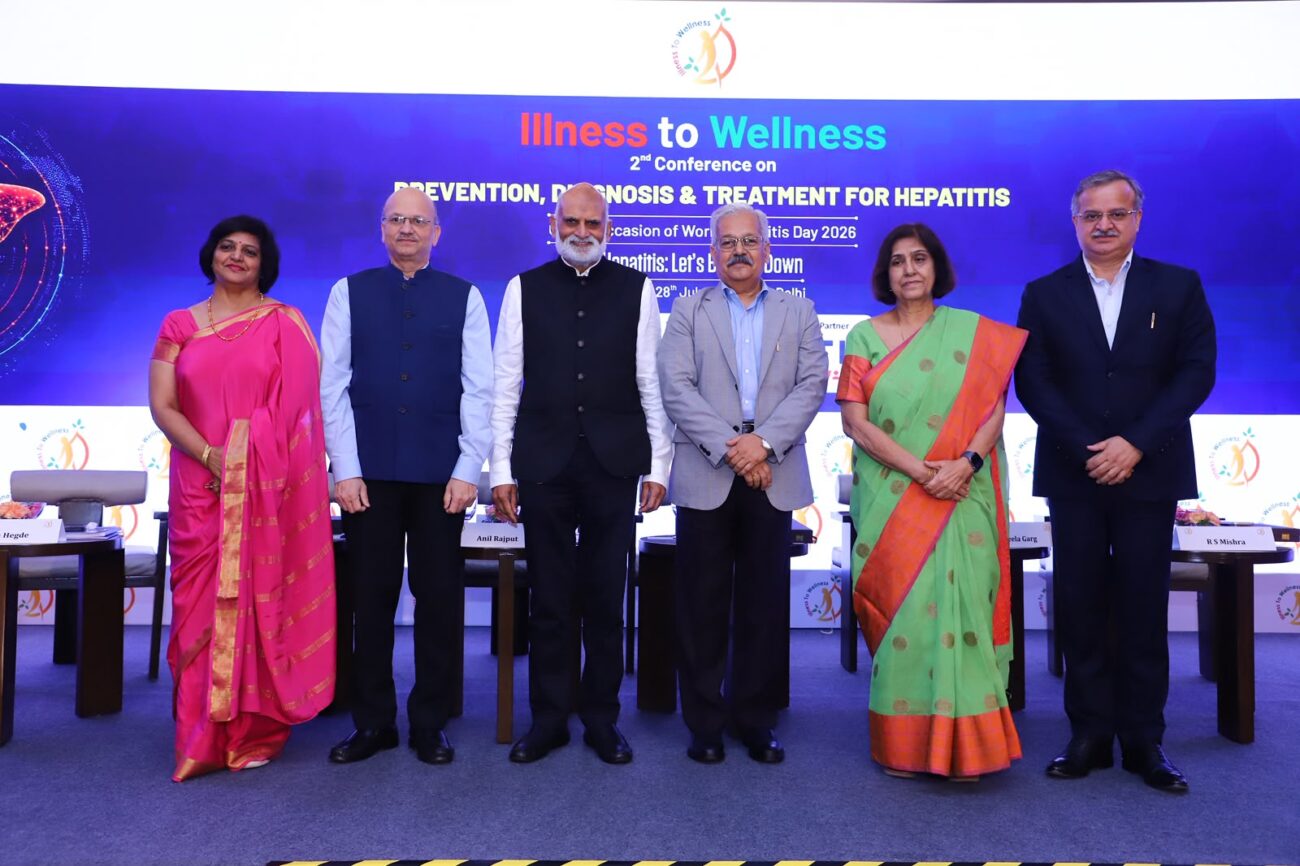
India has the knowledge, vaccines, diagnostics and treatments needed to eliminate viral hepatitis as a public health threat. The next challenge is ensuring that these lifesaving interventions reach every individual from expectant mothers and newborns to high-risk adults through universal screening, adult immunisation, stronger maternal healthcare, early diagnosis and equitable access to treatment, leading policymakers, hepatologists and public health experts said at the second edition of the Illness to Wellness Foundation’s conference on “Prevention, Diagnosis and Treatment for Hepatitis,” organised on the occasion of World Hepatitis Day 2026.
Delivering the keynote address, Mr. Rajesh Bhushan, Former Secretary, Ministry of Health & Family Welfare, Government of India, and Chairperson, Governing Council, Illness to Wellness Foundation, said, “India has made meaningful progress through the National Viral Hepatitis Control Programme, but achieving greater impact will require stronger collaboration across stakeholders. Government, healthcare institutions, the private sector, civil society and development partners must work together to expand the reach of hepatitis services and ensure that quality care is available to every community. A well-integrated, partnership-driven approach will be key to building a stronger and more inclusive public health response.”
Highlighting India’s progress in hepatitis prevention while outlining the next phase of the country’s response, Padma Bhushan Dr. (Prof.) S. K. Sarin, Senior Professor, Department of Hepatology & Director, ILBS, emphasised, “India’s next priority must be to expand adult hepatitis B immunisation, encourage early diagnosis, eliminate stigma and ensure timely treatment for every patient. Preventing hepatitis is no longer only about scientific progress—it is about reaching every individual with the care they need, so that no one is left behind in India’s journey towards eliminating viral hepatitis.”
Delivering the welcome address, Mr. Anil Rajput, Chairperson, Advisory Council, Illness to Wellness Foundation, asserted, “We believe that success demands a whole-of-society approach. Governments, healthcare professionals, researchers, industry, civil society, the media and citizens all have vital roles to play. Public health succeeds not through isolated efforts but through partnerships that place prevention at the heart of national development. The Illness to Wellness Foundation remains committed to advancing this movement through awareness, evidence based dialogue and collaborative action. Our aspiration is simple yet ambitious to make wellness the first line of defence and prevention the first principle of healthcare.”
Highlighting the importance of maternal health in hepatitis elimination, Dr. Asha Hegde, Director South Asia HIV/Hepatitis/STIs and Family Health, PATH India, said, “Today, the challenge is no longer the absence of scientific solutions—we already have effective vaccines, accurate diagnostics and highly effective therapies. The real challenge lies in delivering these interventions consistently, equitably and at scale. Every pregnancy should be an opportunity to prevent hepatitis transmission, every birth should be protected, and every child should have the opportunity to grow up free from hepatitis. Achieving this will require stronger integration of healthcare services and collective action across all stakeholders.”
Addressing the gathering, Dr. R. S. Mishra, Principal Director & Head Internal Medicine, Max Smart Super Speciality Hospital, Saket, underlined, “Hepatitis often progresses silently, making awareness and timely action critical. Along with strengthening healthcare systems, we must empower people to seek testing without fear or stigma and ensure that quality care is accessible to everyone who needs it.”
Providing a clinical perspective, Dr. Anil Agarwal, Co-chairman, Institute of Surgical Gastroenterology, Sir Ganga Ram Hospital, said, “India has made remarkable progress in hepatitis care, but sustained success will depend on greater adult immunisation, stronger patient awareness and ensuring continuity of care. Our collective effort must be to translate medical advances into better health outcomes for every patient.”
Providing insights into advances and challenges in hepatitis diagnostics, Dr. Anita Shete-Aich, Scientist-E, Hepatitis Group, ICMR National Institute of Virology (NIV), Pune, emphasised, “Early and accurate diagnosis remains the cornerstone of hepatitis elimination. Strengthening screening, expanding access to quality diagnostics and integrating molecular testing wherever appropriate will enable timely treatment, improve surveillance and support India’s goal of eliminating viral hepatitis by 2030.”
The conference featured three thematic technical sessions that examined critical dimensions of hepatitis prevention and management across the continuum of care. The first session, “Women’s Health and Hepatitis,” focused on universal screening during pregnancy, prevention of mother-to-child transmission, birth-dose vaccination, maternal care and long-term monitoring of exposed infants. The second session, “Integrated Approaches to Viral Hepatitis Prevention,” explored vaccination, awareness, screening strategies, infection prevention, digital health technologies and public-private partnerships to strengthen outreach and patient care. The third session, “From Prevention to Wellness: The Role of Nutrition and Diet in Hepatitis Care,” underscored the importance of personalised nutrition, healthy lifestyle interventions, dietary counselling and holistic care in improving treatment outcomes and supporting long-term liver health.
Delivering the concluding remarks, Dr. Suneela Garg, Member, FICCI Swasth Bharat Task Force, emphasised that eliminating viral hepatitis would require a whole-of-society approach, with sustained public awareness, timely vaccination, stronger preventive healthcare, reduced stigma and coordinated action across government, healthcare institutions, academia, civil society and communities to accelerate progress towards the WHO’s 2030 elimination goal.
The experts collectively underscored that eliminating viral hepatitis is an achievable goal for India. They called for sustained investments in preventive healthcare, universal screening, adult immunisation, maternal and child health interventions, timely diagnosis, equitable access to treatment and stronger public awareness to translate scientific advances into improved health outcomes and achieve the World Health Organization’s 2030 elimination target.