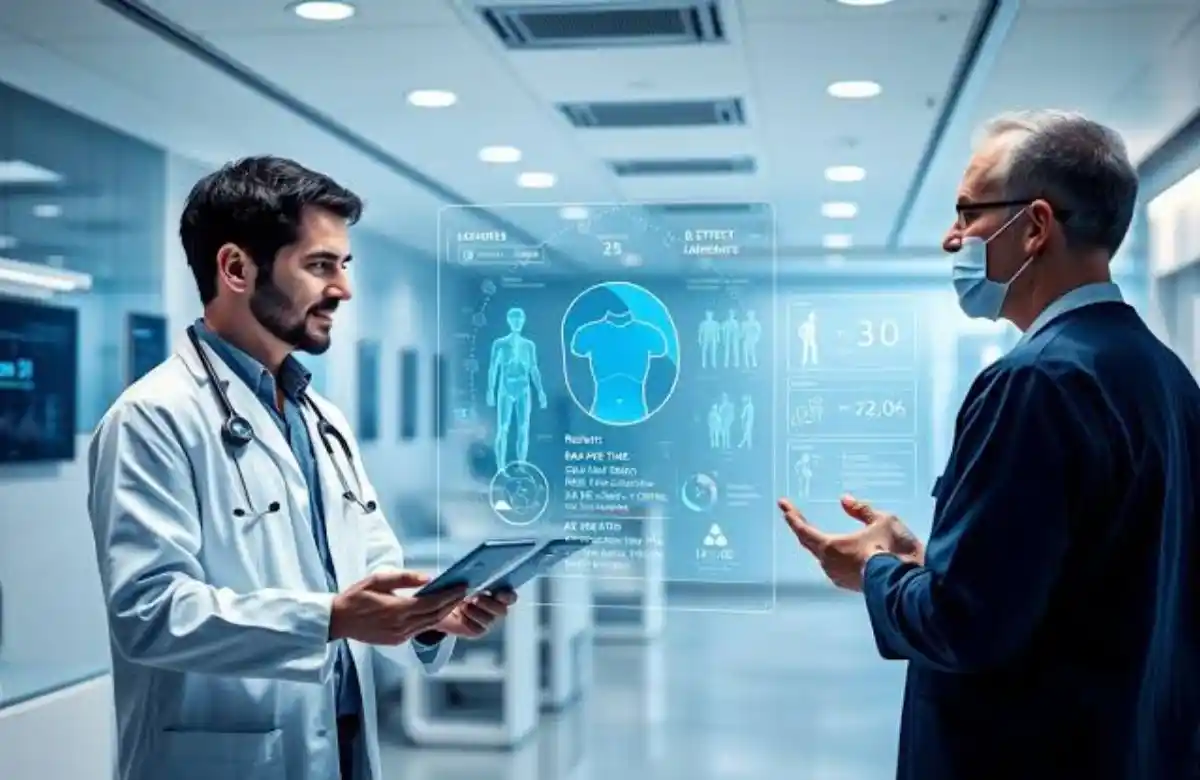

AI-Enabled Medical Device: Transforming Modern Healthcare
Artificial intelligence is rapidly changing the healthcare industry, and the Medical Device is becoming an important part of modern medical technology. These devices use artificial intelligence, machine learning, and advanced algorithms to analyze healthcare data,

Artificial intelligence is rapidly changing the healthcare industry, and the Medical Device is becoming an important part of modern medical technology. These devices use artificial intelligence, machine learning, and advanced algorithms to analyze healthcare data, support medical professionals, and improve patient care.
The development of an AI-Enabled Medical Device offers new opportunities for faster diagnosis, improved disease detection, personalized treatment, and remote patient monitoring. The U.S. Food and Drug Administration (FDA) encourages the development of innovative, safe, and effective medical devices, including those that incorporate artificial intelligence.
What Is an AI-Enabled Medical Device?
An AI-Enabled Medical Device is a medical technology that uses artificial intelligence to perform or support specific healthcare functions. These devices can analyze large amounts of medical information and identify patterns that may be difficult or time-consuming for humans to detect.
AI can be used in medical imaging, diagnostic tools, wearable healthcare devices, patient monitoring systems, and clinical decision-support technologies. By processing information quickly, an AI-Enabled Medical Device can provide valuable insights to doctors and healthcare professionals.
How AI-Enabled Medical Devices Work
Most AI-enabled technologies use machine learning algorithms trained on large amounts of medical data. This information may include medical images, patient records, laboratory reports, and data collected from wearable devices.
The AI-Enabled Medical Device analyzes the available information and identifies patterns associated with diseases or health conditions. Healthcare professionals can use these insights to support their diagnosis and treatment decisions.
However, AI technology is not designed to completely replace doctors. Human expertise and professional judgment remain essential for providing safe and effective healthcare.
Benefits of AI-Enabled Medical Devices
The growing use of an AI-Enabled Medical Device provides several benefits for patients and healthcare providers.
Improved Disease Detection
One of the most important benefits is improved disease detection. AI can analyze X-rays, CT scans, MRI images, and other medical information to identify possible abnormalities.
An Medical Device may help healthcare professionals detect diseases earlier, including cancer, heart conditions, and neurological disorders. Early detection can lead to faster treatment and better patient outcomes.
Faster Healthcare Decisions
Doctors often need to review large amounts of patient information. AI technology can process this information quickly and provide useful insights.
By supporting faster analysis, an Medical Device can help healthcare professionals make informed decisions more efficiently. This can improve workflow and reduce delays in certain areas of patient care.
Better Patient Monitoring
AI technology is also increasingly used in wearable medical devices and remote monitoring systems. These devices can track health information such as heart rate, blood pressure, glucose levels, and physical activity.
Medical Device can identify unusual patterns and alert healthcare providers when additional attention may be needed. This technology is particularly useful for patients with chronic health conditions.
FDA and AI-Enabled Medical Devices
The FDA plays an important role in encouraging innovation while protecting patient safety. As AI becomes more common in healthcare, medical devices must be evaluated to ensure they are safe and effective.
The development of an Medical Device requires careful testing and evaluation. Developers must demonstrate that their technology performs as intended and provides reliable results.
Safety, Data Quality, and Bias
The performance of an AI-Enabled Medical Device depends heavily on the quality of the data used to develop it. Poor-quality or biased data can affect the accuracy of AI systems.
For this reason, developers must consider data quality, fairness, reliability, and potential bias. AI technology should be tested across diverse patient populations whenever appropriate.
The Future of Medical Devices
The future of the Medical Device is promising. Advances in artificial intelligence, machine learning, medical imaging, and wearable technology are expected to create new opportunities in healthcare.
These technologies may help improve early diagnosis, personalized treatment, and access to medical services. However, innovation must always be balanced with patient safety, privacy, cybersecurity, and human oversight.