
AI Is Transforming Healthcare by Enabling Faster and Smarter Diagnosis
Artificial Intelligence (AI) is rapidly becoming an important part of modern healthcare, helping doctors analyse information faster, identify patterns and support more informed clinical decisions. From medical imaging and diagnostics to patient monitoring and research,

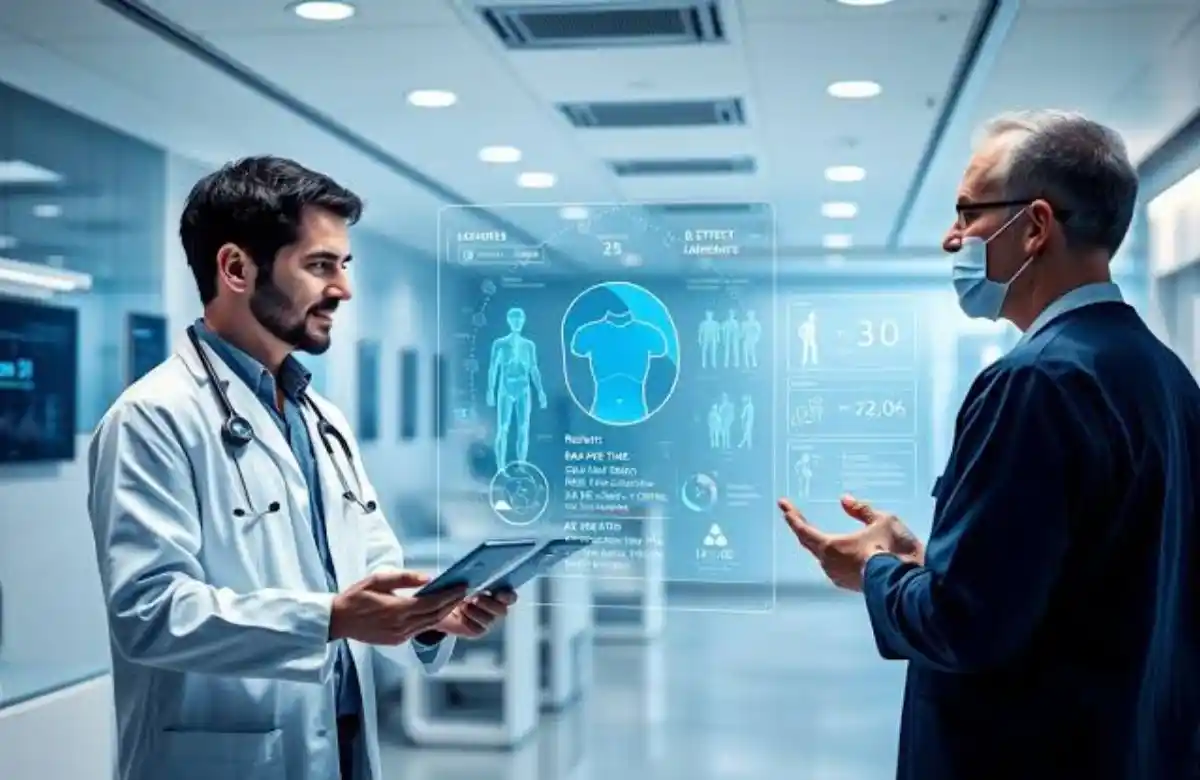
Artificial Intelligence (AI) is rapidly becoming an important part of modern healthcare, helping doctors analyse information faster, identify patterns and support more informed clinical decisions. From medical imaging and diagnostics to patient monitoring and research, AI is creating new opportunities to improve the speed and efficiency of healthcare delivery.
The growing role of AI was highlighted by the founder of Apollo Hospitals, who pointed to its potential to assist doctors in making quicker diagnoses. As healthcare systems deal with increasing patient volumes and large amounts of medical data, AI-based technologies can help healthcare professionals process information more efficiently while keeping clinical expertise at the centre of decision-making.
AI Can Support Faster Diagnosis
One of the most significant applications of AI in healthcare is diagnostic support. Doctors often need to examine medical histories, laboratory results, scans and other clinical information before reaching a diagnosis. AI tools can assist by analysing large datasets and identifying patterns that may require further clinical attention.
In areas such as radiology, pathology and cardiology, AI systems can analyse medical images and other diagnostic information at high speed. This can help doctors identify potential abnormalities and prioritise cases that may require urgent attention.
AI can also support the early detection of certain diseases by recognising subtle patterns in patient data. However, these technologies are designed to support healthcare professionals rather than replace them. The final interpretation and clinical decision remain dependent on qualified medical experts and the individual patient’s circumstances.
For hospitals, faster analysis can also contribute to more efficient workflows. When diagnostic information becomes available sooner, doctors may be able to begin appropriate evaluation and treatment without unnecessary delays.
Read More: New Strategy to Build a Healthier Market for Childhood Cancer Medicines
From Data Analysis to Personalised Care
Healthcare generates enormous amounts of data every day. Electronic health records, diagnostic reports, medical images, wearable devices and laboratory results can provide valuable information, but analysing all of it manually can be challenging.
AI can help organise and analyse this information, allowing healthcare professionals to identify relevant trends and correlations. This may contribute to more personalised approaches to patient care, where treatment decisions can take into account a patient’s medical history, clinical characteristics and response to previous interventions.
AI is also being explored in drug discovery, clinical research, predictive analytics and remote patient monitoring. These applications could help researchers accelerate certain stages of medical research and enable healthcare organisations to use resources more effectively.
At the same time, responsible implementation is essential. Healthcare AI must be developed and deployed with attention to patient privacy, data security, accuracy, transparency and potential biases. Human oversight remains particularly important when AI-generated insights could influence diagnosis or treatment.
Read More: WHO Launches New Primary Health Care Course to Strengthen Health Systems Globally
Building the Future of AI-Enabled Healthcare
The increasing adoption of AI represents a broader shift in how healthcare organisations use technology. Rather than functioning as a standalone replacement for medical professionals, AI is increasingly being viewed as a tool that can augment human expertise.
The comments from the Apollo Hospitals founder reflect this emerging direction, where technology can help doctors work with information more quickly and potentially make diagnosis more efficient. The greatest value of AI may come from combining computational capabilities with the experience, judgement and empathy of healthcare professionals.
As AI technologies continue to evolve, hospitals and healthcare institutions are likely to explore new ways to integrate them into clinical and operational workflows. The focus will remain on using technology responsibly to support doctors, improve efficiency and ultimately enhance the patient experience.
The future of healthcare will therefore not simply be about machines making medical decisions. It will increasingly involve collaboration between healthcare professionals and intelligent technologies, with AI helping clinicians access and interpret information faster while human expertise continues to guide patient care.