
Climate Change and Insecticide Resistance Could Threaten India’s Malaria Elimination Goal: President Murmu
Healthcare News Climate change, unplanned urbanisation and growing mosquito resistance to insecticides could create fresh challenges for India's efforts to eliminate malaria by 2030, President Droupadi Murmu has cautioned. She called for stronger disease surveillance, mosquito-control

Healthcare News
Climate change, unplanned urbanisation and growing mosquito resistance to insecticides could create fresh challenges for India’s efforts to eliminate malaria by 2030, President Droupadi Murmu has cautioned. She called for stronger disease surveillance, mosquito-control measures, environmental management and greater community participation to sustain the country’s progress against the vector-borne disease.
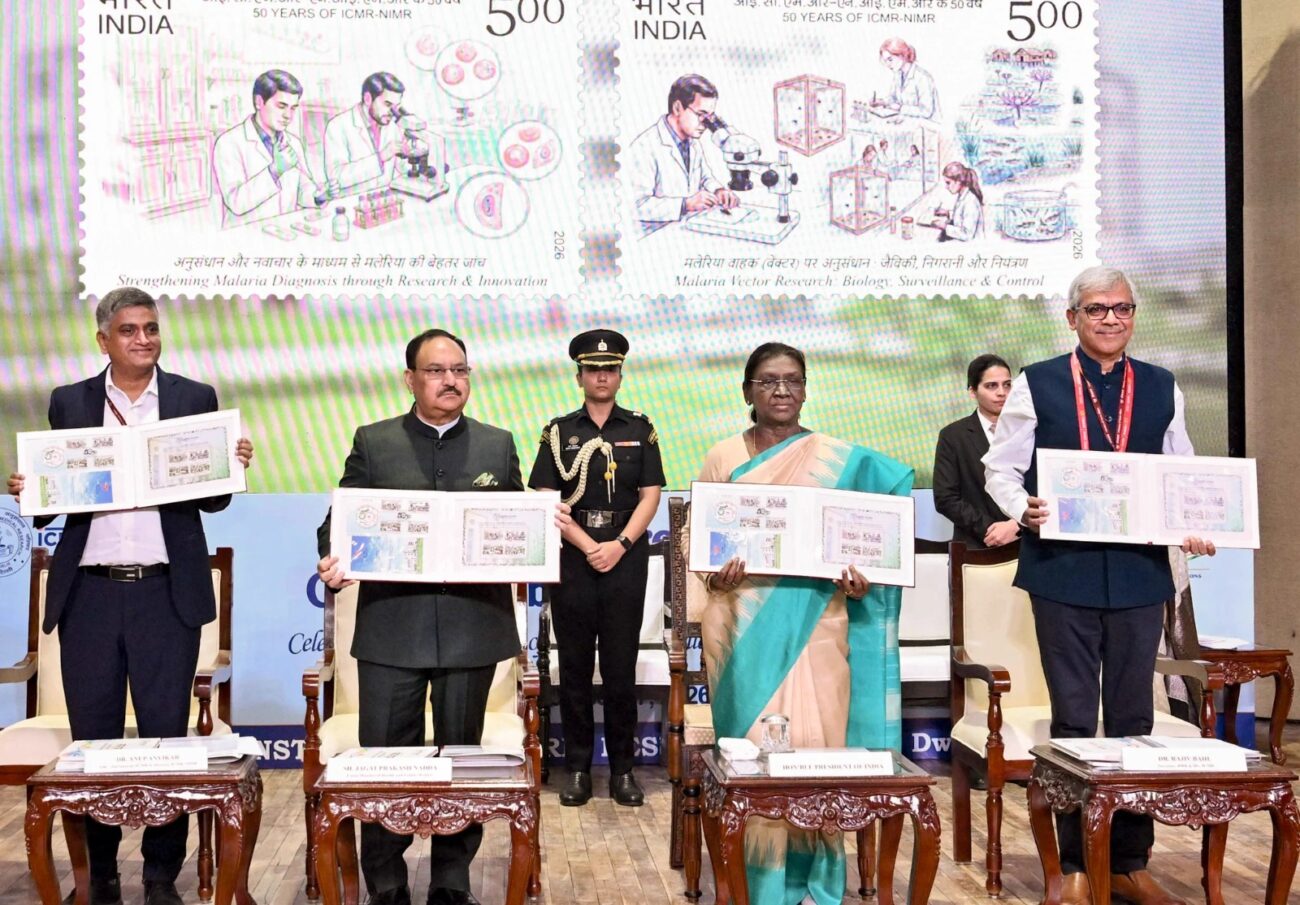
The President made these remarks on November 17 while inaugurating the year-long Golden Jubilee celebrations of the Indian Council of Medical Research–National Institute of Malaria Research (ICMR–NIMR) in New Delhi. She highlighted the institute’s five decades of contribution to malaria research, including work on malaria parasites, mosquito vectors, vector control, insecticide resistance and community-based surveillance.
India has recorded significant progress in malaria control over the past decade. According to figures shared by the President, malaria cases and deaths declined by nearly 80% between 2015 and 2025. The number of high-burden districts also fell from 155 to 33, while 160 districts reported zero indigenous malaria cases during 2022–2025. India also exited the World Health Organization’s High Burden to High Impact initiative in 2024.
Despite these gains, the President stressed that sustained vigilance would be necessary to prevent a resurgence. She pointed to climate change, changing environmental conditions and unplanned urban development as factors that could complicate mosquito control. Increasing insecticide resistance among mosquitoes also poses a challenge to existing vector-control strategies.
She emphasised that malaria prevention cannot depend solely on healthcare workers and government interventions. Preventing water stagnation, eliminating mosquito breeding sites and improving environmental management require active participation from communities. She also called for stronger malaria diagnosis, timely treatment, effective surveillance and research into new medicines and vaccines.
Addressing the gathering, Union Health Minister Jagat Prakash Nadda reiterated India’s commitment to eliminating malaria by 2030. He attributed the country’s progress to research on mosquito behaviour and malaria parasites, community participation, prevention campaigns, early diagnosis and appropriate treatment. He also highlighted the contribution of research and innovation to affordable and accessible healthcare.
ICMR Director General and Secretary, Department of Health Research, Dr Rajiv Bahl, outlined the institute’s research contributions and stressed the need for stronger surveillance, interdisciplinary research and partnerships to address emerging challenges, including climate change, changing mosquito vectors and drug resistance. He also highlighted the goal of achieving zero indigenous malaria cases by 2027.
The Golden Jubilee celebrations mark 50 years of ICMR–NIMR’s contribution to malaria research and public health. The occasion also reinforced the importance of linking scientific research with community-level interventions as India works towards its 2030 malaria elimination target.
.
By MedGate Bureau