
BRICS 2026: The Healthcare Test for the Global South
From health security to digital infrastructure and medical manufacturing, the Delhi Summit signals a deeper shift in how emerging economies are beginning to define healthcare resilience. NEW DELHI: In the high-security corridors of Bharat Mandapam, much

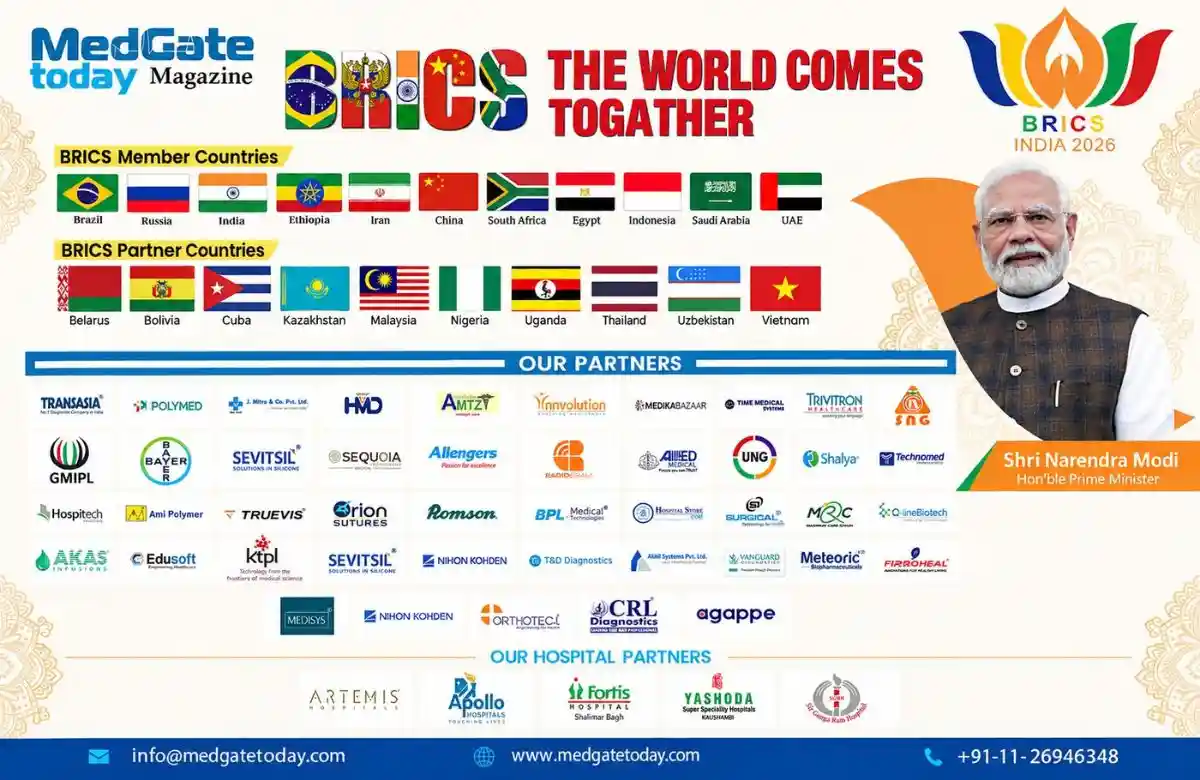
From health security to digital infrastructure and medical manufacturing, the Delhi Summit signals a deeper shift in how emerging economies are beginning to define healthcare resilience.
NEW DELHI: In the high-security corridors of Bharat Mandapam, much of the visible attention surrounding the 18th BRICS Summit is understandably centred on geopolitics, trade, energy and the future of the international order. But beneath that larger diplomatic architecture lies another conversation of considerable consequence—who will build the healthcare systems capable of withstanding the next global disruption, and on whose technology, data, medicines and manufacturing capacity will they depend?
That is where the healthcare significance of BRICS 2026 becomes far more substantive than a reference to “health cooperation” in a summit communiqué.
India’s year-long BRICS Chairship has already given the health agenda considerable institutional depth. The Sixteenth BRICS Health Ministers’ Meeting in Chandigarh in July brought health security, digital health, affordable medicines, medical innovation and traditional medicine into the cooperation framework. The Delhi Leaders’ Summit now places those sectoral discussions against the much larger question of resilience among emerging economies.
The distinction is important. The healthcare debate after COVID-19 has moved decisively beyond hospital capacity and emergency response. It now encompasses pharmaceutical and medical-device supply chains, diagnostics, health data, digital public infrastructure, disease surveillance, technology access and domestic manufacturing capability. A disruption in any one of these can quickly become a national-security and economic issue.
For India, this is particularly relevant. The country has spent the past decade demonstrating that population-scale digital infrastructure can alter the economics of service delivery. The next question is whether similar thinking can help create interoperable, secure and affordable health systems across the Global South. The opportunity is not to export a single Indian model, but to create platforms for countries with very different healthcare capacities to exchange technology, knowledge, data frameworks and implementation experience.
Artificial intelligence will be an important part of that conversation, but it should not become the headline at the expense of fundamentals. The real test is whether AI can improve early detection, clinical decision-making, public-health surveillance and resource allocation without widening the technology divide. For BRICS economies, responsible adoption must therefore be accompanied by questions of affordability, clinical validation, data governance and digital inclusion.
The same strategic lens applies to medical manufacturing. A resilient healthcare system cannot remain excessively dependent on fragile international supply chains for essential medicines, devices and critical technologies. Greater cooperation among BRICS economies could potentially connect India’s manufacturing ambitions with complementary capabilities across member countries, creating a broader ecosystem for innovation and supply-chain resilience.
There is also a less visible but equally important dimension: health diplomacy. BRICS brings together countries with enormous populations, diverse disease burdens and markedly different healthcare systems. That diversity makes consensus difficult, but it also makes cooperation valuable. Shared preparedness mechanisms, research collaboration and coordinated responses to future health emergencies could give the Global South greater agency in shaping the international health architecture.
This is ultimately what makes the Delhi Summit significant for healthcare. BRICS is no longer simply discussing how countries can respond to health crises. The larger question is whether emerging economies can design healthcare systems that are resilient before the crisis arrives.
As global fault lines deepen and supply chains become increasingly strategic, healthcare is moving steadily from the margins of foreign policy to its centre. The decisions, partnerships and priorities emerging from New Delhi therefore deserve to be read not merely as diplomatic outcomes, but as indicators of where the next decade of global healthcare may be headed.
MedGate Today is on the ground in New Delhi for BRICS 2026, tracking the healthcare implications of the Summit and bringing the developments, conversations and strategic signals shaping the future of healthcare to its professional readership.