

NHA Releases Guidebook to Help Hospitals Build Model Digital Health Facilities Across India
The National Health Authority (NHA) has released a Guidebook for a Model Digital Health Facility to help hospitals and other healthcare institutions digitise patient services through a structured, step-by-step approach. Launched as part of the

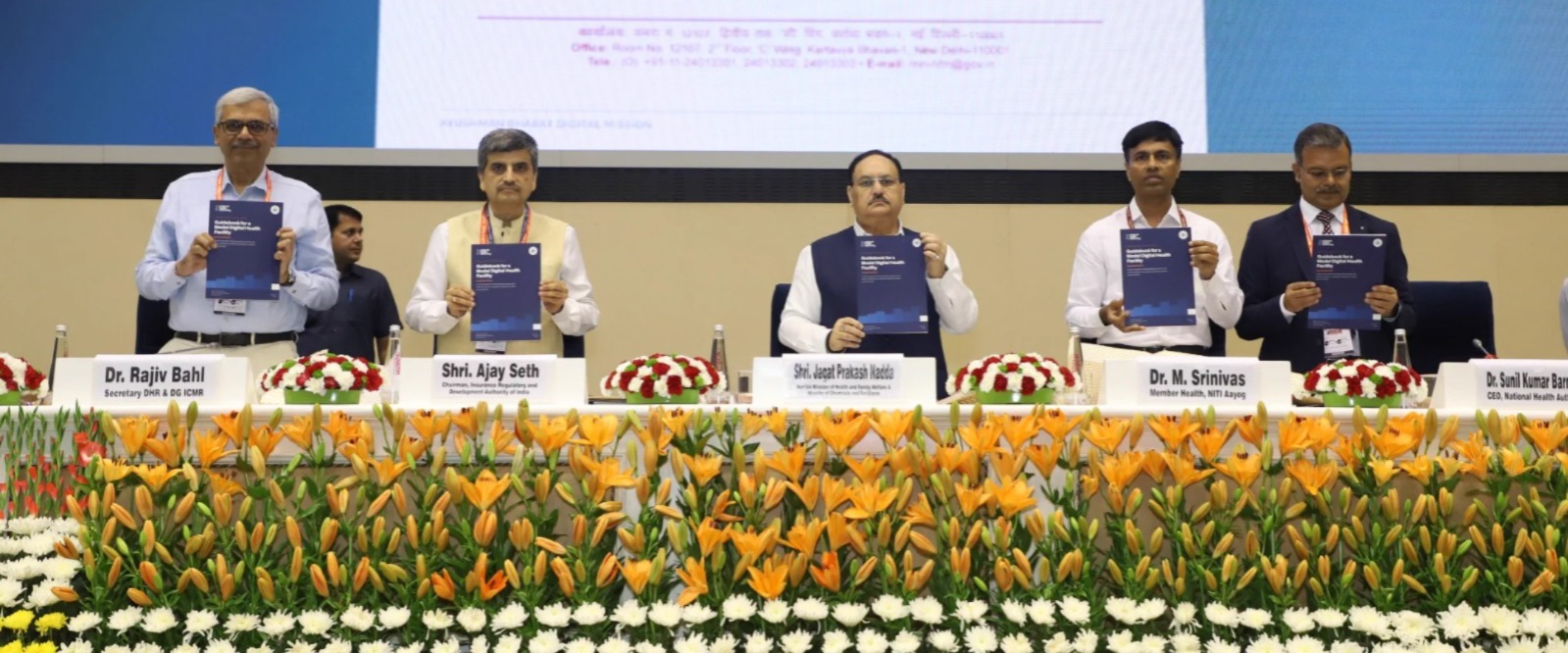
The National Health Authority (NHA) has released a Guidebook for a Model Digital Health Facility to help hospitals and other healthcare institutions digitise patient services through a structured, step-by-step approach. Launched as part of the Aarogya Manthan 2026 initiatives, the guidebook outlines how digital systems can be integrated across a patient’s journey, from registration and consultation to treatment and discharge, supporting the wider implementation of the Ayushman Bharat Digital Mission (ABDM).
The guidebook provides healthcare facilities with a practical framework for assessing digital readiness and identifying the systems required to improve hospital operations. According to Digital Health News, it includes eight readiness checks and eight steps covering the patient journey. The approach is intended to help facilities assess their existing digital infrastructure and introduce technology in a planned manner, rather than adopting disconnected digital tools across individual departments.
The framework comes as India’s digital health infrastructure continues to expand. According to the Ministry of Health and Family Welfare, as of September 1, 2026, more than 97.8 crore Ayushman Bharat Health Accounts (ABHAs) had been created, and over 121 crore health records had been linked under ABDM. The ecosystem also included more than 5.6 lakh registered health facilities and 11 lakh healthcare professionals, reflecting the growing scale of the country’s digital health network.
The guidebook is intended to support the adoption of digital processes that can improve patient registration, access to health records, information exchange and coordination between healthcare providers. Interoperability remains a key component of ABDM, enabling compatible digital health systems to exchange information while supporting continuity of care. Wider adoption of these systems could also help reduce repetitive documentation and administrative delays for patients and hospital staff.
The NHA has described the guidebook as a living document that wfill be refined based on feedback from states and healthcare facilities. Its implementation will therefore evolve with practical experience from hospitals and other providers. The initiative forms part of the government’s broader effort to strengthen standardised, interoperable and citizen-centric digital healthcare delivery across India.