
Draft National Health Research Policy 2026 Proposes Unified Framework to Transform India’s Health Research Ecosystem
The Ministry of Health and Family Welfare has released the Draft National Health Research Policy 2026, proposing a comprehensive roadmap to strengthen India's health research ecosystem through a unified national framework focused on digital health,

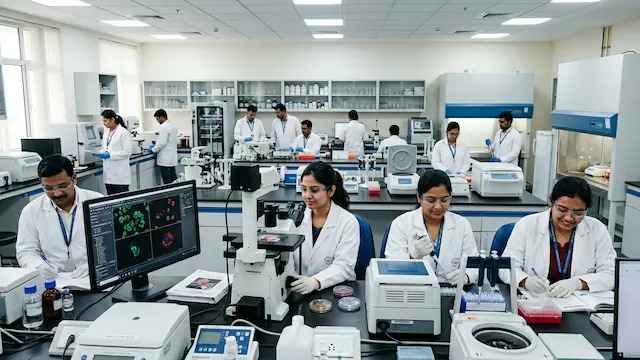
The Ministry of Health and Family Welfare has released the Draft National Health Research Policy 2026, proposing a comprehensive roadmap to strengthen India’s health research ecosystem through a unified national framework focused on digital health, artificial intelligence (AI), indigenous innovation, disease burden and pandemic preparedness. The Ministry has invited feedback from stakeholders before finalising the policy.
Prepared by the Department of Health Research (DHR), the draft is India’s first policy to integrate biomedical sciences, clinical medicine, public health, epidemiology, health systems research, behavioural sciences, digital health, AI and emerging technologies under a single strategic framework.
A key proposal is the establishment of a National Health Research Agenda (NHRA), which will identify priority research areas based on disease burden, scientific opportunity, equity, national priorities and future public health emergencies. The agenda will be reviewed every five years and developed through consultations with States, Union Territories, researchers, clinicians, patients and community representatives.
The draft policy also proposes a three-tier governance structure, comprising a National Health Research Stewardship Committee for strategic oversight, the Department of Health Research as the coordinating authority and the Indian Council of Medical Research (ICMR) as the scientific and technical lead. States will be encouraged to integrate research more closely with healthcare delivery while strengthening regional research capacity.
Beyond established priorities such as tuberculosis, antimicrobial resistance, cancer, maternal and child health, mental health and non-communicable diseases, the policy identifies AI, digital health, health data science, cell and gene therapy, obesity and climate change-related health research as emerging focus areas. It also aims to reduce regulatory barriers, expand access to research infrastructure, strengthen ethics and cybersecurity, and promote collaboration between academia, industry, government and non-profit organisations.
Unlike conventional evaluation systems, the policy proposes assessing research based not only on publications and patents but also on its contribution to health policies, clinical practice, indigenous technologies, public health programmes, equity and societal impact. It further outlines long term targets for research investment, medical science PhDs, scientific publications and indigenous health technologies in alignment with the Viksit Bharat 2047 vision, positioning India to become a global leader in health research and innovation.