
Hotel Tariff and Hospital Rent Aren’t the Same”: Apollo’s Dr. Prathap Reddy on Pricing, AI and Expansion
Dr. Prathap C. Reddy, founder and chairman of the Apollo Hospitals Group, believes India is well positioned to become a global healthcare service provider. Reddy spoke about the state of healthcare in the country, the

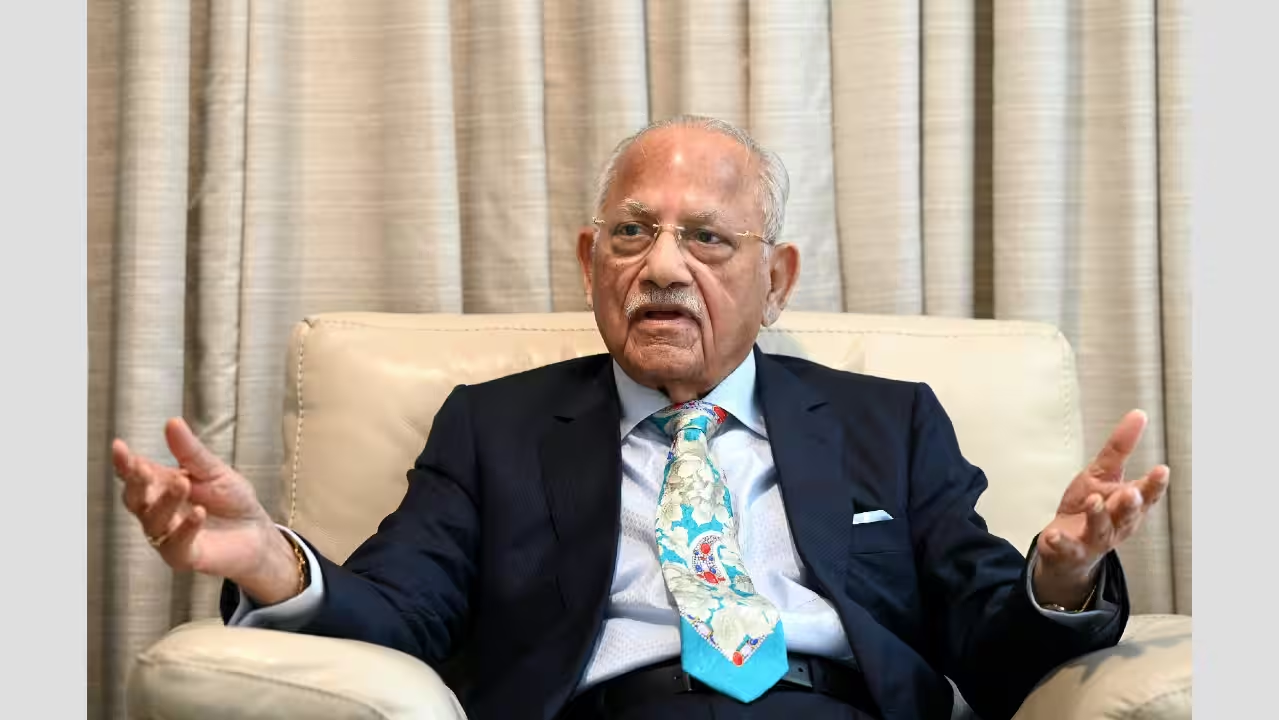
Dr. Prathap C. Reddy, founder and chairman of the Apollo Hospitals Group, believes India is well positioned to become a global healthcare service provider. Reddy spoke about the state of healthcare in the country, the case for preventive care, the role of AI in medicine, hospital pricing, and Apollo’s future expansion plans. Edited excerpts below.
On Declining Health Indicators Among Indians
Asked whether recent data pointing to a deterioration in health indicators reflects a lifestyle problem, Reddy said the core issue is that people simply don’t treat health as a priority – most only think about it once they fall ill, scrambling to figure out where to go and what it will cost. He described his vision as “Health and Happiness at Home” (HHH), adding that this can only be realised once individuals take ownership of their own health.
On the Rise of Private Healthcare
On whether private healthcare’s growth stems from gaps in the public system, Reddy credited the government for substantial work through several programmes, while noting that India’s size and geography – particularly in remote regions – remain a real challenge. He recalled that when he returned from the US, advanced healthcare was scarce in India; today, hundreds of hospitals offer world-class treatment, drawing patients from across the globe. In his view, public and private healthcare need to complement rather than compete with each other. He pointed out that the world will need close to 9 million doctors, nurses, paramedics and other healthcare workers by the end of the decade – a gap India’s large young population is well placed to help fill.
On Standardising Care Across Hospital Sizes
Responding to a question on maintaining consistent treatment standards across large hospital chains and smaller nursing homes while keeping care affordable, Reddy said strict protocols are essential to minimise patient risk and ensure good outcomes. He noted that tertiary-care hospitals are increasingly adopting standardised protocols, and that medical education itself is evolving – though the real challenge lies in extending these improvements nationwide.
On Artificial Intelligence in Healthcare
Asked whether AI could dilute the human element of medicine, Reddy was clear that AI is a tool, not a replacement. He said it can meaningfully improve the speed and precision of diagnosis and give doctors access to far more information than before, but it cannot replace a doctor. In his view, AI’s real value lies in freeing up doctors’ time so they can spend more of it directly interacting with and caring for patients.
On the Hotel Tariff vs Hospital Rent Debate
Reddy was also asked for his view on a parliamentary committee’s suggestion to link private hospital room tariffs with three-star hotel rates. He rejected the comparison outright, calling it fundamentally flawed. Hospitals, he said, must maintain patient safety standards, infection-control measures and medical infrastructure that hotels simply don’t require — a hotel offers a night’s accommodation, while a hospital exists to save lives. He argued that the cost of maintaining medical infrastructure, equipment and trained personnel cannot reasonably be measured against the cost of a hotel room, and added that any surplus Apollo earns is reinvested into expanding its network.
On Apollo’s Position Across the Healthcare Value Chain
On Apollo’s presence across diagnostics, hospitals and insurance, Reddy said the group’s positioning is fairly unique. He revealed plans to add 10 more hospitals over the next five years, with three already in the pipeline. This includes expansion in the Delhi-NCR region, with a new hospital planned in Dwarka (land already secured) and a 900-bed hospital in Gurgaon expected to open around October.
On the Future of Apollo’s Ownership Structure
Asked whether Apollo would remain family-run or shift toward professional management, Reddy said it would be a blend of both. His daughters remain involved in the organisation in different capacities, while a strong professional management team handles implementation. Looking ahead, he said his long-term goal is for Apollo’s ownership to eventually be held through a trust, ensuring the institution’s continuity beyond any individual family member.