
IIT Mandi Develops Sea Urchin-Inspired Coating for 3D-Printed Bone Implants
Researchers at the Indian Institute of Technology (IIT) Mandi have developed a bio-inspired surface coating for 3D-printed bone scaffolds that could help address two major challenges in orthopaedic implants — bacterial infection and poor integration

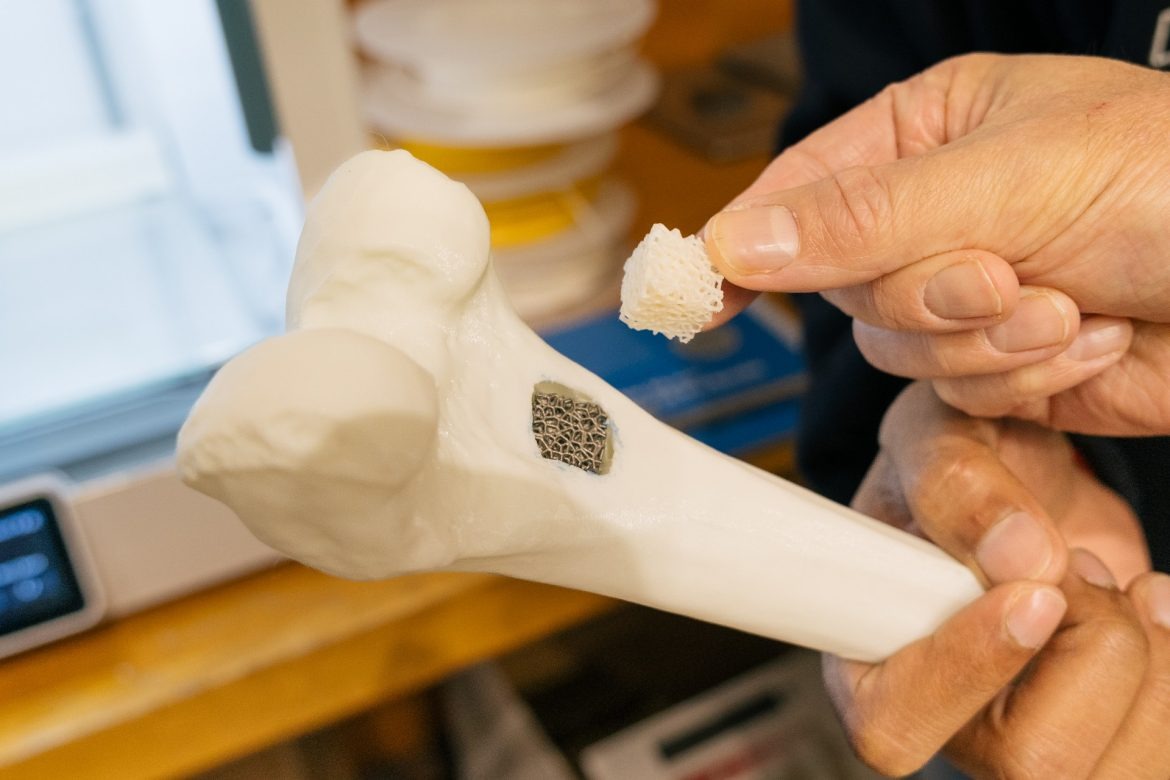
Researchers at the Indian Institute of Technology (IIT) Mandi have developed a bio-inspired surface coating for 3D-printed bone scaffolds that could help address two major challenges in orthopaedic implants — bacterial infection and poor integration with surrounding bone. The technology uses microscopic, sea urchin-like structures made of hydroxyapatite, a mineral closely associated with natural bone, on biodegradable implant scaffolds.
The research, published in the Chemical Engineering Journal, describes a composite system based on 3D-printed polylactic acid (PLA) scaffolds coated with hydroxyapatite nanospicules. The sea urchin-inspired surface architecture increases surface roughness, porosity and wettability, creating conditions that may support improved cell attachment and bone formation.
The researchers used a two-step process to develop the coating. The PLA scaffold was first treated to create chemical sites on its surface, followed by a low-temperature hydrothermal process that enabled hydroxyapatite crystals to form directly on the scaffold. The resulting nanospicule coating produced a highly hydrophilic surface and a distinctive “nano-urchin” structure.
In laboratory and preclinical testing, the coated scaffolds demonstrated mechanical antibacterial activity against Escherichia coli and Staphylococcus aureus, two bacteria commonly associated with infections. The nanospicules are designed to damage bacterial cells through their physical surface structure rather than relying solely on antibiotics. Testing in a mouse subcutaneous infection model also showed reduced infection and inflammation compared with untreated scaffolds.
The team further evaluated the material’s bone-forming potential using MG-63 cells, primary goat osteoblasts, mouse implantation studies and an ex vivo caprine bone defect model. The hydroxyapatite-coated scaffolds showed improved cell adhesion, collagen and calcium deposition, mineralisation and integration with bone compared with untreated PLA scaffolds.
The study was led by researchers including Ankita Negi, Aakash Verma, K.M. Mohammed Sufiyan, Vedante Mishra and Dr Sumit Murab from IIT Mandi’s research ecosystem. The institute’s work in biomaterials and 3D printing focuses on developing regenerative solutions for orthopaedic and tissue-engineering applications.
While the technology remains at the research and preclinical stage, the findings could support the future development of customised, biodegradable and infection-resistant bone implants. The IIT Mandi innovation highlights how 3D printing, biomimetic materials and nanotechnology can be combined to create next-generation orthopaedic implants designed to improve bone regeneration while reducing the risk of implant-associated infections.