
Kriti Sanon Highlights Women’s Health Investment at World Health Summit, Points to $1 Trillion Economic Opportunity
Berlin: Actor Kriti Sanon has brought global attention to the importance of women's healthcare investment during her address at the World Health Summit in Berlin, highlighting how improving women's health can create long-term benefits for

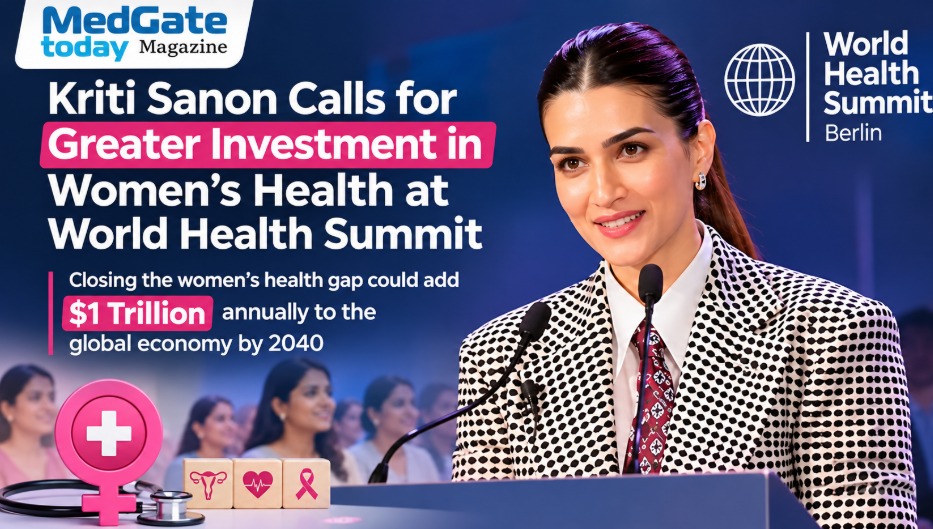
Berlin: Actor Kriti Sanon has brought global attention to the importance of women’s healthcare investment during her address at the World Health Summit in Berlin, highlighting how improving women’s health can create long-term benefits for individuals, families and economies.
Her message focused on the need to move beyond treating women’s healthcare as a limited medical issue and recognise it as an important priority for public health, economic development and social progress.
A significant aspect of the discussion was the economic potential of addressing inequalities in women’s healthcare. According to an analysis by the World Economic Forum (WEF) and McKinsey Health Institute, closing the women’s health gap could contribute at least $1 trillion to the global economy annually by 2040.
The projection highlights the wider economic consequences of inadequate healthcare access, delayed diagnoses and insufficient medical research into conditions that disproportionately affect women.
Women’s Health Investment Could Transform Global Healthcare
Women’s health investment remains an important area requiring greater attention from healthcare systems, policymakers, research institutions and private organisations.
For decades, several aspects of women’s health have received limited research attention, creating gaps in diagnosis, treatment and access to appropriate medical support. Conditions associated with reproductive health, menstrual health, menopause and cardiovascular diseases require stronger clinical research and more accessible healthcare services.
Improving these areas could help women receive timely medical attention, reduce preventable health complications and maintain better quality of life throughout different stages of life.
Kriti Sanon’s message at the international summit also reinforces the importance of recognising women’s healthcare as an essential component of sustainable development.
Menopause and Women’s Health Require Greater Attention
One important area within women’s healthcare that needs greater recognition is menopause.
Menopause is a natural biological transition, but symptoms such as sleep disturbances, hot flashes, mood changes and difficulties with concentration can affect daily activities and professional responsibilities.
Perimenopause, the transitional period before menopause, can also bring physical and emotional changes that may remain unrecognised or misunderstood.
Greater awareness among healthcare professionals, employers and families can help women access appropriate medical advice and support.
Healthcare providers also need better research, training and resources to understand how hormonal changes affect women’s health differently.
Healthcare Research and Workplace Support Need Improvement
Addressing the women’s health gap requires more than increasing healthcare expenditure. Investment must also translate into practical improvements in medical research, preventive healthcare, diagnostic facilities and treatment accessibility.
Research institutions can play an important role by expanding clinical studies that reflect women’s health requirements. Pharmaceutical companies and healthcare organisations can contribute through innovation, improved treatment options and patient-focused healthcare programmes.
Workplace support is equally important. Women experiencing health challenges should have access to appropriate medical guidance, flexible working arrangements where possible and supportive organisational policies.
These measures can help reduce the impact of health-related challenges on professional participation and productivity.
A Stronger Global Commitment to Women’s Healthcare
The discussion at the World Health Summit highlights the need for coordinated action from governments, healthcare institutions, researchers and businesses.
Closing the global women’s health gap will require long-term commitments, better healthcare infrastructure and policies that recognise the diverse medical needs of women.
The estimated $1 trillion annual economic opportunity by 2040 provides an additional reason for governments and investors to prioritise this area. However, the real value of progress extends beyond financial returns.
Better women’s healthcare can support healthier families, stronger communities and greater participation in education, employment and public life.
Kriti Sanon’s message adds to the growing international conversation about making women’s health a central priority in healthcare planning and investment decisions.
Ultimately, improving women’s health is not simply a matter of addressing individual medical conditions. It is an investment in healthier populations, stronger healthcare systems and a more sustainable global economy.
.
Disclaimer: This article is intended solely for general information and awareness and does not constitute professional advice, recommendation or endorsement; MedGate Today assumes no liability for decisions made based on its contents.
Best Healthcare Magazine in India