
Nadda Reviews Dengue and Malaria Preparedness, Directs States to Strengthen Surveillance Ahead of Monsoon
Union Health Minister Jagat Prakash Nadda has reviewed the country's preparedness for dengue, malaria and other seasonal vector borne diseases ahead of the monsoon season, directing states and Union Territories to strengthen surveillance systems, enhance

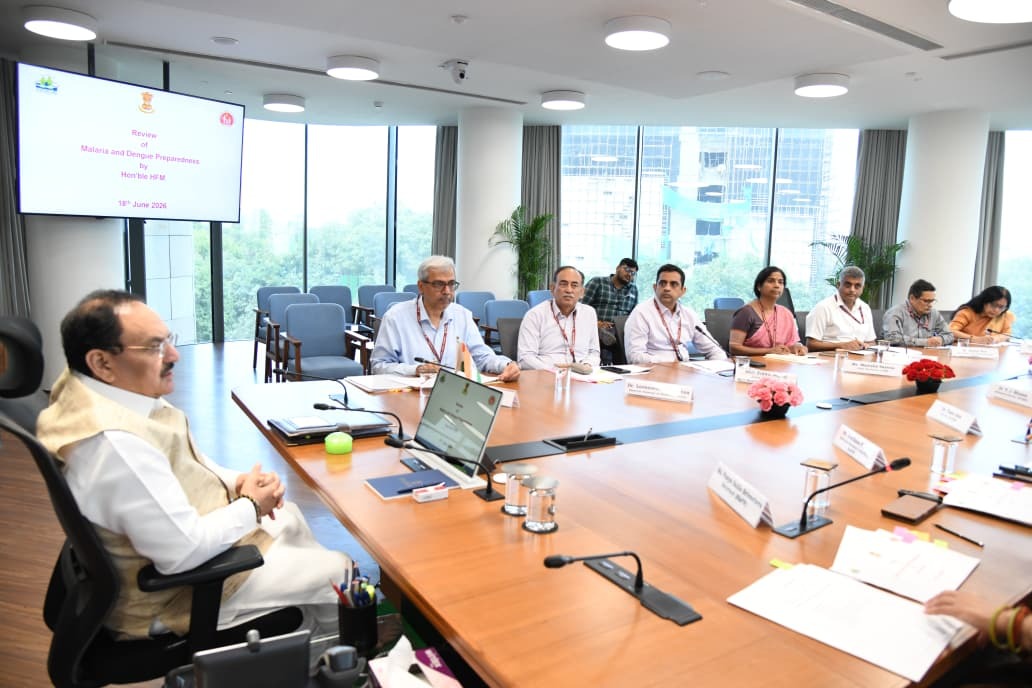
Union Health Minister Jagat Prakash Nadda has reviewed the country’s preparedness for dengue, malaria and other seasonal vector borne diseases ahead of the monsoon season, directing states and Union Territories to strengthen surveillance systems, enhance outbreak monitoring and ensure rapid response measures to prevent disease spread.
During a high level review meeting with senior health officials, Nadda emphasized the importance of early detection and timely reporting of cases. He instructed states to intensify surveillance activities, strengthen laboratory testing capacities, and ensure effective coordination between health departments and local authorities to identify potential outbreaks at an early stage.
The Health Minister stressed that prompt reporting, active case monitoring and rapid response mechanisms remain critical for controlling vector borne diseases during the monsoon months, when favourable breeding conditions often lead to a rise in mosquito borne infections. He also called for intensified public awareness campaigns focused on source reduction, sanitation and preventive measures.
According to the National Centre for Vector Borne Disease Control (NCVBDC), India continues to make progress in reducing the burden of vector borne diseases. Malaria cases have declined significantly over the past decade, with the country recording a reduction of more than 80 percent in malaria cases and deaths compared to 2015 levels. India has also been recognized by the World Health Organization for its progress towards malaria elimination, with the country exiting the WHO’s High Burden to High Impact (HBHI) group in recent years.
Dengue, however, remains a significant public health concern, particularly during and after the monsoon season. The disease affects thousands of people annually across several states, with urban areas often reporting higher transmission due to water stagnation and mosquito breeding. Health authorities have urged citizens to eliminate stagnant water sources, use mosquito protection measures and seek medical attention promptly if symptoms such as high fever, severe headache, body aches or rash develop.
The Union Health Ministry has also directed states to ensure adequate availability of medicines, diagnostic kits, hospital beds, blood components and trained healthcare personnel to manage any surge in cases. Special attention has been given to hotspot districts and areas that have historically reported higher incidences of dengue and malaria during the monsoon period.
Public health experts note that surveillance remains one of the most effective tools in preventing outbreaks, allowing authorities to identify disease clusters early and implement targeted interventions. Enhanced monitoring, community participation and timely vector control measures are expected to play a crucial role in minimizing disease transmission during the upcoming season.
The review reflects the Centre’s continued focus on strengthening India’s public health preparedness and ensuring that healthcare systems remain equipped to respond swiftly and effectively to seasonal disease threats.