
PM-RAHAT Scheme: Can Government Hospitals Strengthen India’s Emergency Trauma Care?
India's road accident burden remains a major public health challenge, and access to timely emergency treatment can often determine whether an injured person survives. While advanced trauma facilities are available in several cities, gaps in

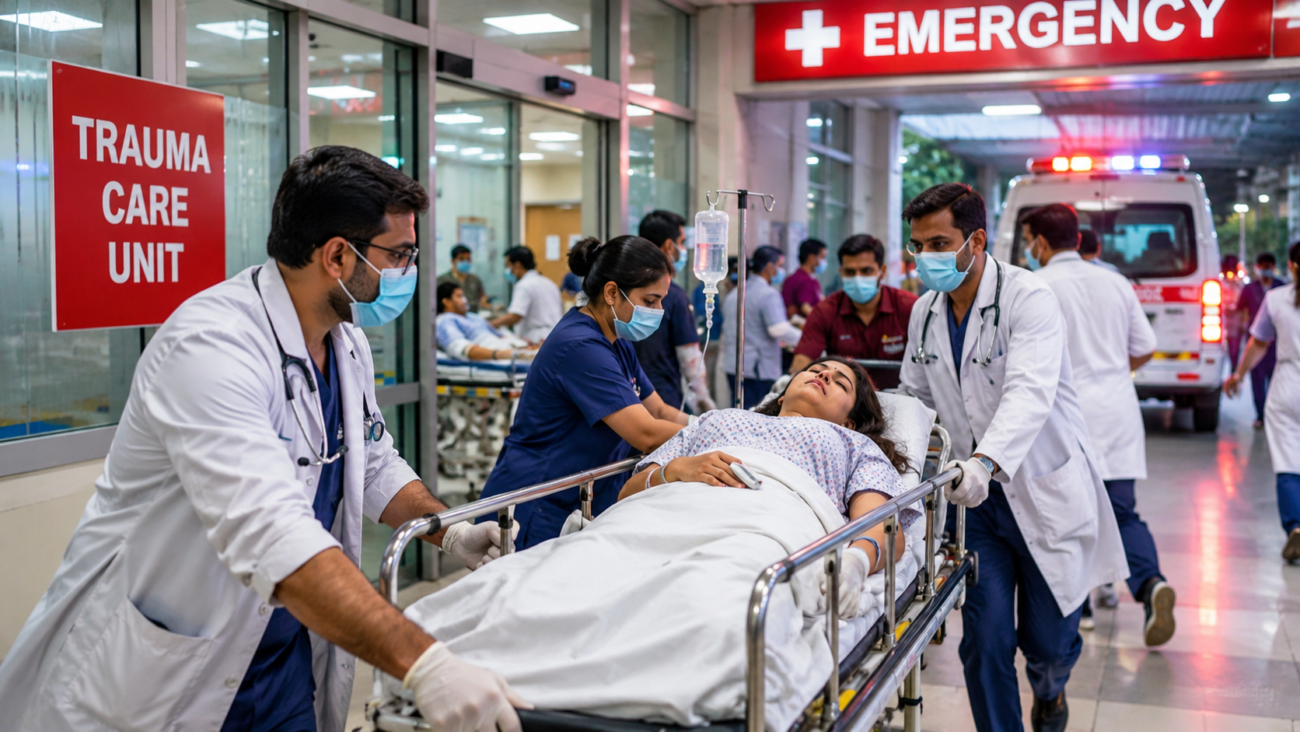
India’s road accident burden remains a major public health challenge, and access to timely emergency treatment can often determine whether an injured person survives. While advanced trauma facilities are available in several cities, gaps in emergency infrastructure, hospital coordination and financial accessibility continue to affect road accident victims, particularly those from economically weaker backgrounds.
A significant development in this direction emerged on 17 November 2026, when reports confirmed that the National Medical Commission (NMC) had directed government medical colleges and their attached hospitals to join the PM-RAHAT scheme. The initiative provides eligible road accident victims with cashless treatment of up to ₹1.5 lakh for a period of up to seven days, subject to the scheme’s applicable conditions.
The development could strengthen India’s emergency healthcare network by bringing government medical colleges into a wider system of cashless trauma care. However, financial coverage alone cannot guarantee survival. Hospitals must also have trained emergency teams, functional intensive care units, operation theatres, diagnostic facilities and reliable ambulance services.
The bigger question is whether the PM-RAHAT scheme can help India build a more coordinated emergency trauma response system, where patients receive treatment when every minute matters.
What Is the PM-RAHAT Scheme and How Does It Work?
The PM-RAHAT scheme aims to reduce financial barriers to emergency medical treatment for eligible road accident victims. Under the reported provisions, eligible patients can receive cashless treatment worth up to ₹1.5 lakh for up to seven days.
For families facing a sudden road accident emergency, this support can make a meaningful difference. In many cases, relatives must arrange money immediately for hospital admission, diagnostic tests, surgery, medicines and intensive care. Delays caused by financial uncertainty can create additional risks for patients who require urgent intervention.
Cashless treatment is intended to reduce this burden by allowing eligible victims to access covered emergency services without having to arrange the full treatment amount upfront.
However, the success of the PM-RAHAT scheme will depend on how effectively hospitals implement its provisions. Patients and families need clear information about eligibility, participating hospitals, documentation requirements and the treatment covered under the scheme.
More importantly, the system must ensure that administrative procedures do not delay life-saving medical intervention.
Why Government Medical Colleges Are Important for Trauma Care in India
Government medical colleges occupy a critical position in India’s public healthcare system. They serve large populations, provide affordable treatment and often act as referral centres for district hospitals, community health facilities and smaller healthcare institutions.
Their inclusion in the PM-RAHAT scheme could expand access to cashless trauma care, particularly in regions where specialised private hospitals are limited or financially inaccessible.
1. Wider Access to Emergency Medical Services
Government medical colleges are located across different states and regions. Their attached hospitals can help extend emergency treatment facilities beyond major metropolitan cities.
For accident victims in smaller towns and surrounding districts, access to a properly equipped government medical college may reduce the distance they need to travel for specialised treatment.
2. Availability of Specialist Doctors
Medical colleges generally have departments covering orthopaedics, general surgery, neurosurgery, anaesthesia, radiology and emergency medicine.
These departments can work together to manage complex injuries, including fractures, head trauma, internal bleeding and multiple injuries.
A coordinated multidisciplinary team is particularly important when patients require immediate assessment and surgical intervention.
3. Stronger Public Healthcare Infrastructure
Participation in the PM-RAHAT scheme could also encourage hospitals to assess their existing emergency infrastructure and identify areas requiring improvement.
This includes trauma beds, emergency operation theatres, intensive care capacity, diagnostic equipment and trained medical personnel.
Government medical colleges can therefore become important centres in a stronger national trauma care network.
Hospital Infrastructure: What Is Required for Effective PM-RAHAT Implementation?
Joining a cashless healthcare programme is only one part of the process. Hospitals must have the operational capacity to provide emergency treatment safely and efficiently.
The NMC directive brings attention to the importance of hospital readiness, particularly in government medical colleges and their attached facilities.
Intensive Care Units
Patients with severe road accident injuries may require continuous monitoring, ventilator support and specialised critical care.
Functional intensive care units are essential for managing patients with serious head injuries, respiratory complications, internal bleeding and other life-threatening conditions.
Hospitals must ensure adequate ICU beds, trained nursing staff, critical care specialists and essential equipment.
Emergency Operation Theatres
Some trauma patients require immediate surgery to control bleeding, repair internal injuries or stabilise fractures.
An emergency operation theatre must be available with the necessary surgical equipment, anaesthesia support and trained personnel.
A shortage of functional emergency theatres can create delays even when surgeons are available.
Imaging and Diagnostic Facilities
Timely diagnosis is essential for determining the severity of injuries.
CT scans, X-rays, ultrasound facilities and laboratory investigations help doctors identify internal injuries, fractures and other complications.
Hospitals must ensure that these facilities are accessible around the clock, particularly for patients arriving during nights, weekends and public holidays.
Blood Storage and Transfusion Services
Severe road accidents can cause significant blood loss. Immediate access to compatible blood and transfusion support can be critical for stabilising patients.
Government medical colleges need dependable blood storage or blood bank arrangements, appropriate testing facilities and coordination with licensed blood centres.
Ambulance and Emergency Transportation
Emergency treatment begins before a patient reaches the hospital.
Ambulance availability, trained emergency medical personnel, communication systems and appropriate transportation arrangements are necessary to ensure that injured victims reach suitable facilities without unnecessary delays.
These services must operate as part of an integrated emergency response system rather than functioning independently.
The Golden Hour: Can Cashless Trauma Care Save More Lives?
The golden hour is a commonly used term in trauma care that highlights the importance of rapid medical assessment and treatment following a serious injury.
It is not a universal 60-minute deadline for every patient. Different injuries require different interventions, and some conditions demand treatment within minutes.
For example, a patient experiencing severe internal bleeding may require immediate resuscitation and surgical intervention. Someone with a serious head injury may need urgent imaging, neurological assessment and specialised critical care.
In both situations, delays can increase the risk of complications and death.
The PM-RAHAT scheme could support the golden-hour response by reducing financial hesitation during hospital admission. However, cashless coverage must be supported by operational readiness.
Consider a road accident victim who is brought to a government medical college with multiple injuries. If the emergency team is available, imaging can be performed immediately, blood support is accessible and the operation theatre is functional, the hospital can begin the necessary treatment without avoidable delays.
On the other hand, if the patient must wait for administrative approval, referral arrangements or the availability of essential equipment, the financial benefit may not translate into timely care.
Therefore, the real value of the PM-RAHAT scheme will depend on how effectively financial protection and emergency medical capacity work together.
Coordination Between Medical Colleges, Designated Hospitals and Referral Centres
India needs more than individual hospitals participating in a cashless treatment programme. It needs a connected emergency healthcare network.
Government medical colleges, designated hospitals, district hospitals, ambulance services and referral centres must work together to ensure that patients receive appropriate treatment at the right facility.
Faster Patient Referral
Not every hospital has the facilities required to manage severe trauma cases. Smaller hospitals should be able to identify high-risk patients and transfer them to suitable trauma centres without unnecessary administrative delays.
A clear referral pathway can help reduce confusion and prevent patients from being moved between multiple facilities.
Better Communication Between Hospitals
Emergency coordination requires accurate information about bed availability, ICU capacity, specialist availability and diagnostic facilities.
Digital communication systems and standard referral protocols could help hospitals make faster decisions about patient transfers.
Clear Administrative Responsibilities
Hospitals participating in the PM-RAHAT scheme need clear procedures for patient identification, eligibility verification, treatment documentation and cashless claim processing.
Responsibilities should be defined so that doctors and emergency teams can prioritise clinical care while designated administrative personnel manage scheme-related formalities.
Monitoring and Accountability
Regular monitoring can help identify hospitals facing difficulties with implementation.
Important indicators include emergency response time, patient transfer delays, ICU availability, treatment initiation time and claim settlement performance.
Such monitoring would help authorities understand whether the scheme is delivering meaningful improvements in emergency healthcare access.
Key Challenges That Could Affect the PM-RAHAT Scheme
Despite its potential, the PM-RAHAT scheme may face several implementation challenges.
Shortage of Emergency Specialists: Many government hospitals experience shortages of trained emergency physicians, anaesthetists, surgeons and critical care professionals. Expanding patient access without strengthening staffing could increase pressure on existing teams.
Limited ICU and Trauma Bed Capacity: Hospitals in high-demand regions may already operate with significant bed occupancy. Additional emergency patients could put further pressure on available facilities.
Administrative Delays: Complicated eligibility verification, documentation requirements or reimbursement procedures could discourage smooth implementation.
Uneven Infrastructure Across States: Not all government medical colleges have the same level of trauma care infrastructure. Some may have advanced facilities, while others require significant investment in equipment and staffing.
Financial Sustainability: Hospitals need timely reimbursement and adequate operational funding to maintain emergency services. Delays in payments could affect the willingness or ability of participating institutions to provide covered services efficiently.
Addressing these challenges will be essential if the scheme is to create long-term improvements rather than simply increase the number of participating hospitals.
What Should Be the Next Priority for India’s Emergency Trauma System?
The expansion of the PM-RAHAT scheme should be accompanied by a broader effort to strengthen emergency healthcare infrastructure.
First, government medical colleges should undergo regular assessments of their trauma care readiness. Infrastructure gaps must be identified, and hospitals should receive the resources required to address them.
Second, emergency medical professionals should receive regular training in trauma assessment, resuscitation, emergency surgery and critical care management.
Third, ambulance networks and referral systems need better coordination. Patients should be transported to the most appropriate available facility rather than simply the nearest hospital.
Fourth, public awareness about cashless emergency treatment must improve. People should know where participating hospitals are located and how eligible accident victims can access treatment.
Finally, authorities should publish transparent performance data to evaluate how effectively the scheme is working. Measuring treatment delays, patient outcomes, hospital readiness and reimbursement efficiency can help identify areas requiring intervention.
The success of the PM-RAHAT scheme should ultimately be measured not only by the number of hospitals enrolled or claims processed, but also by whether patients receive faster and better emergency treatment.
Frequently Asked Questions (FAQs)
1. What is the PM-RAHAT scheme?
The PM-RAHAT scheme is an initiative aimed at providing eligible road accident victims with cashless medical treatment of up to ₹1.5 lakh for up to seven days, subject to applicable scheme conditions.
2. Why has the NMC asked government medical colleges to join PM-RAHAT?
The reported directive aims to expand the participation of government medical colleges and their attached hospitals in the scheme, potentially improving access to cashless emergency treatment for road accident victims.
3. What hospital facilities are important for trauma care?
Important facilities include intensive care units, emergency operation theatres, CT scans, X-ray and diagnostic services, blood storage or blood bank support, ambulance services and trained emergency medical professionals.
4. How does cashless trauma care help road accident victims?
Cashless trauma care reduces the immediate financial burden on eligible patients and their families. It can help avoid delays caused by arranging money before receiving covered emergency treatment.
5. Can PM-RAHAT improve the golden-hour response in India?
Yes, it has the potential to support faster emergency treatment by reducing financial barriers. However, its impact will depend on hospital readiness, specialist availability, ambulance services and efficient referral coordination.
Conclusion: Strengthening Emergency Healthcare Beyond Financial Coverage
The inclusion of government medical colleges in the PM-RAHAT scheme could represent an important step towards improving India’s road accident emergency response system.
These institutions already play a major role in providing affordable healthcare and specialised medical services. Their wider participation could strengthen the reach of cashless trauma care, particularly for patients who have limited access to private healthcare facilities.
However, financial support alone cannot solve the challenges facing emergency trauma services. Functional ICUs, emergency operation theatres, trained specialists, diagnostic facilities, blood support and coordinated ambulance networks are equally important.
The real test of the PM-RAHAT scheme will be whether it helps transform emergency treatment from a financially uncertain process into a faster, more accessible and coordinated healthcare service.
Disclaimer: This article is intended solely for general information and awareness and does not constitute professional advice, recommendation or endorsement; MedGate Today assumes no liability for decisions made based on its contents.